Visiting Sumba With Kids: What to Know
Is Sumba with kids a good idea? A practical family guide to ages, safety, health prep, what children love and how to plan a realistic trip.
14 min read
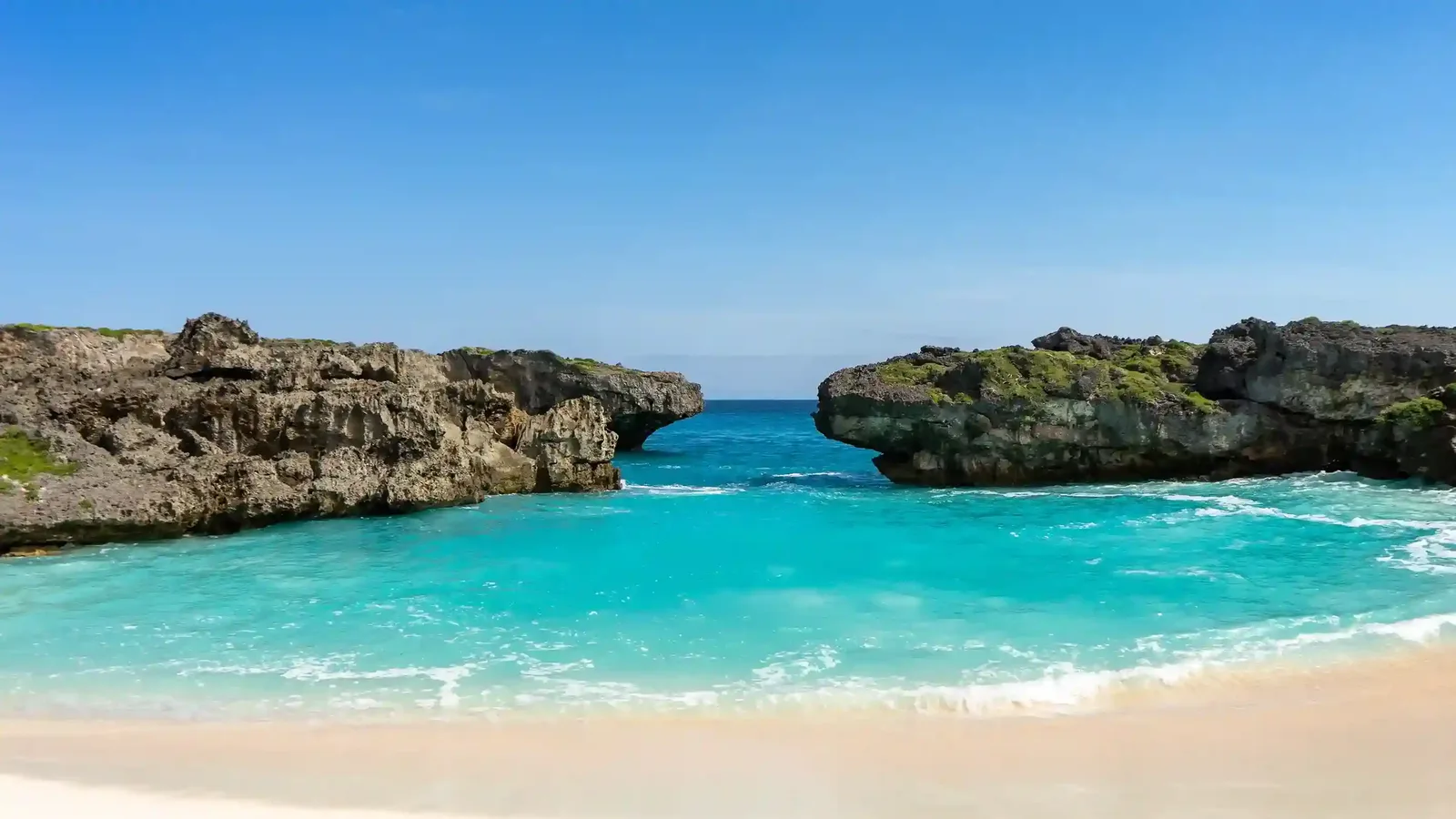
Visiting Sumba with kids can be deeply rewarding for adaptable families, but it is not a plug‑and‑play resort holiday. For most travellers, Sumba with kids works best when children are old enough to enjoy long drives, simple comforts and real cultural encounters, rather than needing theme‑park entertainment on demand.
Is Sumba Good for Families? The Short Answer
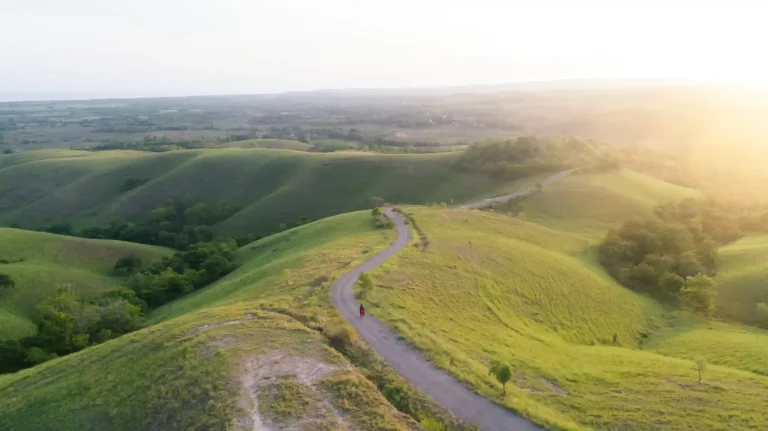
Sumba is a large, sparsely developed Indonesian island in East Nusa Tenggara (NTT), known for traditional villages, wild horses and uncrowded beaches. It is not another Bali, and that is precisely the point.
For families considering a Sumba family trip, three truths shape the decision:
- There are no big resort towns, malls or amusement parks.
- Drive times are long, infrastructure is basic once you leave your lodge, and medical facilities are limited compared to major cities.
- The reward is immersion in nature and Sumbanese culture, with space for children to explore and slow down.
Our view: Sumba is a strong fit for families who already travel comfortably in developing destinations, are honest about their children’s thresholds for boredom and discomfort, and are willing to prepare carefully around health and logistics.
What Ages Does Sumba Suit Best?
Age is the clearest predictor of how smoothly traveling Sumba with children will go. The island’s distances, heat and simplicity tend to favour older kids.
| Age group | How Sumba may feel | Key considerations |
|---|---|---|
| 0–4 years | Challenging: heat, long drives, limited gear. | Not ideal unless for a short, single‑resort stay with strong backup. |
| 5–8 years | Mixed: magical horses and beaches; tiring logistics. | Works with realistic pacing, patient kids and strong parental bandwidth. |
| 9–13 years | Often excellent: curious minds, more stamina. | Prime age for village visits, riding, easy treks and learning. |
| 14–17 years | Potentially transformative. | Engage them in planning; scope surf, photography, anthropology angles. |
Traveling with Toddlers and Babies
We rarely encourage a first‑time Indonesia visit to be centered on Sumba with very young children. Reasons include:
- Transfers and drives: Even from the island’s airports to coastal areas, you can expect 1–2.5 hour drives on winding roads.
- Heat and sun: Many family activities are outdoors with limited shade and air‑conditioning outside your accommodation.
- Gear and supplies: Nappy brands, baby food varieties and specific formulas are not guaranteed island‑wide. Do not assume Bali‑level choice.
If you do come with under‑5s, you will likely want to choose one well‑resourced property, minimize road time, and keep plans intentionally simple.
Primary School Age: Curious but Still Fragile
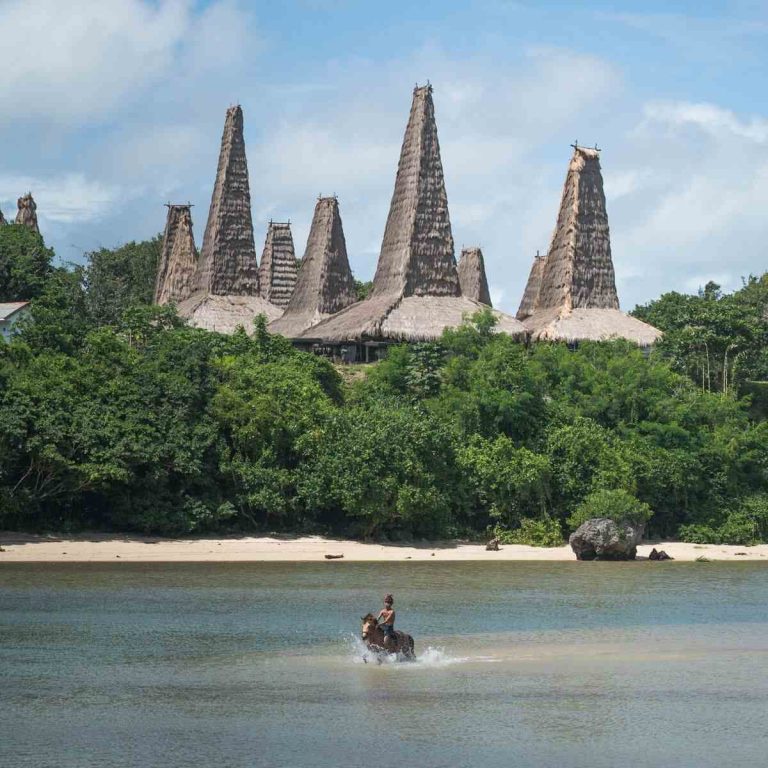
For roughly 5–8‑year‑olds, Sumba can feel like a real‑life geography and culture lesson. Horses racing along the sand, traditional peaked‑roof houses, buffalo grazing, and starry skies often captivate this age group.
Challenges: evening tiredness after long, hot days, picky eating, and limited options for spontaneous diversions. Building in rest afternoons, pool time (where available) and unstructured beach play becomes essential.
Older Kids and Teens
Older children and teenagers are usually the best match for a Sumba family trip. They can understand cultural context, manage longer drives, and participate in more active pursuits: horse riding, gentle treks to waterfalls, supervised body‑surfing or learning about megalithic tombs in village squares.
Our strongest family feedback tends to come from parents traveling with 9–16‑year‑olds who already enjoy nature and are used to travel outside heavily touristed areas.
What Kids Tend to Love in Sumba
The island is less about scheduled “kids’ clubs” and more about unscripted, experiential moments. Within that, some experiences consistently resonate with children.
Horses and Riding Experiences
Sumba is famous for its Sumba sandalwood ponies (kuda Sandel): small, sure‑footed horses historically prized across the region. Children often remember them long after the trip.
- Beach rides: Some lodges can arrange gentle rides along quiet stretches of sand for confident young riders, typically led on a rope for less experienced kids.
- Stable visits: For children who prefer patting to riding, supervised visits to stables or local horses by the shore can be enough.
- Swimming near horses: In select locations, horses may be led into the shallows; we outline what to expect and how to assess safety in more depth in our separate piece on swimming with horses in Sumba.
Age, confidence level and safety standards vary between providers; arranging any horse interaction through a quality‑focused lodge or vetted local partner is strongly advised.
Beaches, Lagoons and Safe-ish Water Play
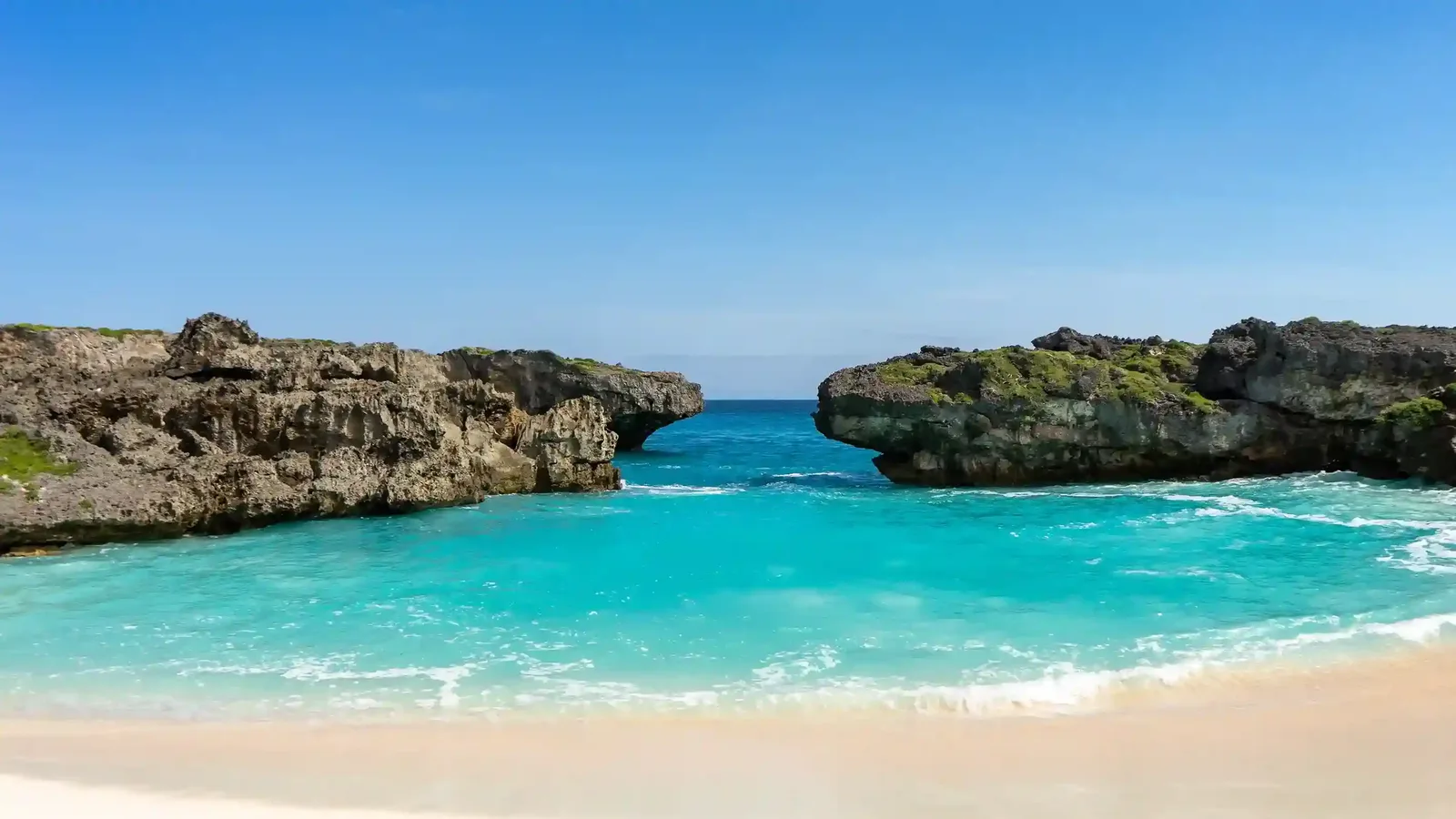
Sumba’s coastline is long and mostly undeveloped. Many beaches are visually dramatic and very lightly populated. Family‑relevant points:
- Surf and currents: Some areas have powerful waves and rips that are absolutely not child‑friendly. Lifeguards are uncommon outside surf‑focused spots.
- Gentler bays and lagoons: Options exist for shallower, calmer water play under parental supervision.
One frequently requested stop is Weekuri Lagoon in Southwest Sumba, a saltwater lagoon backed by limestone. Its generally calm, clear water can be appealing for confident swimmers under adult watch. Conditions vary, and there is limited formal safety infrastructure, so flotation support and vigilance remain important.
Village Life and Cultural Encounters
For older children, village visits can be the most memorable part of traveling Sumba with children. Sumba is known for distinct traditional houses with high, conical roofs, megalithic stone tombs and strong clan structures.
Age‑appropriate experiences can include:
- Walking respectfully through traditional villages with a local guide, learning why houses are built as they are.
- Meeting Sumbanese weavers and seeing how ikat textiles are made, from natural dyeing to loom work.
- Hearing stories (with translation) about festivals or the role of horses and buffalo in community life.
We recommend preparing children in advance: simple context on not climbing on tombs, asking before photographing people, and dressing modestly (shoulders and midriffs covered; longer shorts or skirts).
Waterfalls and Light Hiking
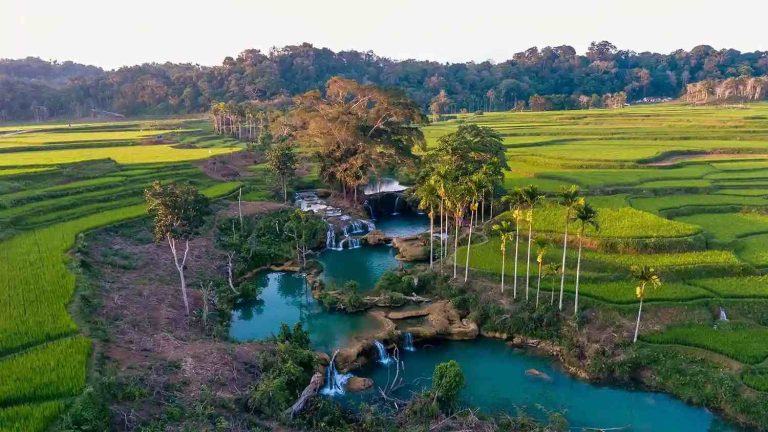
Sumba’s interior has several waterfalls and rivers that can be viable for active families, usually reached by a combination of driving and short hikes. Trails may be uneven, steep in places and not fenced, so they suit confident walkers more than toddlers.
Quality lodges generally know which waterfalls are realistic for your children’s ages and the current path conditions. Slippery rocks and wet season water levels require conservative judgment; no itinerary is worth a preventable fall.
The Realities: Distances, Food, Costs and Healthcare
Part of our role as an independent curation and concierge‑intelligence service is to be explicit about trade‑offs. Sumba rewards honesty in planning.
Drive Times and Daily Rhythm
Sumba is large by Indonesian island standards. The road network is improving but not fast. As a rule of thumb:
- Airport to many coastal lodges: roughly 45–150 minutes by car, depending on which airport and which coast.
- Day trips to villages or waterfalls: commonly 45–90 minutes each way.
Roads can be winding, with occasional potholes and livestock on or near the verge. Cars are generally air‑conditioned, but motion sickness is a real factor for some children. If you know your family is sensitive to long drives, aim for fewer change‑of‑base moves and focus on one region rather than trying to “see all of Sumba”.
Food and Dining Variety
Inside well‑run lodges, you can expect carefully prepared Indonesian and international dishes, with the usual caveat that ingredient supply is more constrained than in Bali or Jakarta.
For families, this often translates to:
- Reasonable flexibility for simple requests: plainer grilled fish or chicken, rice, omelettes, fruit.
- Fewer branded snacks or fast‑food options: if your child eats only a narrow band of Western comfort food, plan accordingly.
- Allergies and intolerances: serious allergies need to be flagged well in advance and re‑confirmed on arrival. Pack critical backup snacks if needed.
Costs and Budget Ranges
Sumba is not a budget island in the way some parts of Indonesia used to be. Most families considering it are already looking at mid‑ to high‑end stays. As a general, non‑operator guide (last verified June 2026):
- Upper‑mid to luxury lodges: family‑suitable rooms or villas often fall somewhere in the high hundreds to low thousands of US dollars per night, depending on season, inclusions and occupancy.
- Private guiding and transfers: full‑day private car and driver with guiding support is commonly priced at a level similar to high‑end Indonesian destinations rather than mass‑market tour hubs.
We do not publish fixed package prices and we are not a tour operator; instead, we help you benchmark realistic ranges and then introduce you to vetted partners whose child‑suitability and safety standards we understand well.
Healthcare Access and Emergency Planning
Medical infrastructure on Sumba is limited. There are hospitals and clinics on the island, but they are not comparable to major facilities in Jakarta, Surabaya or Singapore.
For families, this means:
- Non‑urgent issues (minor infections, simple injuries) are generally manageable, especially with lodges that have on‑call doctors or links to local clinics.
- Serious emergencies may require evacuation to another island or further afield, depending on the case.
We strongly encourage all family visitors to carry comprehensive travel insurance with clear medical evacuation coverage and to understand what triggers that coverage. Carry a child‑focused travel medical kit, including any regular medications, oral rehydration salts, basic dressings, and anti‑nausea or pain relief appropriate to age, as advised by your usual doctor.
Health Preparation: General Information (Not Medical Advice)
Health planning is personal. We are a curation and intelligence service, not medical professionals, so what follows is general context to help shape your conversation with a qualified travel health provider.
Malaria and Mosquito‑Borne Illnesses
Parts of East Nusa Tenggara, including Sumba, have malaria presence. That does not automatically mean every visitor will need chemoprophylaxis, but it does mean you should seek professional travel clinic advice several weeks before your trip, particularly for children.
- Key malaria‑related points
-
- Risk varies by area, season and specific activities.
- Preventing mosquito bites is an important layer of protection: long sleeves and trousers in the evenings, repellent appropriate for children, screened or air‑conditioned rooms where possible.
- Some families may be advised to use antimalarial medication; only a medical professional can weigh benefits, risks and age limits.
We maintain a broader perspective on context and prevention measures in our dedicated piece on Sumba malaria and travel health. That article is information‑only and does not replace individual medical advice.
Food, Water and Sun
Standard tropical travel basics apply, with extra vigilance for younger travellers:
- Drink safe, treated or bottled water; avoid ice of uncertain origin outside your lodge.
- Encourage frequent small sips in the heat; children dehydrate faster than adults.
- Use high‑SPF, broad‑spectrum sunscreen and UV‑protective clothing. The equatorial sun can catch even experienced travellers off‑guard.
Motion Sickness and Road Fatigue
Given the driving involved, discuss motion‑sickness strategies with your doctor if your children are prone. Simple tactics such as seating position, fresh air breaks, and advance dosing (where appropriate and medically approved) can change the feel of a day trip.
Choosing a Base: Where to Stay with Kids in Sumba
Because we are not a tour operator, we do not list packages; we focus on match‑making: aligning your family’s rhythms and risk tolerance with the right corner of the island and the right level of support.
Single‑Base vs. Multi‑Stop Family Itineraries
Families usually fall into two patterns:
- Single‑base stays (5–7 nights): You settle into one coastal lodge or resort, using it as a hub for a handful of day trips and quieter days by the water. This minimizes packing and transfers, ideal for younger kids or anyone new to Indonesia beyond Bali.
- Two‑base trips (7–12 nights): For older children, combining two regions can broaden what you see—perhaps one surf‑oriented coast and one area closer to traditional villages. The trade‑off is more time in the car and more transitions.
What Makes a Stay “Family‑Suitable” Here
Star ratings on paper are less important than concrete features. For Sumba with kids, we pay attention to:
- Room configuration: True family rooms or villas, interconnecting options, or at least layouts that allow parents to be adjacent rather than down a corridor.
- On‑site safe space: Gardens, beach frontage or pool areas where children can be in view, not right on a cliff edge or rough surf break.
- Flexible kitchen: The ability to prepare early dinners and simple meals without fuss.
- Staff attitude: Comfort engaging with children, not just adults.
- Emergency plans: Transport arrangements, clinical contacts and communication tools should something go wrong.
Working Out Your Family’s Risk and Comfort Profile
Before choosing a lodge or region, it helps to be candid about the following as a family:
- How many hours in a car per day feel acceptable?
- Is everyone broadly open to Indonesian food, or will you need strong Western back‑up options?
- How anxious will you feel being several hours from a major hospital?
- Do your children handle early bedtimes and power‑cut contingencies reasonably well?
Once we understand those parameters, we can advise far more precisely and connect you with operators aligned to your family’s thresholds. You can always plan your trip with us via email or WhatsApp; we will map options without pressure to book a particular property.
Sample Pacing for a Family Week in Sumba
To illustrate how a realistic Sumba family trip might feel (not as a rigid itinerary, but as pacing guidance):
- Day 1–2: Arrive, settle, short local walks or beach time only. Early nights as bodies adjust.
- Day 3: Half‑day outing—perhaps a nearby village visit or lagoon—back by mid‑afternoon for pool and rest.
- Day 4: Quiet morning, optional horseback activity late afternoon when sun is lower.
- Day 5: Longer outing (waterfall or more distant village) with picnic, allowing for naps in the car.
- Day 6: Keep flexible: repeat a favourite activity or simply let children lead the pace.
- Day 7: Buffer day for weather changes, last swims, unscheduled time.
The families who leave most satisfied are usually those who resist the urge to pack every day, accepting that doing slightly less on paper often yields more meaningful experience in reality.
How Sumba Private Helps Families
We exist to sit between pure information and full‑service tour operating. That means:
- We curate where to stay and what to do, with particular awareness of family realities on the ground.
- We share candid views on which parts of Sumba may feel too abrasive for some children and which offer gentler introductions.
- When you are ready, we introduce you to vetted local partners and lodges; no one can pay to change what we publish, and if you proceed with our partner they may pay us a referral fee at no extra cost to you.
If you would like tailored advice on Sumba with kids, you can plan your trip with us via email or WhatsApp. A short conversation about your children’s ages, prior travel and comfort levels goes a long way toward getting Sumba right.
FAQs: Visiting Sumba with Kids
Is Sumba safe for families?
Sumba is broadly calm and community‑oriented, and most family visits pass without incident. The main risks are environmental rather than social: road conditions, ocean currents, heat and limited medical infrastructure. Choosing experienced drivers, heeding local guidance about where to swim, and building in rest all help reduce risk.
How long should we stay in Sumba with children?
For most families, 5–7 nights is a realistic first visit: enough time to settle, see a few villages or waterfalls and enjoy the beach without constantly moving. Very travel‑seasoned families with older teens might extend to 10–12 nights, especially if combining two regions of the island.
Do we need a guide when traveling Sumba with children?
A dedicated local guide is strongly recommended for most day trips with kids. Beyond logistics and translation, a good guide helps frame cultural encounters, reads local conditions and can adjust plans on the fly if children get tired or the weather shifts.
Is Sumba better before or after Bali for a family trip?
Many families find it easier to begin in Bali or another hub to adjust to time zones, then fly on to Sumba once everyone is rested. Ending in Bali can also give younger children a final few days of easier pools and dining after the more off‑grid feel of Sumba. The right order ultimately depends on flight patterns and your children’s energy cycles.
How far in advance should we plan a Sumba family trip?
For school‑holiday periods and the drier months, we suggest starting planning 6–9 months ahead, especially if you need specific room configurations. Shoulder seasons may offer more flexibility, but quality family‑friendly options remain limited, so earlier is generally better. We are happy to help you plan your trip via email or WhatsApp once you have rough dates and children’s ages in mind.