How to read this: Sumba Private is an independent editorial guide — we research and compare, then connect travellers to vetted local partners. Our help is free; a partner may pay us a referral fee at no extra cost to you, and this never changes what we publish. Prices, schedules, festival dates (including Pasola) and health guidance change — treat figures as indicative and confirm current details before you travel. This is general information, not professional travel, medical or legal advice.
A luxury Sumba itinerary 5 days is not a fixed tour, but a realistic framework: five days of privately guided travel that link West Sumba’s megalithic villages and surf-laced beaches with East Sumba’s savanna, ikat weaving, and coastal light. On this page, we share the route we use most often as a starting point for serious travellers who want comfort, cultural depth, and honest logistics rather than a brochure loop.
We write as Sumba specialists and as guests of the island’s communities. Sumba Private is an independent curation and concierge-intelligence service: we help you design a route, sense-check timings and costs, then introduce you to vetted local partners. We are not a tour operator, and this 5 day Sumba travel plan is a planning tool, not a product on a shelf.
Luxury Sumba Itinerary: 5 Days, At A Glance
This sample 5 day Sumba travel plan starts in Tambolaka (TMC) in the west and ends in Waingapu (WGP) in the east. It balances archaeology, village life, coastal time, and photography-friendly light, with driving hours that remain reasonable for a short stay.
- Day 1
- Arrive Tambolaka (TMC) — Weekuri Lagoon and Mandorak Beach
- Day 2
- West Sumba megalithic focus — Ratenggaro, Kodi Coast, Lapopu Waterfall
- Day 3
- West-to-East overland transfer — savanna viewpoints and village stop
- Day 4
- East Sumba ikat weaving — Prailiu / Prailiang area & Walakiri sunset
- Day 5
- Morning flexibility — depart Waingapu (WGP)
Tambolaka–Waingapu overland is typically around 3–3.5 hours of driving on paved roads (longer if you make detours), so this Sumba luxury route keeps most days to 3–5 hours in the vehicle, with time to walk, swim, and sit with hosts.
Day 1: Arrive Tambolaka (TMC) & West Sumba Coast
Morning / Early Afternoon: Arrival Logistics at TMC
We suggest arriving at Tambolaka Airport (TMC) on a morning or early-afternoon flight from Bali or Kupang. TMC is small, with manual baggage handling and no jet bridges, which often makes for a quick exit but also means delays are handled more slowly than on Java or Bali.
On a private, guide-accompanied program, you are usually met at the terminal door and on the road in 15–25 minutes after landing, depending on baggage. If you prefer to self-drive, rental options exist but are limited and rarely match the safety and local-knowledge advantages of a vehicle with driver.
Check-in: West Sumba Base
For a 5-day luxury Sumba itinerary 5 days that spans the island, we normally suggest two bases: a higher-comfort property in West Sumba for Days 1–2, and a second in the Waingapu area for Days 3–4. Around Tambolaka and the nearby coast, current “upper tier” options (as of mid-2026) are small hotels and villas rather than international-branded resorts. Rooms with air conditioning, hot water, and decent bedding are achievable; private pool villas exist but are limited in number.
Expect the transfer TMC to west-coast accommodation to run 45–90 minutes depending on your chosen property and traffic through Waitabula and Waikabubak. Your guide can build in a simple local lunch stop en route.
Afternoon: Weekuri Lagoon and Mandorak Beach
Once checked in and refreshed, the classic west-and-south coastal introduction pairs Weekuri Lagoon and Mandorak Beach. Access roads are now paved for most of the way, but you should still budget realistic drive times from the Tambolaka / Waitabula hotel cluster:
| Route | Approx. one-way drive time | Notes |
|---|---|---|
| Tambolaka → Weekuri Lagoon | 1.5–2 hours | Mostly paved; last section narrower, slow through villages |
| Weekuri → Mandorak Beach | 10–20 minutes | Short transfer, often combined |
| Mandorak → back to hotel | 1.5–2 hours | Return before dark for easier driving |
Weekuri is a saltwater lagoon separated from the ocean by coral rock. Conditions vary with tides and swell, so your guide will assess on arrival if swimming is safe that day. In busy domestic-holiday periods, there may be basic food stalls; off-peak you should bring your own snacks and water.
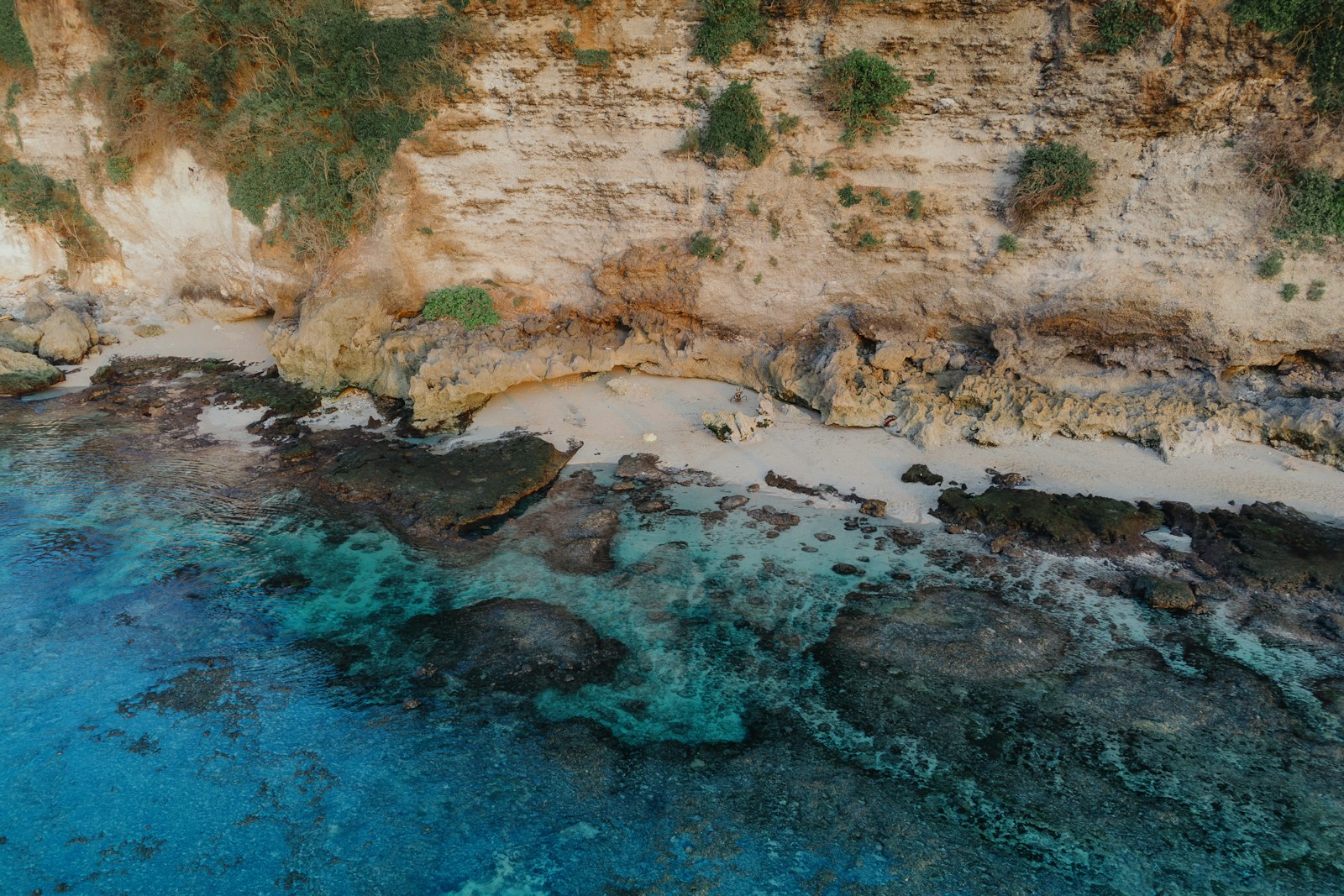
Mandorak Beach sits a short drive away via a sandy track. On quieter days it can feel strikingly empty: bright sand, rocky promontories, and a direct line of swell from the Indian Ocean. Footing on rocks can be slippery, and currents in the open sea can be strong, so many luxury travellers treat this as a visual and photography stop rather than a swim.
Sunset here is attractive, but driving back after dark increases risk from roaming livestock and unlit scooters. We usually recommend leaving the coast 45–60 minutes before sunset and enjoying golden hour from a hillside vantage point closer to your hotel.
Day 2: West Sumba Megaliths, Kodi Coast & Lapopu Waterfall
Morning: Ratenggaro and the Kodi Peninsula
West Sumba is defined by its megalithic graves and tall, peaked thatch roofs. Ratenggaro village, on the Kodi Peninsula, is one of the best-known examples and fits logically into a west and east Sumba overland tour because it sits near the western coastal “corner” of the island.
From the Tambolaka / Waitabula area to Ratenggaro, you should expect:
- Approximate drive time: 2–2.5 hours one way, depending on road conditions and photo stops.
- Road quality: mainly paved, with slow segments near markets and through villages.
A respectful visit here means more than a photo stop. Your guide should coordinate with the village head or a designated representative; a customary contribution is usually expected and is best handled transparently. Photography is widely tolerated, but individual people may prefer not to be photographed, especially elders in traditional dress. Ask before shooting portraits, and consider having your guide explain how images may be used.
From Ratenggaro, you can walk down to the black-sand beach for a wider view of the village skyline, the surf, and the stone graves along the shore. Heat builds quickly from late morning, so light, breathable clothing and a hat are not optional here.
Midday / Early Afternoon: Kodi Coast Stop and Lunch
After Ratenggaro, many travellers follow the coast briefly before looping inland. Options in a private itinerary include:
- A shaded coastal spot for a packed or simple catered lunch.
- A short walk along the beach for perspective; swimming is often rough and is not guaranteed safe.
- Additional villages on the Kodi Peninsula, if your energy and the community’s schedule allow.
Food-wise, West Sumba is still largely warung-based (simple local eateries). On a curated, higher-end program, meals are usually pre-arranged: either at your accommodation or through a vetted cook who can provide cleaner kitchens and more careful handling. Tap water is not safe to drink; stick to sealed bottled water or boiled refills.
Late Afternoon: Lapopu Waterfall
From Kodi, the route bends inland towards Lapopu Waterfall in Manupeu Tanah Daru National Park. This adds variety: a cooler, forested environment and freshwater swimming opportunity when conditions are right.
Key logistics:
- Ratenggaro / Kodi → Lapopu area: typically 2–3 hours by car.
- Parking area to waterfall: a short but sometimes slippery walk, including simple bridges.
- Water conditions: depend on rains; after heavy rain the water can be stronger and muddier, and access may be limited.
A private guide will assess conditions before you commit to the trail. Comfortable walking shoes that can get wet are advisable; flip-flops are not ideal on wet stone. Leech presence varies with season; in drier periods it is often minimal.
From Lapopu back to the Tambolaka / Waikabubak area, plan for around 1.5–2 hours. This is often a dusk drive; your driver will know the sections where livestock and pedestrians share the road after dark.
Day 3: Overland West to East Sumba
The Core Transfer: Tambolaka to Waingapu
The geographic spine of this Sumba luxury route is Day 3: the overland transfer from West Sumba to East Sumba. On a direct drive, Tambolaka–Waingapu usually takes around 3–3.5 hours on the main trans-island road. This is the most important fixed number in any five-day itinerary; compressing or ignoring it leads to rushed, uncomfortable days.
The road is fully paved but varies in width and surface quality. Overtaking trucks can be slow; goats and children appear without warning. This is why we rarely schedule more than one substantial detour on a transfer day.
Suggested Day 3 Structure
Leaving from the west after breakfast, a balanced program might look like this:
- 08:00–08:30: Depart West Sumba accommodation.
- Morning: Drive eastwards, stopping at 1–2 viewpoints over the island’s interior valleys and ridgelines.
- Midday: Simple lunch stop in a local town along the route, kept short to avoid arriving late in Waingapu.
- Early afternoon: Optional stop at a traditional village en route, arranged in advance, to introduce East Sumba’s architecture and ritual life.
- Mid / late afternoon: Arrival and check-in at Waingapu-area accommodation.
Those travelling during or just after the rainy season (roughly December–March, though timing is variable year to year) may find the interior landscape greener than expected; by March–April, Sumba often reaches its “greenest” phase, before gradually drying towards a more golden savanna palette later in the year.
Arrival: East Sumba Base
Waingapu (WGP) is Sumba’s administrative and air hub. Accommodation here ranges from simple city hotels to more design-forward lodges set outside town, some with views over the savanna and rice fields. Comfort levels are still below Bali’s top end, but in the context of Sumba they represent the upper tier: air-conditioned rooms, decent linens, and more consistent power and water than you will find in remote villages.
We normally recommend a property within 30–45 minutes of Waingapu Airport to make your Day 5 departure simpler. If you strongly prioritise seclusion, you can push further along the coast, accepting extra transfer time on both Days 3 and 5.
Day 4: East Sumba Ikat Weaving & Walakiri Sunset
Morning: Ikat Weaving Villages
East Sumba is Indonesia’s reference point for warp ikat textiles. The main weaving villages around Waingapu — such as Prailiu and nearby communities — are accessible within 20–40 minutes’ drive from town. For a luxury-oriented visit, the emphasis is on context, not just shopping.
A well-structured morning in the weaving area typically includes:
- An introduction by your guide to the social and ritual role of textiles in Sumba: bridewealth, funerary rites, and everyday status.
- A demonstration of key steps: tying, dyeing (including the use of natural indigo where practised), and weaving on backstrap looms.
- Time to view finished pieces, with clear distinctions drawn between natural-dye, synthetic-dye, and tourist-market work.
Pricing here varies widely, based on age, size, dye, and complexity. For serious collectors, we usually suggest setting a budget in advance and having your guide or a trusted local textile specialist help you distinguish ceremonial-quality pieces from decorative souvenirs. Haggling exists but is best handled sensitively; remember that high-quality ikat represents weeks or months of labour.
Midday: Lunch and Rest
After the intensity of the weaving visit, a slower midday is valuable. Options include:
- Lunch in Waingapu town at a reliable, pre-vetted restaurant serving Indonesian staples.
- Return to your lodge for a quieter meal and downtime by the pool, if available.
Heat and light in East Sumba can be stark in the early afternoon. For photography, textiles, and landscapes alike, you will usually achieve more in the softer light of morning and late afternoon.
Late Afternoon: Walakiri Beach for Sunset
Walakiri Beach has become one of the most photographed spots on the island, largely due to the mangrove trees that stand in the tidal shallows. At low tide in the late afternoon, these trees and their reflections can create highly graphic silhouettes against the setting sun.
Key practical points for Walakiri:
- Waingapu town to Walakiri: approximately 30–45 minutes by car.
- Best light: the last 60–90 minutes before sunset, timed with a suitable tide for exposed mangrove roots.
- Footwear: sandals or reef shoes; you will likely walk on wet sand and shallow water.
This is one of the few locations in Sumba where you may encounter a meaningful concentration of other visitors, particularly on domestic holidays. A private guide can help position you a little away from the busiest clusters and manage timing so you are not departing in a heavy traffic wave.
After sunset, it is a straightforward return drive to your accommodation for a final dinner on the island.
Day 5: Departure from Waingapu (WGP)
Flexible Morning
Depending on your flight time, you may have 1–4 hours free in the morning. Good use of this window can include:
- A short walk or easy hike near your lodge for a last view of Sumba’s hills.
- A follow-up visit to a textile source if you are finalising purchases (time permitting).
- Unhurried packing and rest; Sumba’s roads reward calm rather than last-minute rushing.
Waingapu Airport (WGP) is small, but check-in and security can still be slow if multiple flights overlap. We advise arriving 90 minutes before scheduled departure for domestic flights, adjusting if your airline sets a stricter recommendation.
Airport Transfer
From most Waingapu-area accommodations, the drive to WGP takes 15–45 minutes. Your guide or driver will account for any predictable delays (market days, school traffic) and factor them into your pickup time. At the airport, baggage screening is manual; fragile items and textiles should be packed with this in mind.
If you are continuing onwards the same day to another Indonesian region, remember that Sumba’s flights are vulnerable to delay from weather, operational issues, and upstream delays on earlier legs. A buffer between your Sumba flight and any international departure from Bali or Jakarta is prudent.
Pace and Driving-Time Realism
Sumba is larger than it appears on a map, and most routes follow single-lane paved roads through villages and agricultural land. For a luxury sumba itinerary 5 days to feel truly high-end, it must avoid having you spend your entire visit in a vehicle.
Core Time Anchors
These are the distances that shape any 5 day Sumba travel plan:
- Tambolaka Airport (TMC) → West-coast sights (Weekuri / Mandorak): around 1.5–2 hours one way.
- Tambolaka / Waikabubak → Ratenggaro (Kodi): approximately 2–2.5 hours one way.
- Tambolaka → Waingapu: usually 3–3.5 hours, direct.
- Waingapu → Walakiri Beach: around 30–45 minutes one way.
We treat 4–5 hours of total daily driving as a comfortable upper bound in a private itinerary. More than that begins to erode the sense of place that justifies coming to Sumba in the first place.
Why This 5-Day Route Works
This sample Sumba luxury route uses a “fan and transfer” pattern: two days exploring out-and-back from Tambolaka, one transfer day across the island, then one full day and a final morning out-and-back from Waingapu. This lets you:
- Experience both West and East Sumba in five days without doubling back.
- Keep the heaviest driving (Tambolaka–Waingapu) on a single, focused day.
- Reserve prime sunrise and sunset windows for specific, photogenic locations.
If an itinerary proposes visiting Kodi, Lapopu, and Weekuri in a single day out of Tambolaka, or shuttling West–East–West across the island within five days, it is trading your comfort for box-ticking.
West vs East Sumba in Five Days: Trade-Offs
With only five days on the island, you inevitably make choices. A clear understanding of how West and East Sumba differ will help you adjust this route around your priorities.
| Aspect | West Sumba | East Sumba |
|---|---|---|
| Primary airport | Tambolaka (TMC) | Waingapu (WGP) |
| Landscapes | Hills, rice terraces, rivers, forested waterfall valleys | Open savanna, coastal flats, salt pans, low mangroves |
| Cultural focus | Megalithic villages, traditional houses, graves | Ikat weaving, horse culture, ritual sites |
| Coasts | Coves, cliffs, lagoon, surf beaches (Kodi / Weekuri / Mandorak) | Shallower sandy beaches, mangrove-fringed areas (Walakiri) |
| Driving density | More time winding through hills and villages | Straighter coastal and savanna roads near Waingapu |
Who Should Emphasise West Sumba
West Sumba is better weighted in your 5 days if you:
- Are primarily drawn to megalithic architecture and village visits.
- Prefer more varied topography: valley viewpoints, rivers, and waterfalls.
- Are comfortable with slightly longer daily drives to link villages, coast, and falls.
Who Should Emphasise East Sumba
East Sumba may deserve more of your limited time if you:
- Collect or study ikat textiles and want meaningful time with weaving communities.
- Are interested in photogenic, minimalist landscapes and mangrove silhouettes.
- Value slightly easier access from hotel to main sights for lower daily driving hours.
This sample framework gives two nights West, two nights East. If your time is fixed at five days but your priorities tilt strongly one way, you can push to three nights West and one East, or vice versa, while still using the Tambolaka–Waingapu overland axis. The key is not to promise yourself “all of Sumba” in under a week.
When to Add Days: Extending Beyond 5
Five days offers a sophisticated first cut through the island, but many high-net-worth travellers find themselves wishing they had allowed more time once they appreciate the driving realities and the depth of village relationships.
6–7 Days: Deepening West and East
Adding one or two nights lets you:
- Spend an extra night in West Sumba to include additional traditional villages and a slower, more relational pace.
- Add a second day around Waingapu for inland savanna walks or horse-focused experiences where appropriate.
- Build in a genuine rest day around a coastal or hilltop property without sacrificing core sites.
8–10 Days: Remote Coasts and Horses
Beyond a week, it becomes realistic to:
- Explore more remote beach areas with simpler infrastructure but a stronger sense of remoteness.
- Coordinate with hosts around seasonal horse races or festivals, acknowledging that date certainty is limited and subject to local calendars.
- Include additional waterfalls or inland hikes that require more time to reach and return safely.
We can help you decide how many days to add and where to place them, based on your tolerance for simpler accommodation and your interest in longer drives. If you are considering extending beyond this framework, you can plan your trip with us via email or WhatsApp; we will listen first, then suggest realistic options.
The Luxury Layer: Stays, Private Guiding, and Light
“Luxury” on Sumba is less about chandeliers and more about intelligent routing, good vehicles, respectful mediation with local communities, and small moments of ease in a relatively raw environment.
Accommodation Standards
Sumba’s accommodation spectrum is still developing. Top-end properties are few and often small in room count; booking them requires early planning, especially around Indonesian holiday periods.
In a 5 day Sumba travel plan like this, we generally layer accommodation as follows:
- West Sumba: Best-available coastal or near-coastal lodge or villa with air conditioning, private bathroom, and attentive staff. Some have on-site dining with limited but well-prepared menus.
- East Sumba (Waingapu area): Upper-tier hotel or lodge with reliable utilities, decent bedding, often a pool, and easier access to both town and Walakiri.
Across both regions, internet can be slow or intermittent; mobile data via Indonesian SIM is often more reliable than Wi-Fi. Power cuts can occur; better properties have generators but may not run heavy loads such as high-capacity heaters during outages.
Private Guide and Vehicle
For high-net-worth and private travellers, a dedicated guide and driver are non-negotiable. Benefits include:
- Local-language mediation in villages where Indonesian and Sumbanese dialects blend.
- Up-to-date knowledge of road conditions, ceremonies, and any sensitivities.
- Flexible pacing: the ability to stay longer in a village that resonates with you, or to move on gracefully when it does not.
Vehicles are typically late-model SUVs or MPVs, not long-wheelbase luxury sedans. The practical luxury is working air conditioning, good shock absorption, and a driver used to sharing the road with livestock.
Photography and Light Management
Sumba rewards those who think in terms of light:
- Megalithic villages: early morning and late afternoon, when shadows pick out the rooflines and stone forms, and human activity is gentler.
- Weekuri and Mandorak: mid-to-late afternoon, before harsh overhead light softens but while it is still bright enough for water clarity.
- Walakiri: precisely the last hour or so before sunset, ideally at low or mid-tide.
A private guide familiar with photographers’ needs can help you adjust daily timings to match changing conditions, within the constraints of road distances and your appetite for early starts.
Indicative Cost Ranges
Because Sumba Private is not an operator, we do not package or sell this itinerary. Instead, we map a route to your interests and then introduce you to vetted on-the-ground partners who can quote and operate it. Exact costs will depend on season, accommodation selection, group size, and how much is done by private charter versus scheduled flights.
As a directional frame (last verified June 2026), a privately guided 5-day / 4-night program on Sumba, excluding international flights, typically falls in these broad bands:
- Upper-mid tier: shared-charter or scheduled flights, best-available local lodges, private guide and driver, most meals included: approximately mid four figures USD for two people.
- Higher-end: top-tier available properties, more spacious vehicles, more elaborate private dining where possible: moving into upper four figures to low five figures USD for two people.
These are not quotes; they are ranges to help you decide if a luxury-oriented Sumba journey should sit alongside, say, a stay in Bali or Raja Ampat on the same trip. Once we understand your preferences, we connect you with a partner to price the specifics. Our editorial independence is central: no one can pay to change what we publish; if you proceed with our partner they may pay us a referral fee at no extra cost to you.
Using This Itinerary as a Framework
This luxury Sumba itinerary 5 days is a skeleton, not a script. The most thoughtful private journeys add or subtract based on your priorities:
- Textiles vs. megaliths.
- Walking vs. time at your lodge.
- Photography vs. immersive conversation, where cameras stay in the bag.
Beyond those personal choices, Sumba itself intervenes: ceremonies, weather, village obligations. A ritual in a village may make it impossible to visit that day; a heavy rain may render a waterfall trail temporarily unsafe. A seasoned local guide will adapt, proposing alternatives that respect both your time and local customs.
Our role is to help you build a route that can flex without collapsing. If you would like to adapt this framework, compare it to other ideas, or stress-test a draft plan you already have, you can plan your trip with us via email or WhatsApp. Our starting point is always honest, logistics-first conversation.
Related Guides and Further Reading
To go deeper into the components of this 5 day Sumba travel plan, you may find these guides useful:
- Getting to Sumba — Airlines, routes, and how to sequence Tambolaka and Waingapu.
- Best Time to Visit Sumba — Seasonal patterns, from dry savanna to March–April greenery.
- Megalithic Villages of Sumba — Context for Ratenggaro and other west-island sites.
- Ikat Weaving in Sumba — Materials, motifs, and ethical buying.
- Waterfalls of Sumba — Including Lapopu and other accessible falls.
- Beaches of Sumba — From Mandorak to Walakiri and beyond.
- Private Tours on Sumba — How our vetted-partner model works in practice.
How many days do I really need in Sumba?
Five days is the minimum we suggest for a first serious visit that includes both West and East Sumba. With less, you are better off focusing on one side of the island only. With 7–10 days, you can add remoter coasts, slower village time, and rest days around your lodge.
Is this 5-day itinerary suitable for families?
Yes, for families comfortable with some road time and modest infrastructure. Children who tolerate 3–4 hour drives and enjoy outdoor, unscripted days usually adapt well. Very young children may struggle with heat, road conditions, and the lack of formal entertainment; the itinerary can be shortened or slowed accordingly.
Can I reverse the route and start in Waingapu?
You can absolutely start in Waingapu and end in Tambolaka; the driving times remain similar. Some travellers with textile priorities prefer to begin in East Sumba, when their energy for learning is highest, then end with more contemplative coastal time in the west. Flight schedules and onward connections often decide the direction.
Is it possible to visit a specific village or ceremony I have read about?
Sometimes, but not always. Access to specific villages depends on local permissions, timing, and what is happening there that day. Ceremonies follow local ritual calendars that are not fixed far in advance. We encourage flexibility: instead of tying your expectations to one named village or event, focus on the broader experience and allow your guide to adapt on the ground.
How far in advance should I plan a luxury Sumba itinerary 5 days?
For peak periods (July–August, late December, and major Indonesian holidays), planning 6–9 months ahead is sensible if you want the best room options. Outside those windows, 3–4 months is often enough, but flight capacity remains limited. Early planning also gives you more scope to refine the balance between West and East Sumba and to align the route with the greener March–April window if that is a priority.