How to read this: Sumba Private is an independent editorial guide — we research and compare, then connect travellers to vetted local partners. Our help is free; a partner may pay us a referral fee at no extra cost to you, and this never changes what we publish. Prices, schedules, festival dates (including Pasola) and health guidance change — treat figures as indicative and confirm current details before you travel. This is general information, not professional travel, medical or legal advice.
Luxury resorts in Sumba are few, remote and characterful: this is barefoot and eco-luxury, not city-style five-star hospitality. On this page we map the real landscape of high-end stays on the island, from Nihi Sumba to low-density villas and private estates, and how we quietly match travelers to the right places.
Sumba Private exists for one purpose: to be the independent curation and concierge-intelligence authority for private and high‑net‑worth travel to Sumba. We are not a tour operator or travel agency. We offer neutral editorial guidance, then—if you wish—introduce you to a small circle of vetted partners. No one can pay to change what we publish; if you proceed with our partner they may pay us a referral fee at no extra cost to you.
On this page, we focus on where to stay in Sumba at the higher end of the market: realistic choices, constraints, and the trade-offs that matter if you are used to Aman, Six Senses, or small-owner, design‑led retreats in other parts of Indonesia.
What “luxury” really means in remote Sumba
Sumba remains one of Indonesia’s more isolated major islands. That is a large part of its appeal—but it also defines what “Sumba luxury” can and cannot offer.
Luxury here is space, privacy and landscape
In Sumba, the most valuable luxuries are:
- Low guest density: large tracts of coast or hillsides with very few keys.
- Privacy: villas and suites spaced far apart; private pools or plunge pools in the upper tier.
- Direct relationship with nature: surf breaks, wild beaches, hill ridges, rice paddies, savanna.
- Cultural depth: easy access to traditional villages, megalithic tombs, marapu rituals—handled respectfully.
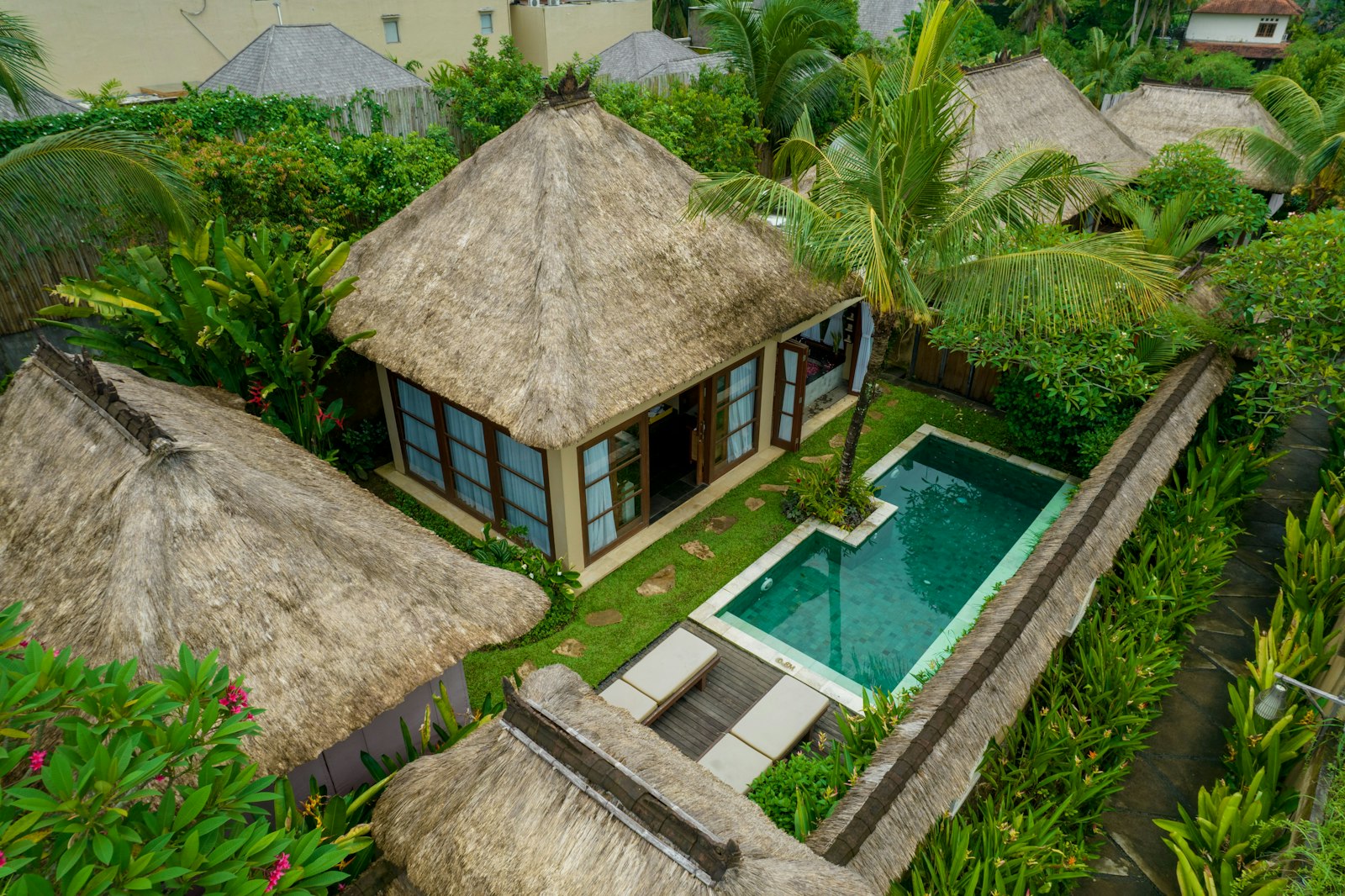
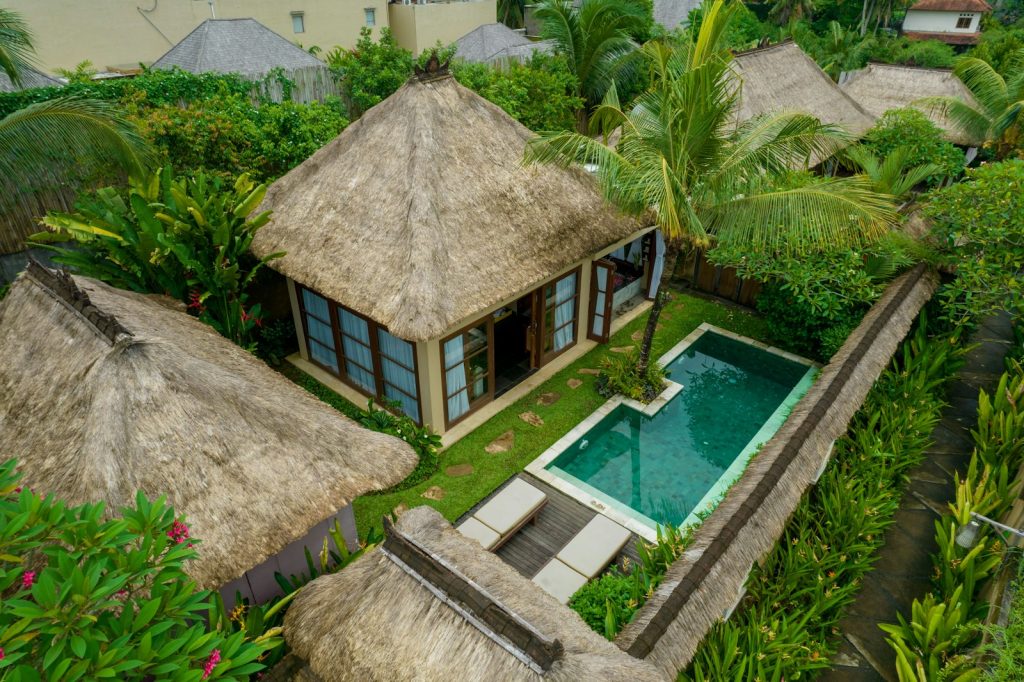
Design palettes tend to be natural: thatched Sumbanese-style roofs, exposed timber, stone, and earth tones. Expect hand‑woven Sumba ikat textiles, not polished marble and chrome. Air-conditioning is common in bedrooms at the luxury tier, but not always in open‑plan living spaces.
What you should not expect
Even at the most high-end stays, Sumba is not yet set up for:
- Big-city dining variety: most kitchens are strong on Indonesian and Western comfort food, with limited international breadth compared with Bali or Jakarta.
- High-end shopping districts: there are weavers’ cooperatives and village markets, not luxury retail.
- Nightlife: evenings are quiet—dinners, bar terraces, stargazing.
You are trading variety and urban gloss for quiet, space, and a more elemental sense of place.
Eco-luxury, not excess
An eco luxury resort in Sumba generally means:
- Low‑rise buildings, largely natural materials, local craftsmanship.
- Water and energy conservation; some level of solar or backup power.
- Structured engagement with community: employment, school support, weaving groups, or health initiatives.
You should still expect:
- Proper mattresses and high‑quality linens.
- En‑suite bathrooms with hot showers; in upper categories, outdoor showers or soaking tubs.
- Working air‑conditioning in bedrooms.
- Real attention to food quality and dietary constraints—with advance notice.
If your mental picture of “luxury” is a highly urban, chandelier-and-butler environment, Sumba will read as beautifully comfortable, but softer and more grounded.
The map: where the best places to stay in Sumba luxury actually are
Most higher-end stays in Sumba cluster along the southwest and west coasts, with a thinner spread of options in the eastern half of the island. Distances are real; travel is slower than on Java or Bali.
Below is a simplified orientation—these are regions and characteristics, not an exhaustive list of properties.
Southwest coast: Sumba’s primary luxury cluster
The southwest coastline is the island’s flagship luxury region. This is where you find:
- Nihi Sumba (often referred to simply as “Nihi”): widely reported around the world as one of Indonesia’s premier remote resorts, perched above a long, wild beach and a famed surf break.
- A small number of low‑density villas and estates in surrounding coastal districts—privately owned or managed by boutique operators.
Why this area draws most of the conversation:
- Access: typically via Tambolaka Airport (TMC) in West Sumba, then an overland transfer, usually 1.5–2.5 hours depending on the exact location and road conditions.
- Coastline: long beaches, powerful surf, dramatic headlands.
- Microclimate: the region is in the island’s western half, which is generally wetter and greener than the east, especially in and just after the wet season (roughly November–March). The dry season tends to run May–September, but patterns can vary year to year.
For many travelers seeking luxury resorts in Sumba, southwest Sumba becomes the anchor, and the rest of the island becomes day-trip or multi-night exploration from there.
West Sumba beyond the southwest cluster
Moving north and northwest from the flagship coastal axis, you find:
- Hill‑and‑valley landscapes: rice paddies, rivers, and more traditional villages.
- Fewer beachfront properties, more ridge‑top or river‑adjacent stays at the boutique‑eco level.
- Access again centered around Tambolaka Airport.
These lodgings are typically smaller, with simpler infrastructure and a more intimate feel—fewer amenities than Nihi‑level, but often very well‑positioned for village visits and inland treks.
East Sumba and Waingapu area
East Sumba is markedly different:
- Landscape: drier, more open savanna and rolling hills, especially away from river systems.
- Climate: the eastern half tends to be drier overall than the west, with the savanna look especially pronounced in the late dry season.
- Access: via Umbu Mehang Kunda Airport (WGP) near Waingapu, with shorter transfers to the nearest coastal or hilltop accommodations.
The luxury and eco-luxury inventory here is thinner than in the southwest. You will find:
- Small, design‑conscious guesthouses and villas around Waingapu and out along the coast.
- Properties that appeal to travelers interested in the island’s savanna, lake and hill landscapes, and weaving traditions, rather than pure resort downtime.
As of our latest research (last verified June 2026), you will not find a large, fully integrated resort in East Sumba on the scale of Nihi. What you will find are places that prioritize authenticity, simple comfort, and access to landscapes that feel subtly different from the island’s west.
Distances, airports and transfers
All island travel is constrained by two airports and road geometry:
- Tambolaka Airport (TMC)
- Serves the west and southwest. Domestic flights typically connect via Bali (DPS) or Kupang (KOE). Overland transfers to southwest coastal resorts usually 1.5–2.5 hours.
- Umbu Mehang Kunda / Waingapu Airport (WGP)
- Serves the east. Domestic flights connect via Bali, Kupang or sometimes other regional hubs. Transfers to nearby coastal or savanna accommodations often 30–90 minutes.
- Cross-island drives
- Travel between the far west and far east can take 5–7 hours by car, depending on route and stop‑points. Road quality is mixed; scenery is often rewarding, but this is not a fast commute.
We plan stays with these distances in mind. Trying to “do the whole island” in three nights from a single base is usually a recipe for more time in cars than in nature.
Resort vs villa vs private estate
Because the field of high‑end stays is small, the more precise question is not “What are all the luxury resorts?” but “Which format best fits how you travel: resort, villa, or private estate?”
Full‑service resort stays
In Sumba, the most internationally known example of a luxury resort is Nihi Sumba, on the southwest coast.
Without repeating what our dedicated piece covers in detail (read our full Nihi Sumba guide), it is fair to say that Nihi is:
- The island’s largest and most complete integrated luxury resort, with villas, activities, dining, spa and equestrian offerings on or near a single coastal estate.
- Strong on service depth, experience design, and flexibility for couples, families and small groups.
This kind of full‑service environment suits travelers who:
- Want activity choice (surfing, riding, village visits, wellness, perhaps spearfishing or freediving with specialist partners) curated day by day.
- Prefer not to assemble their own network of drivers, guides and boats.
- Place a high value on polished, but informal, hospitality.
Price points reflect that. Publicly reported rates for Nihi, depending on season and villa type, sit at the very top of the Sumba market and in line with leading remote resorts across Indonesia (last verified June 2026). Exact figures move with currency and shoulder vs peak periods; think many hundreds to several thousand US dollars per villa per night including varying degrees of meals and experiences.
If you are planning a honeymoon or milestone trip, start with our resort-level analysis, then compare against villa and estate formats below and our dedicated guides to a Sumba honeymoon and different villa categories.
Standalone luxury villas
Beyond Nihi’s own villas, Sumba has a small but growing set of standalone luxury villas, particularly along pockets of the southwest and western coasts and in hilltop positions.
These tend to offer:
- 2–5 bedrooms; occasionally larger.
- Private pools or plunge pools in the upper tier—cross‑referenced with our Sumba private pool villa curation.
- Staff on site or on call: at minimum daily housekeeping; better properties add a cook and villa manager.
- Meals either cooked in‑house based on market shopping, or taken at a nearby resort/restaurant where possible.
They generally do not offer:
- A full activities desk under one roof—drivers and guides are arranged per outing.
- Multiple restaurants, kids’ clubs, or spa pavilions in the way a full resort does.
This format suits:
- Families or groups of friends valuing privacy and flexible rhythm.
- Travelers who prefer to pay for guiding and activities à la carte.
Pricing here spans a broad band—from mid‑hundreds to low thousands of US dollars per villa per night (last verified June 2026), depending on location, bedroom count, and level of service. Some are beachfront; others trade water proximity for dramatic hill views. For beachfront specifics, we maintain a separate view of beachfront villas in Sumba.
Private estates and buy‑outs
At the very top end are private estates and small compounds that can be reserved on an exclusive basis. These might be:
- A cluster of villas and suites around a shared pool and living pavilion.
- A large house with several satellite bungalows.
- A boutique eco‑property willing to sell out all rooms to a single group.
Key characteristics:
- Capacity: often 8–20 guests comfortably.
- Use case: extended families, retreats, friends’ gatherings, occasionally small celebrations.
- Staffing: private chef or kitchen team, housekeeping, on‑site estate manager, and dedicated vehicles.
We treat these on a case‑by‑case basis because availability and configuration shift more than with fixed resorts. If you are contemplating bringing a group, it is almost always worth an early exploratory conversation; we can then align you with either a villa cluster, a private estate, or a resort buy‑out depending on dates and budget. Our dedicated private estate section outlines the types of compounds that exist on the island today.
What to expect on service, power and connectivity
Sumba rewards realistic expectations. Even the best places to stay Sumba luxury will feel different from a deeply urban five‑star.
Service culture: warm, evolving, occasionally improvised
The upsides:
- Genuine warmth: Sumbanese hosts are typically open, gentle, and proud of their island.
- High staff‑to‑guest ratios at the top tier: this allows for flexible days and personalized attention.
- Increasing exposure to international standards: particularly at Nihi and at properties managed or advised by experienced teams.
The constraints:
- English levels vary: in high-end resorts, key staff are comfortable; in smaller eco properties, you may encounter more limited English, especially at night or off‑hours.
- Training depth: fine‑dining choreography, wine knowledge, and spa protocol are improving but are still catching up to Bali or Jakarta.
- Pace: service is attentive but rarely hurried—meal times and transfers work more smoothly with clear communication of your preferences.
We encourage guests to see this as part of the charm rather than a flaw: you are not in a mass‑tourism destination.
Power reliability and water
Electricity across Sumba is improving but not flawless.
At the luxury and eco‑luxury levels, you can generally expect:
- Air‑conditioning in bedrooms.
- Hot water from either solar or conventional heating systems.
- Backup generators or contingency plans for planned outages.
However:
- Brief power cuts do occur; resorts and villas usually switch to generators, sometimes with a brief gap.
- Very remote villas may ask you to be mindful of power use, particularly air‑conditioning and pool pumps.
Water:
- Tap water is not for drinking; all decent properties provide filtered or bottled water.
- In the driest months and driest regions, some properties will operate with greater water consciousness; shorter showers and thoughtful towel reuse help the system overall.
Connectivity: 4G, Wi‑Fi and offline hours
Mobile data:
- Coverage around the airports and main towns (Tambolaka, Waingapu) is fairly consistent for major Indonesian carriers.
- Along some remote coasts and inland valleys, signal can drop or degrade.
Wi‑Fi:
- Full-service luxury resorts will provide Wi‑Fi across common areas and rooms, adequate for email, messaging and standard browsing.
- Video calls are usually possible but may not be perfectly stable at all hours.
- Smaller villas and eco‑lodges sometimes offer Wi‑Fi limited to a central area or router; performance can vary widely.
If your work or family obligations require reliable, high‑bandwidth connection, tell us upfront. We can then steer you towards the properties with the most robust connectivity and suggest backup strategies.
Matching region and stay type to the traveler
There is no single “best” place to stay in Sumba. There are better or worse fits for specific travelers, timings and budgets.
Here is a simplified comparison to help frame options:
| Format / Region | Best for | Trade-offs |
|---|---|---|
| Southwest coast full‑service resort (e.g. Nihi Sumba) | Honeymoons, milestone trips, families wanting structured activities and strong service. | Highest price band; longer transfers; less sense of “being alone” than in a private villa. |
| Southwest / West standalone villa | Families/friends who value privacy, a private pool, and flexible days near the surf/coast. | Activities and guiding must be planned individually; service typically less layered than a large resort. |
| Private estate or buy‑out compound | Extended families, retreats, small groups wanting exclusivity and staff dedicated solely to them. | Requires more lead time; per‑night cost significant, though often efficient on a per‑person basis. |
| East Sumba eco-luxury lodge / villa | Travelers drawn to savanna, weaving villages, and quieter, less built‑up coastlines. | Fewer amenities; thinner restaurant scene; simpler spa and activity infrastructure. |
Once we understand your non‑negotiables—bedroom count, pool expectations, exact dates, budget band, tolerance for road time—we usually narrow choices quickly.
If you would like a private, no‑obligation recommendation based on your dates and preferences, you can plan your trip with us; we also coordinate discreetly via WhatsApp once we understand your brief.
How we vet and match Sumba luxury stays
Our role is to be useful long before any booking occurs. That means being precise, conservative and transparent about quality.
Our criteria
We look at each property across five dimensions:
-
Location and land
– Beach quality and ocean conditions (including currents and seasonal surf character).
– Siting relative to traditional villages and cultural sites.
– Exposure to sunrise or sunset; wind conditions through the year. -
Build and design
– Structural quality: roofs, drainage, flood and wind awareness.
– Thermal comfort: airflow, orientation, and the presence and reliability of AC where it matters.
– Authenticity: use of Sumbanese architectural cues and materials without pastiche. -
Operations and staffing
– Ownership/management track record in Sumba or similar remote contexts.
– Staff welfare and training.
– Safety protocols: vehicles, water activities, medical contingencies. -
Community and environmental footprint
– Local hiring and skills development.
– Engagement with weaving groups, schools or health initiatives.
– Waste management and water/energy practices appropriate to a dry island. -
Guest experience architecture
– Clarity of what the property is and is not—we are wary of any place trying to be everything.
– Breadth and depth of activities once you are there.
– How well they handle the “invisible” details: laundry, special diets, children’s needs, early/late check‑ins.
We regularly visit, re‑visit and cross‑check feedback from a narrow but demanding clientele. We would rather under‑promise and have you pleasantly surprised than the reverse.
How we work with travelers
Our process is intentionally low‑friction:
-
Listen first
You share your dates, who is traveling, rough budget range, and what you care about most—privacy, surf, riding, cultural immersion, spa, child‑friendliness, or simply doing as little as possible. -
Reality check
We talk through what is and isn’t realistic in Sumba given your timeframe and flexibility. For example:
– With 3–4 nights, we often recommend choosing one region as a base.
– With 7+ nights, a west‑plus‑east split can make sense, timing the cross‑island drive as part of the experience. -
Shortlist and shape
We then suggest a small number of options, typically across formats (resort vs villa vs estate) and regions (west vs east), with straightforward pros and cons. -
Warm introductions
If you decide to move forward, we introduce you directly to the relevant resort, villa owner/manager, or specialist planner with on‑the‑ground capability. No one can pay to change what we publish; if you proceed with our partner they may pay us a referral fee at no extra cost to you. -
Quiet support
For travelers who value a discreet sounding board even after a property is chosen, we remain available on WhatsApp for sense‑checks—route tweaks, activity ideas, and how to handle cultural encounters respectfully.
You remain fully in control of what you book and with whom. Our role is to radically shorten your research time and reduce the chance of mismatch.
Planning your stay: budgets, timing and combinations
Because rates move with demand, currency and seasonality, it is unhelpful to fixate on any single number. Instead, we think in ranges and patterns.
Budget bands (last verified June 2026)
Indicative per‑night spend (accommodation only, before flights and major activities):
- Upper‑luxury resort band
- Typically many hundreds to several thousand US dollars per villa/suite per night, depending on category and inclusions.
-
Often includes some meals and selected experiences; details vary by property and season.
-
Luxury villa / eco-luxury lodge band
- Roughly mid‑hundreds to low thousands of US dollars per villa/compound per night.
-
Staffing, breakfast and sometimes one additional meal commonly included; full board and activities extra.
-
Private estate buy‑outs
- Varies significantly with scale; often comparable on a per‑person basis to upper‑tier resorts once you fill the estate, but with higher absolute nightly totals.
These bands are broad by design. Once we know your actual dates, group size and format preference, we can usually narrow the field to a few viable options.
How long to stay
For travelers considering Sumba as part of a wider Indonesian itinerary:
- 3–4 nights
- Works for: a focused stay at one luxury resort or villa, using it as a restful bookend to Bali or Komodo.
-
Expect: one or two major exploratory days and one or two slower days.
-
5–7 nights
- Works for: deeper immersion in one region, or a west–east split with a single cross‑island transfer.
-
Expect: time for both coastal and inland exploration, plus meaningful downtime.
-
8+ nights
- Works for: serious riders or surfers, families wanting to “live” somewhere for a while, or travelers who enjoy very low‑density, slow travel.
- Expect: potential to combine a flagship resort stay with a simpler but well-sited villa or eco‑lodge.
If you are planning a honeymoon, we typically recommend at least 5 nights on Sumba to justify the logistics; our Sumba honeymoon guide sets out a few tested patterns.
Combining Sumba with other destinations
Most guests combine Sumba with:
- Bali: for dining, shopping and spa breadth; easy domestic connections to Tambolaka or Waingapu.
- Komodo / Flores: for diving and liveaboards; routing usually via Bali or Kupang.
- Java: for Borobudur and cultural travel; connections via major hubs.
In designing multi‑stop itineraries, Sumba tends to sit either at the beginning (as a decompressing first stop) or the end (as a deep unwind before flying home). We can help you think through sequencing even if you plan to book flights yourself.
Next step: a quiet conversation
Sumba is not a destination where you scroll through dozens of luxury resorts and simply pick by star‑rating. The inventory is limited, the trade‑offs are real, and the rewards for getting it right are considerable.
If you would like impartial guidance on where to stay in Sumba—resort vs villa vs private estate, southwest vs east, eco-luxury vs full‑service—share a little about your plans and we will respond with a clear, context‑rich view. You can plan your trip through our short form, and, if helpful, we will continue the conversation via WhatsApp for efficient, time‑zone‑friendly planning.
Is Nihi Sumba the only true luxury resort in Sumba?
Nihi Sumba is by far the most internationally recognized full‑service luxury resort on the island and sits at the top of the market in price and amenity depth. There are, however, smaller luxury and eco-luxury villas, lodges and private estates elsewhere on Sumba that deliver high comfort and strong experiences in different formats, even if they are not resorts in the classic sense.
Can I find ultra-modern, city-style five-star hotels in Sumba?
No. Sumba’s high-end accommodation is deliberately low-rise and grounded in local materials. You will not find glass-tower hotels or large urban five-star brands here. Luxury is expressed through land, privacy, craft and service rather than urban spectacle.
Is Sumba suitable for a honeymoon at the luxury level?
Yes, particularly if you appreciate remote, nature-forward destinations. A combination of a southwest coast luxury resort or villa with carefully chosen activities—riding, coastal walks, village visits and spa—works very well. We outline specific honeymoon patterns and trade-offs in our dedicated Sumba honeymoon guide.
How far in advance should I book a luxury stay in Sumba?
For peak periods (broadly June–September and late December–early January), 9–12 months ahead is prudent for top-tier resorts and the best villas. Shoulder and off-peak seasons can be more forgiving, but for larger groups seeking private estates or multi-bedroom villas, earlier is always better to secure the right fit.
Can Sumba handle special diets and accessibility needs at luxury properties?
Most luxury resorts and better villas can accommodate common dietary needs (vegetarian, vegan, gluten-free, allergies) with advance notice; the more specific the requirement, the earlier we should brief the property. Physical accessibility is more constrained: many properties involve stairs, uneven paths and off-road access. If mobility is a concern, contact us early so we can identify the most practical options and confirm details directly with on-site teams.