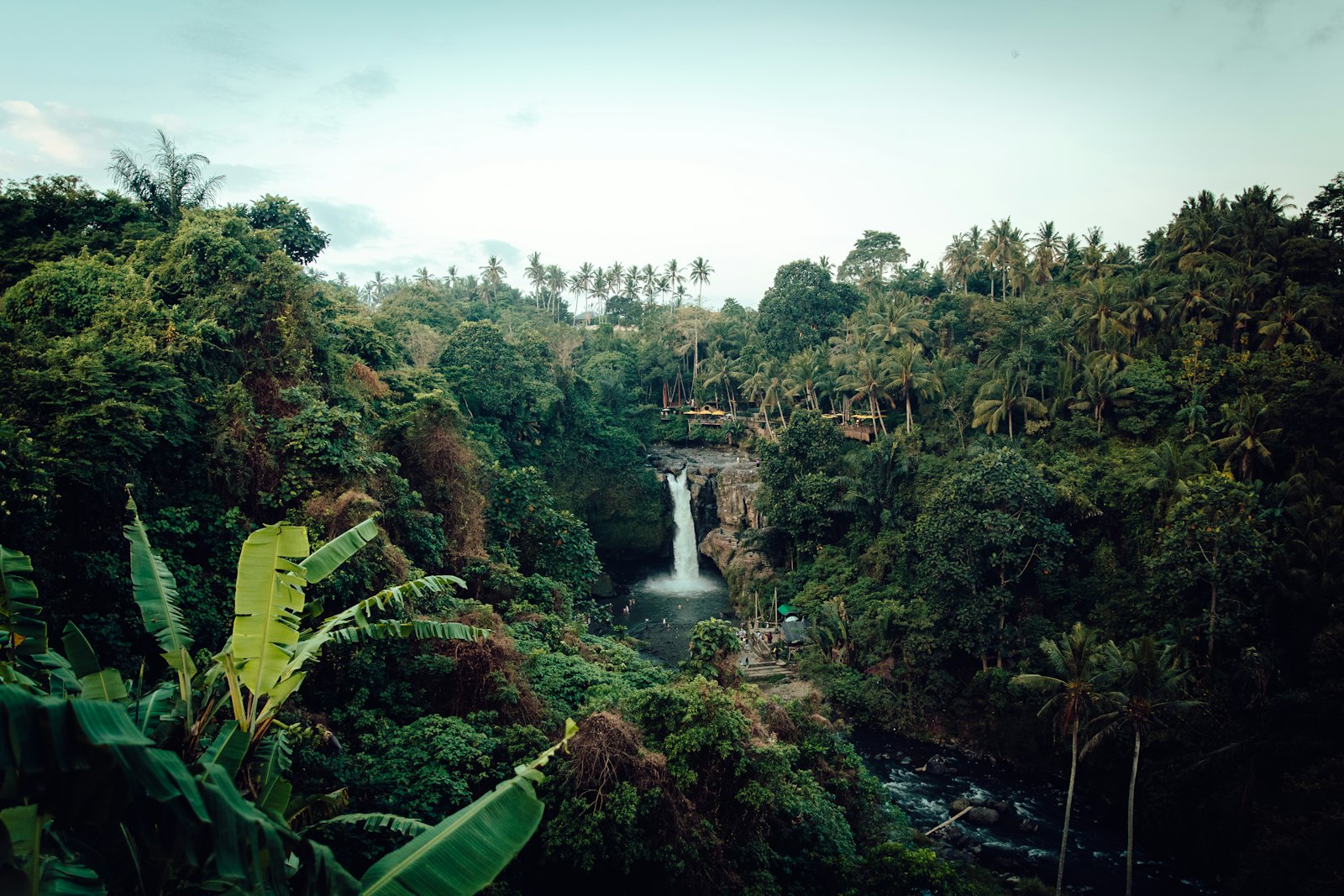
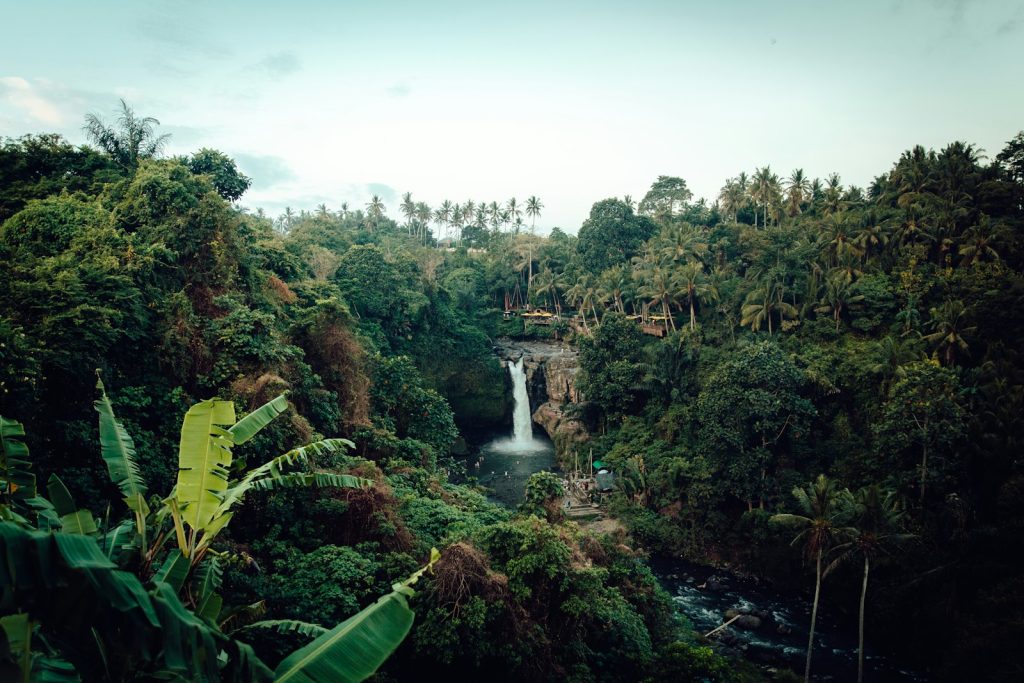
Lapopu Waterfall Sumba is the island’s archetypal cascade: tiered limestone ledges spilling into a forested river valley in West Sumba, reachable as a half‑day or full‑day outing. Around it, a small circuit of other Sumba waterfalls – including Weekacura’s natural limestone pools and the canyon pools of Waimarang – can be threaded into a private waterfall day trip Sumba that is memorable, photogenic, and realistic about road time and hiking.
This page is our practical Sumba waterfalls guide: what Lapopu and Weekacura are actually like, how they differ, how conditions change month‑by‑month, and how we fold them into private itineraries that respect Sumbanese custom and your energy levels.
Lapopu Waterfall
Lapopu is the most referenced waterfall on Sumba and, for most travellers, the easiest to incorporate into a broader West Sumba circuit.
Where Lapopu sits and why it matters
- Region: West Sumba (Sumba Barat)
- Landscape context: Part of the greener, wetter western half of the island, within the broader Manupeu Tanah Daru / Laiwangi Wanggameti forested area
- Travel pairing: Commonly combined with rice terrace overlooks, traditional villages, or West Sumba beaches on a long day trip
The setting is classic West Sumba: steep green hills, a river valley, and pockets of semi‑evergreen forest. It feels more like a rural river gorge than a manicured attraction, which is precisely the appeal for most of our guests.
What “tiered” actually means here
Lapopu is described almost everywhere as a “tiered” waterfall. In practice:
- The river spills over broad limestone ledges rather than dropping in a single vertical chute.
- In higher flow months, those ledges form curving curtains of water that step down the rock face.
- In lower flow months, you see multiple discrete channels and small cascades, with more rock exposed.
You do not get the sheer height of, say, a volcanic waterfall in Java, but you do get a layered, almost terraced effect that lends itself well to photographs and calmer pools near the base.
Access route and walking time
From the main West Sumba road network, a spur road takes you closer into the valley, then you continue on foot. Expect the following:
- Drive time from Waikabubak: Roughly 1.5–2.5 hours one way, depending on road works and seasonal conditions (dry vs post‑rain).
- Track condition: Mix of sealed road and patchy local road. After heavy rains, potholes and mud can slow progress.
- Walk in: Typically 10–25 minutes each way from the parking area to a primary viewing/relaxing area near the falls.
- Walking profile: Short but can involve:
- Uneven dirt or rock steps
- Slippery sections, especially after rain
- Simple bamboo or wooden bridges in some seasons
For most reasonably fit travellers, the walk is moderate. If you have knee issues, balance concerns, or are travelling with very young children, plan to move slowly, with hands free and appropriate footwear (more on safety below).
Swimming, photography, and how long to stay
You can usually find places to sit on rocks near the river, wade, or bathe in calmer pools downstream of the main drop. However:
- After heavy rain, currents can be stronger and less predictable.
- Rock surfaces range from smooth and algae‑slick to relatively grippy; your footwear matters.
- Water clarity in the wettest months shifts toward brownish‑green; in drier months it trends clearer, though never pool‑blue.
Most private guests we place here spend 60–90 minutes at Lapopu itself: enough time to walk in, cool off, photograph, and sit quietly without rushing.
Weekacura & Waimarang: Swimming Pools vs Canyon Walls
Within the universe of Sumba waterfalls, Weekacura and Waimarang are often mentioned in the same breath but offer very different experiences. Both can work as a second stop on a waterfall day trip Sumba; which you choose depends on how you feel about hiking, swimming, and drive time.
Weekacura Waterfall: limestone pools for easy swimming
Weekacura Waterfall is known less for a vertical drop and more for its series of shallow, turquoise‑tinted limestone pools.
- Look and feel:
- A low cascade feeding into natural steps of water
- Human‑modified edges in places, but still ringed by rural greenery
-
Children from nearby communities often playing in the shallower sections
-
Swimming profile:
- Gentle, comfortable for casual bathing and float time
- Depths vary; many sections are waist‑deep or shallower
-
Water colour shifts with seasons but tends more toward the blue‑green spectrum than river‑brown
-
Effort level:
- Short approach walks from where vehicles park
- Less of a “hike” and more of a stroll, though surfaces can still be slippery
We often suggest Weekacura for families, multi‑generational groups, or anyone who wants a long, relaxed soak without a long descent or ascent.
Waimarang: canyon pools with a bit more adventure
Waimarang (often spelled Waimarang Waterfall) offers a more dramatic canyon‑like environment:
- Topography:
- A narrow gorge with high rock walls
- A blue‑green plunge pool at the base of a smaller vertical fall
-
Access paths that can involve steps and steeper sections
-
Swimming and access:
- Stronger swimmers tend to enjoy Waimarang’s deeper pools
- Some sections require more care in footing, and the descent/ascent can be more demanding than Weekacura
- After rain, rock surfaces can be very slick; this is a location where guide support is especially useful
Waimarang is not extreme trekking, but for guests who prefer short, easy walks only, we are more likely to recommend Lapopu plus Weekacura instead.
Best Season: Flow vs Water Clarity
The west side of Sumba, where most accessible waterfalls sit, is wetter and greener than the drier east. Even so, the island as a whole follows a marked pattern:
- Dry season: Roughly April–October
- Rainier months: Typically November–March, with peaks that can vary by year
Within that, two different preferences emerge: those who want powerful flow and lush hillsides, and those who prioritise clearer, calmer water for swimming.
For maximum waterfall flow and green hills
If your priority is volume and greenery:
- Best window: Late wet into very early dry – around March–April.
- What to expect:
- Hills and valleys are at their greenest after the heavier rains.
- Lapopu’s tiers are more fully covered with water; smaller side‑falls may appear.
- Access tracks can be muddier; some minor water crossings may be slightly higher.
For photography focused on water movement and “full” cascades, this shoulder period is attractive, understanding that skies can be more changeable and humidity higher.
For clearer, calmer swimming conditions
For those who would rather have more predictable sun, firmer tracks, and calmer pools:
- Best window: The heart of the dry season – roughly June–September.
- What changes:
- River levels drop, sometimes exposing more rock at Lapopu and reducing the drama of the flow.
- Pools at places like Weekacura and Waimarang often read clearer and more turquoise, especially in extended dry stretches.
- Trails typically dry out, making footing less muddy but still potentially dusty and loose.
You trade a degree of waterfall power for easier handling and more inviting swimming water.
Months to be cautious about
There is no absolute “off‑limits” month, but you should be aware:
- Peak rains (often January–February):
- Localised heavy rain can make some rural roads rutted or temporarily difficult.
- Water in rivers and pools is more likely to be turbid and fast‑moving.
- Hikes become more strenuous in humid conditions.
If this is the only time you can travel, we simply build more flexibility into waterfall days and favour the most robust access options.
Access Realities: Drives, Hikes, and the Value of a Guide
Even for high‑end travellers accustomed to remote logistics, Sumba’s waterfall access can surprise. Distances on the map are short; time is what stretches, largely because of road conditions and conservative driving.
Typical drive times
In broad strokes, using Waikabubak (West Sumba’s main town) as a conceptual hub:
- Waikabubak → Lapopu: 1.5–2.5 hours each way
- Waikabubak → Weekacura: commonly 1–2 hours each way
- Waikabubak → Waimarang: can be significantly longer, especially if you are based further north or west; we often combine it with other East‑leaning stops to justify the time
If you are staying at a private villa or resort outside of town, add extra drive time accordingly. The west is compact but not fast.
Road and trail conditions
- Roads:
- Main arteries are sealed but can have potholes or sections under repair.
- Smaller approach roads are often narrow, partially paved or unpaved, and affected by rain.
-
Speeds are conservative for safety; a 60 km stretch rarely feels like “one hour on a highway”.
-
Trails:
- Typically unrailed dirt and rock paths, sometimes with improvised steps.
- Riverbank routes can flood or shift slightly year to year.
- Expect to occasionally use your hands for balance on short sections.
This is not technical hiking, but it is field walking in a rural Indonesian context, not a polished national park boardwalk.
Why we still recommend local guides and private drivers
You can, in principle, rent a car and drive to some waterfall trailheads yourself. In practice, for private and high‑net‑worth guests, we rarely advise it. A vetted, Sumba‑savvy driver–guide adds:
- Navigation certainty: Many turn‑offs are unsigned; local knowledge saves backtracking.
- Real‑time judgment: Road or river conditions can change after rain. A driver who knows how yesterday’s storm affected today’s route is valuable.
- Cultural interface: Waterfall valleys may intersect with local land use, grazing, or ceremonial sites. A guide smooths introductions and interactions.
- Safety on trail: Having an extra pair of hands at slippery spots or water crossings reduces stress, especially for families or older travellers.
We curate and regularly re‑verify guides and drivers who understand the expectations of private clients. No one can pay to change what we publish; if you proceed with our partner they may pay us a referral fee at no extra cost to you.
If you would like us to match you with a driver–guide who fits your style and language preferences, you can plan your trip with us – including WhatsApp‑based planning if you prefer concise coordination from your phone.
Building a Waterfall Day Trip into a Wider Itinerary
Sumba waterfalls are best treated as one element in a day that also honours Sumbanese culture, coastal landscapes, or rice‑farming life. Pure “waterfall marathons” rarely feel as rewarding as they sound on paper.
Choosing your base: West vs East
Most accessible waterfalls we describe here are west‑leaning. That dovetails with a broader West vs East decision:
- The west is greener and closer to many of the traditional villages and rice terraces.
- The east is drier, with more savanna and some of the island’s most discussed beaches.
For a more detailed breakdown of these differences – including how they affect drive times and day‑trip logic – see our dedicated guide to West vs East Sumba.
As a rule, guests focused on Lapopu and Weekacura will spend at least one or two overnights based in the west, then extend to eastern beaches later, or vice versa.
Sample private day trip structures
Below are conceptual outlines; our actual itineraries are adjusted based on where you are staying, season, and energy levels.
Example: Lapopu + village + rice terraces (West Sumba focus)
- Morning:
- Depart after an early breakfast from your villa or resort in West Sumba.
- Drive toward Lapopu with one viewpoint stop over rice terraces.
-
Walk in to Lapopu, swim or wade, photograph, and sit quietly.
-
Midday:
- Simple lunch – depending on your style, either a pre‑prepared picnic from your accommodation or a stop at a vetted local warung for something straightforward.
- Afternoon:
- Visit a nearby traditional Sumbanese village to understand marapu spirituality, megalithic tombs, and local weaving.
- Return via a second scenic viewpoint or light walk, timed to avoid driving long rural stretches after dark.
This structure suits guests who value cultural depth alongside nature.
Example: Weekacura + beach time (for swimmers and loungers)
- Morning:
- Depart west‑coast base mid‑morning.
-
Swim and relax at Weekacura’s pools; children and adults can both engage at their own pace.
-
Afternoon:
- Drive toward one of West Sumba’s more accessible beaches (for an overview of high‑end‑friendly coastline, see our Sumba beaches guide).
- Late lunch or early dinner by the coast, with sunset as a natural endpoint.
This is ideal if you want water day energy without a more demanding hike.
Integrating waterfalls into a luxury Sumba itinerary
For most private travellers, waterfalls are one thread in a 5–10 day itinerary that might include:
- Time in both West and East Sumba for contrast
- Overnight at a high‑end coastal property, then a move inland or vice versa
- Dedicated days for traditional villages and markets
- Boat or beach days, depending on season and swell
We maintain a living set of recommended flows and stay lengths in our luxury Sumba itinerary guide, which we then adapt for each household.
For a tailored route that folds Lapopu, Weekacura, or Waimarang into your broader stay, you can always plan your trip with our team – WhatsApp contact is welcome if that is your preferred channel.
Safety, Footwear, and What to Pack
Waterfalls look serene in photography. In real life, they are moving water over rock – which carries predictable risks. With modest preparation, most issues can be avoided.
Footwear: the single most impactful choice
We recommend:
- Closed‑toe hiking sandals or shoes with good tread for the walk in and out.
- Optional water shoes if you are sensitive to rocky riverbeds or want more grip when wading.
Avoid:
- Smooth‑soled fashion trainers
- Loose flip‑flops or slides on steep or muddy sections
For many guests, a single pair of hybrid sandals that can get wet and still offer tread is ideal.
Walking support and basic kit
Beyond footwear:
- Light trekking pole or a simple walking stick (often easily found at the trailhead) can increase stability.
- Dry bag or waterproof pouch for phone, small camera, and essentials.
- Quick‑dry towel and a change of clothes left in the vehicle, in case you decide to wade or swim more than planned.
- Sun protection: hat, high‑SPF sunscreen (even under partial canopy, UV is not trivial).
- Insect repellent: useful particularly in shaded or standing‑water areas.
Your driver–guide can usually carry a modest first‑aid kit; if you have specific medications or sensitivities, bring your own supplies.
Water behaviour and physical limits
A few simple principles:
- Do not jump from rocks into unknown pools; depths and submerged obstacles are not formally surveyed.
- After rain, treat all moving water with additional caution; what was a gentle crossing one week can be challenging the next.
- If you are not a confident swimmer, treat any water above waist‑depth as “for wading with support only”.
- Hydrate regularly. Humidity plus gentle exertion can still deplete you faster than expected.
Children and older travellers can absolutely enjoy these environments, but they do best with hand‑holding, unhurried pacing, and a conservative approach to which sections they enter.
Quick Comparison: Lapopu vs Weekacura vs Waimarang
To help frame choices, here is a simplified comparison of the three most common waterfall targets for private travellers.
| Waterfall | Main appeal | Effort level (walk) | Swimming comfort | Best paired with |
|---|---|---|---|---|
| Lapopu | Tiered limestone cascades in a green valley | Moderate: short but can be steep/slippery | Good for wading and some swimming in calmer sections | Traditional villages, rice terraces, West Sumba viewpoints |
| Weekacura | Shallow turquoise pools, easy bathing | Relatively easy: short access, uneven but less steep | Very comfortable for casual bathers and families | Beach time, relaxed “water day” itineraries |
| Waimarang | Canyon pool with vertical fall | Moderate–higher: steeper sections, more steps | Best for confident swimmers; deeper central pool | Broader East‑leaning or cross‑island days |
Costs and How We Work with Partners
Waterfall access in Sumba involves a mix of informal local fees, guide arrangements, and transport costs. These are not fixed government tariffs and can vary by season and local community decisions.
Typical cost elements
- Local access or contribution fees: Usually modest cash amounts paid at simple entry points or to community representatives.
- Private driver–guide for the day: Priced as a day rate, typically as part of a broader transport package for your stay.
- Snacks, water, and meals: Either provided by your accommodation as a packed service or paid directly en route.
Because pricing fluctuates, we describe ranges (last verified June 2026) rather than claimed “standard prices”, and we brief you on expected cash needs before your day trip.
Our curation stance
We are not a tour operator or agency. Our role is to:
- Help you define what you actually want from waterfalls in the context of your overall Sumba trip.
- Introduce you to vetted partners – drivers, guides, and accommodations – who we believe align with that brief.
- Keep our editorial line independent: no one can pay to change what we publish; if you proceed with our partner they may pay us a referral fee at no extra cost to you.
For a more transport‑focused discussion of private drivers, vehicles, and cross‑island transfers, see our guide to getting to Sumba and around the island. For curated on‑the‑ground experiences beyond waterfalls, our private tours and experiences overview sets out the spectrum of possibilities.
If you prefer a single conversation that covers waterfalls, beaches, and culture days in one arc, you can plan your trip in one step – including fast WhatsApp back‑and‑forth for refinements.
FAQs: Sumba Waterfalls and Day Trips
Can I visit Lapopu Waterfall and Weekacura on the same day?
Yes, pairing Lapopu Waterfall Sumba with Weekacura in a single private day is feasible if you start early and accept a full day on the road with a moderate walk at each stop. We usually structure this from a West Sumba base, with simple meals built in and sunset planned closer to your accommodation to avoid long after‑dark drives on rural roads.
Is swimming allowed at Lapopu, Weekacura, and Waimarang?
Swimming and wading are commonly practised at all three, but there is no lifeguard infrastructure or formal supervision. Conditions change with rainfall and season, and local guidance on the day matters. We position a driver–guide who knows the current state of each pool and can indicate which sections are safer for bathing based on your swimming ability.
Which Sumba waterfall is best for families with young children?
For most families, Weekacura Waterfall is the most relaxed option thanks to its shallow pools and easier walk. Lapopu can also work if children are comfortable with a slightly more involved path in and out and parents are ready to assist on slippery sections. Waimarang tends to suit older children and teens who are stronger swimmers and can manage steeper stairs.
Do I need special permits to visit these waterfalls?
You do not need complex formal permits, but you should expect to pay small, locally managed access or contribution fees at many waterfall entries, which support community management and maintenance. These are usually handled in cash on arrival. Your driver–guide will help interface with local representatives and ensure contributions are made respectfully.
How many waterfall days should I include in a one‑week Sumba trip?
For a seven‑day private itinerary, one dedicated waterfall day is usually enough, occasionally two if you are particularly drawn to river landscapes and swimming. Our typical structure is one day for Lapopu plus culture, another for beaches, and then additional days for cross‑island travel and slower time at your primary property. We can adjust this up or down depending on your preference for hiking versus coastal or cultural time.