How to read this: Sumba Private is an independent editorial guide — we research and compare, then connect travellers to vetted local partners. Our help is free; a partner may pay us a referral fee at no extra cost to you, and this never changes what we publish. Prices, schedules, festival dates (including Pasola) and health guidance change — treat figures as indicative and confirm current details before you travel. This is general information, not professional travel, medical or legal advice.
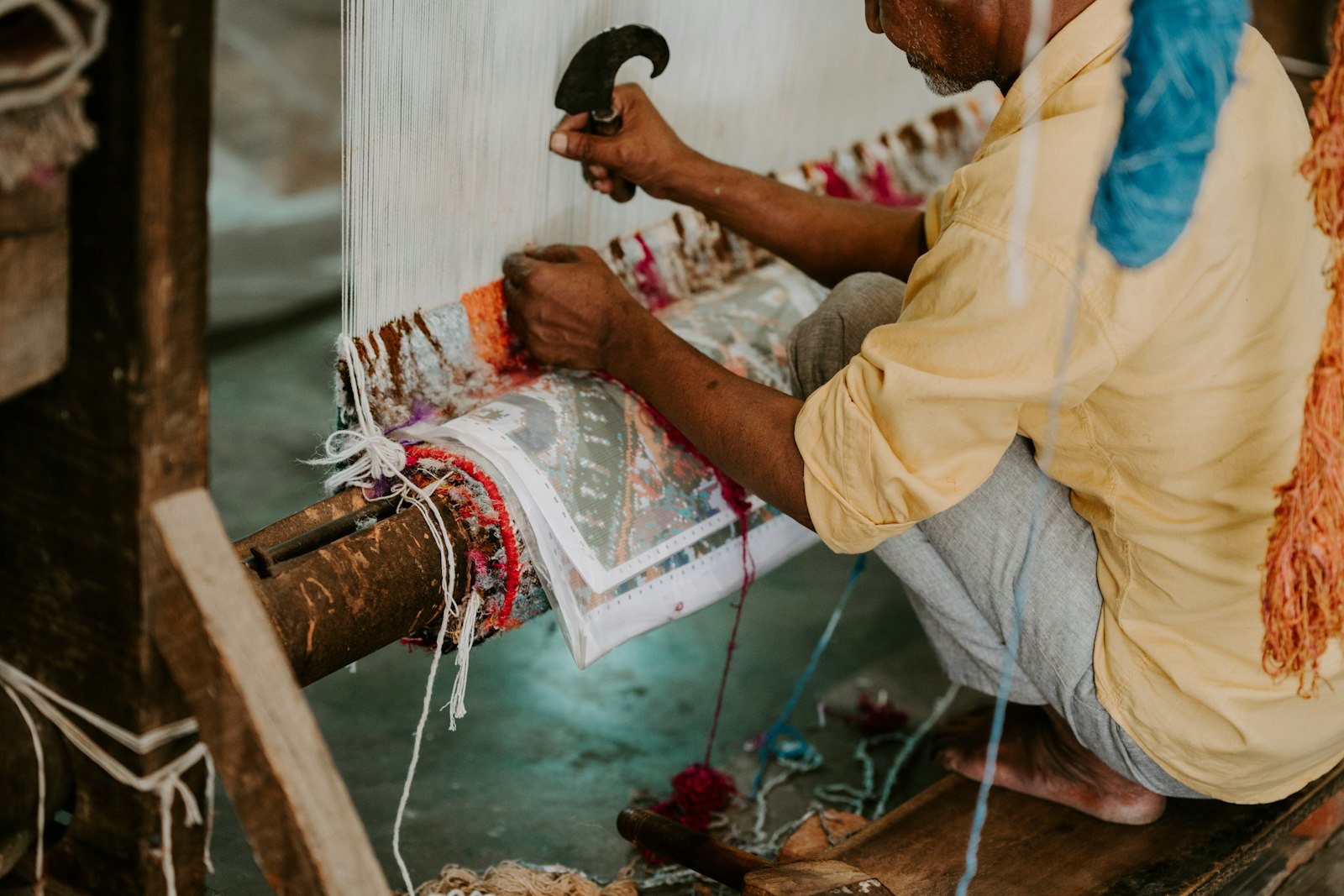
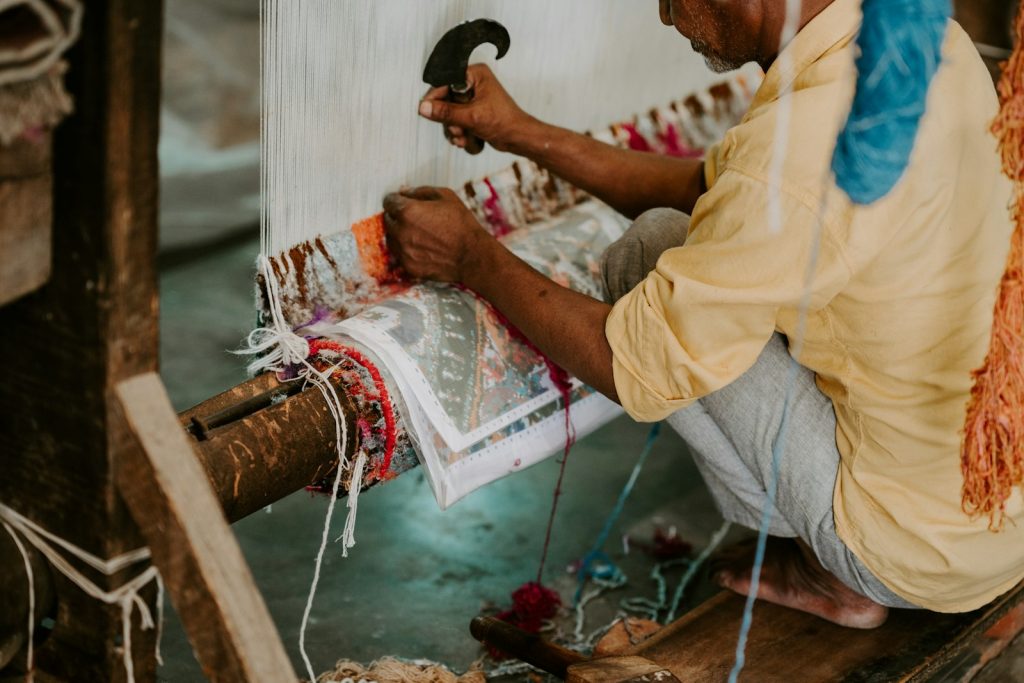
An ikat weaving village workshop in Sumba is not a tourist show but a living household economy, where women spend months tying, dyeing and weaving cloth that carries ancestry, status and ritual obligation. Visiting these villages is a chance to understand Sumba ikat tenun from the inside — and, if you choose to buy, to do so in a way that is fair to the weavers and respectful of the cloth’s ceremonial role.
We write here as Sumbanese and as editors. Our aim is to explain what you are seeing, help you move carefully in villages, and give you a realistic sense of how to visit East Sumba weaving communities from Waingapu, how to recognise quality, and why some of the most powerful textiles are not for sale at any price.
What Sumba ikat is: technique, time and materials
Sumba ikat tenun refers to handwoven warp-ikat textiles, made almost entirely by women, that bind together identity, ritual and exchange across the island.
Warp-ikat, defined
In Sumba, ikat is made on the warp, not the weft:
- Warp-ikat means the lengthwise yarns (warp) are tied and dyed before weaving.
- The pattern is “pre-programmed” into the yarns through tying, dyeing and retying, then carefully aligned on the loom.
- The weft (crosswise) yarn is usually a plain cotton that stabilises the patterned warp.
The result is slightly feathered edges to motifs, a hallmark of ikat. On older or finer pieces you will also see hinggi kombu (men’s cloths) and lau pahikung (women’s cloths) where warp-ikat is combined with supplementary warp or weft for extra pattern and texture.
Months-long work, not an afternoon craft
A single high-quality cloth can take months of intermittent work. The steps, each with skill and risk, are:
-
Spinning (in some villages)
– Traditionally, cotton was hand-spun; now most weavers use factory-spun yarn for consistency.
– Some heritage-focused groups still spin and prepare their own threads for ceremonial cloth. -
Pattern design and tying
– The weaver or a senior woman in the group maps out the motifs.
– Yarn bundles are stretched and tightly bound with plastic fibre or raffia in the areas meant to resist dye.
– For multi-colour pieces, this tying–dyeing–retying cycle repeats several times. -
Natural dyeing (and the reality of synthetics)
– Traditional dyes include:- Indigo (tarum) for blues.
- Morinda citrifolia root (mengkudu), often combined with tannin-rich bark, for reds and brick tones.
- Various barks, leaves and mud for browns, blacks and yellows.
- The yarns are dipped, aired and re-dipped many times to build depth and fastness.
- Synthetic dyes are now common, especially on lower-priced pieces. Many workshops use a mix: natural indigo for blues, synthetics for bright accents.
-
Setting up the loom
– Once dyed, the warp is dried, untied and carefully arranged on a back-strap or simple frame loom.
– Getting motifs to align across the width of the cloth is a careful, time-consuming task. -
Weaving
– Weaving itself may take several weeks of daily work, depending on the fineness of the yarn, width of the cloth and complexity of supplementary patterning.
– Mistakes in tension can distort motifs; on high-level pieces, the skill is in keeping the pattern crisp across the full length. -
Finishing
– Ends are knotted or braided.
– Some textiles are lightly beaten to soften; others are left firm to preserve structure.
As a visitor, what you normally see in a village is one or two of these stages. Do not expect to witness the whole process in an afternoon; you are seeing one frame in a long sequence.
Why Sumba ikat tenun matters locally
Sumba’s cloth is not just decorative. It is:
- Bridewealth and marriage exchange
- Families exchange textiles, livestock and valuables in both directions.
-
Certain cloths are made specifically for a daughter’s marriage, decades before it occurs.
-
Funerary obligation
- Cloths wrap the dead and accompany them into their stone tombs.
-
Groups also present textiles to the host clan as part of complex mortuary exchanges.
-
Status and alliance
- The right to use certain motifs, colours and scales of cloth historically marked nobility or specific lineages.
- Even now, elders will read a cloth as a record of connection: who you are linked to, and through which house.
Understanding this embedded role helps explain why some pieces in a house are not — and should not be — for sale.
The motifs: ancestors, horses, skull-trees and crocodiles
Patterns in Sumba ikat are not random decoration. They reference myth, clan history, ecology and power.
Core motifs you will see
While each region and even each clan has its preferences, several motifs are widely recognised:
- Ancestors (marapu figures)
- Stylised human figures with raised arms, large eyes or elaborate headdresses.
-
They stand for protective ancestors (marapu), and by extension for the clan’s continuity.
-
Horses
- Sumba is renowned for hardy island ponies.
-
Horses in cloth signal nobility, mobility and wealth. Historically, they were essential in warfare, trade and prestige exchange.
-
Skull-trees (andung / kayu tengkorak)
- Tree-like forms bearing small oval shapes that recall skulls.
-
They evoke the era of headhunting and ancestral victory, and by extension protection and potency.
-
Crocodiles
- Associated with origin myths and riverine power.
-
In some stories, the island itself is a transformed crocodile; the motif ties people back to the land and sea.
-
Birds (including cockerels, cockatoos and stylised eagles)
- Messengers between worlds, dawn-bringers, markers of clan totem animals.
-
Their placement can signal watchfulness and communication with the spirit realm.
-
Geometric hooks, chains and lattices
- Repeated borders or central bands that frame the main motifs.
- These may represent paths, binding ties between lineages, or protective enclosures.
Reading cloth: not every symbol is yours to use
Locally, motifs can carry restricted meanings:
- Certain layouts or combinations historically signalled noble houses or specific domains.
- Some funerary or oath-taking cloths are meant to appear only in particular rituals.
- In a few communities, displaying a skull-tree motif without the right to do so would once have been socially unacceptable.
As visitors, we are not expected to know every code. But we should resist treating motifs as mere “tribal” graphics. When in doubt, ask your village host to explain the meaning of a pattern you are drawn to; this opens a conversation and honours the maker’s intent.
Colour as language
Traditional palettes are relatively restrained: indigo blues, deep reds, blacks, rusts and off-whites, sometimes punctuated by yellow.
Elements to note:
- Indigo and black: associated with gravity, depth and the ancestral realm.
- Red: life force, blood, generative energy; also linked to prestige.
- White: bone, purity, and in some contexts, mourning.
Bright purples, neons and sugary pinks you may see in markets usually indicate synthetic dyes and production for external tastes rather than ritual use. That does not make them “wrong”, but it signals a different context of making.
Where to see weaving in Sumba: East Sumba and Waingapu
Weaving exists across Sumba, but East Sumba, with Waingapu as its main town, is the island’s most developed region for Sumba ikat tenun in both traditional and commercial forms.
East vs West Sumba: an overview
To orient your trip, it helps to distinguish broad regional patterns in textiles and visits.
- East Sumba (Waingapu and hinterland)
- Dense concentration of weaving villages; strong tradition of large warp-ikat men’s cloths (*hinggi*); more workshops set up to receive guests; easier logistics from Waingapu airport.
- Central & West Sumba
- Weaving present but less commercialised; more emphasis on supplementary techniques and subtle palettes; visits here often paired with megalithic village walks and require more overland travel.
For a broader sense of how East and West differ in culture and landscape, see our guide to West vs East Sumba.
Waingapu as a practical hub
Waingapu, East Sumba’s main town, is the usual base for:
- Half-day or full-day visits to nearby kampung tenun (weaving villages).
- Meeting established cooperatives and independent weavers.
- Accessing roads that lead further inland to more traditional settlements.
From Mau Hau Airport (Waingapu):
- Many villages with active weaving can be reached within 45–90 minutes’ drive on mixed paved and unpaved roads.
- Longer drives (2–3 hours) bring you into hilltop settlements where megalithic tombs, traditional houses and weaving co-exist.
We deliberately do not list village names here, because patterns of tourism and production shift. Some communities welcome a small number of serious visitors; others have stepped back from receiving guests. Our role is to match your interests with villages that are open and comfortable with hosting, at that specific time.
For context on the stone tombs and house forms you are likely to see alongside weaving, you may wish to read our guide to Sumba’s megalithic villages.
Market vs village: where to actually see weaving work
In Waingapu town, you will find:
- Small shops and stalls selling cloth, sometimes with minimal information on origin.
- A few larger outlets that aggregate textiles from multiple villages.
These are useful to get your eye in, but you will rarely see actual weaving underway.
In the villages, by contrast:
- You may see women tying, dyeing or weaving under the eaves of traditional houses or in simple outbuildings.
- You can observe how cloth is stored, displayed and used — folded in bamboo baskets, draped on beams, or worn by family members.
For anyone serious about understanding or acquiring Sumba ikat tenun, a field visit to at least one ikat weaving village workshop is essential.
Visiting an ikat workshop respectfully
An ikat weaving village workshop in Sumba is also somebody’s home. You are entering not just a workspace, but a ritual and kinship environment.
How visits are usually structured
With an ethical, village-based visit, you can expect:
-
Advance arrangement
– Your guide or host contacts the village head or a specific weaving group beforehand.
– This allows families to decide who will receive you, and to prepare cloths they are comfortable showing. -
Arrival and greetings
– You are typically welcomed by a representative of the host clan or weaving group.
– Simple greetings in Indonesian or a local phrase are appreciated; your guide can help. -
Orientation and observation
– You may be shown different stages of work: tying, dyeing pots, looms in use.
– Sometimes, older ceremonial cloths are brought out to illustrate motifs and history; these are usually not for sale. -
Conversation and questions
– Through your guide, you can ask about motifs, dye plants, time involved, family stories.
– It is appropriate to show interest in the person, not only the product. -
Opportunity to purchase
– If you wish, you can browse finished pieces.
– Prices are typically set by the weavers or their cooperative. Negotiation is possible but should be gentle and respectful. -
Farewell and optional contribution
– If you do not buy, leaving a modest village contribution via your guide is good practice.
– If you do buy, no further payment is expected, though some visitors choose to support specific projects (e.g., school supplies) through established channels.
We help structure visits like this via our ethical cultural visit framework: low group sizes, prior consent from hosts, and clear expectations on both sides.
Etiquette: clothing, photography, gifts
To move respectfully:
- Dress
- Cover shoulders and knees; avoid swimwear, very short shorts or low-cut clothing.
-
A light scarf or shawl is useful for sun and as a gesture of modesty.
-
Shoes
-
Ask before entering a house platform; in many places you will be invited to remove shoes.
-
Photography
- Always ask before photographing people, especially elders and young children.
- For ceremonial cloths or ancestor figures, follow your host’s lead; some may prefer no photos, or only from certain angles.
-
If you plan professional or commercial use of images, say so clearly and seek specific consent. We offer separate advisory for photography expeditions that involve more structured shooting.
-
Touching textiles
- Ask before handling pieces, particularly older cloths brought down from rafters or trunks.
-
Wash or sanitise your hands beforehand to avoid staining.
-
Gifts and cash
- Avoid distributing loose cash or sweets to children; it distorts local dynamics quickly.
- If you wish to give, channel it through the host or an existing village committee.
Language and mediation
Most weavers in rural East Sumba speak limited Indonesian and primarily use local languages. A good interpreter is not ornamental:
- They bridge not just words, but expectations — explaining why you are there, and what you hope to learn.
- They can quietly correct misunderstandings about money, timing and consent.
Our curated visits always involve guides who understand both Sumbanese village life and your likely questions as a private traveller.
How to judge quality and buy Sumba ikat ethically
Buying a cloth can be a meaningful exchange when done carefully. It can also be confusing, given wide variations in technique, dyestuff, age and price.
Five key markers of quality
You do not need to become a textile historian, but you should learn to see a few basic things.
-
Crispness and alignment of motifs
– Look for clean, recognisable shapes; some feathering is inherent in ikat, but the overall figure should be coherent.
– Check that motifs align across the width of the cloth; severe distortion suggests rushed work. -
Thread fineness and evenness
– Finer yarns with consistent thickness allow sharper detail but require more work.
– Coarser threads are not “bad”, but they belong to a different price point and purpose. -
Handle (feel) of the cloth
– High-quality natural-dyed pieces often feel firm yet supple.
– Very stiff, plasticky textures can indicate heavy synthetic sizing or lower-grade materials. -
Dye depth and stability
– On natural dyes, expect subtly layered tones, not flat, uniform blocks.
– You can discreetly rub a white handkerchief on a small area; a faint trace of indigo on first wear can be normal, but heavy bleeding suggests poor fixing. -
Construction and finishing
– Are selvedges even? Are ends neatly knotted or braided?
– On older pieces, some wear is natural, but large breaks or crude repairs change value.
Natural dye vs synthetic: how much does it matter?
There is a growing market for fully natural-dyed Sumba ikat tenun, often for collectors. These:
- Usually command significantly higher prices (reflecting dye labour and expertise).
- Age beautifully, with colours that soften rather than fade abruptly.
However:
- Ethical practice is not limited to natural dyes. Many village weavers use synthetics by choice, for affordability and bright shades that local buyers enjoy.
- A well-made, synthetic-dyed cloth from a weaver you have met can be more meaningful than a “perfect” natural-dyed piece bought at a distance.
If natural dyes are important to you, ask clearly: “natural dye only?” and be prepared for higher price ranges. Mixed techniques (indigo natural, others synthetic) are common and honest.
New vs old: what are you actually buying?
In and around Waingapu you will encounter:
- New cloths
- Recently made, often in contemporary colourways.
-
Ideal if you want to support current livelihoods directly.
-
“Old” cloths
- This can mean anything from five years to several decades.
-
Some are genuine heirlooms reluctantly sold; others are older studio pieces that never entered ritual circulation.
-
Very old / ritual cloths
- Objects with deep ceremonial histories.
- Many of these should not leave the village; some that you see in towns may have been decontextualised.
We encourage a conservative approach: if a cloth is strongly connected to funerary use or core clan identity, consider photographing it (with consent) and purchasing a different piece instead.
Price: how ranges work (and why you should be wary of “bargains”)
We will not quote fixed numbers for specific villages; they change. But to calibrate expectations (ranges last verified June 2026):
- Simple, smaller pieces (scarves, basic shawls, synthetic-dyed): usually sit in an accessible range that still matters significantly to the maker’s household.
- Mid-level cloths (larger hinggi or lau with recognisable motifs, mixed dyes): expect a step up, reflecting increased labour.
- High-level, natural-dyed, finely woven textiles: often several multiples above entry-level pieces, appropriate to months of specialised work.
If something seems dramatically cheaper than comparable cloths in the region, ask why:
- Is it factory-made elsewhere and only marketed as Sumba?
- Is it a practice piece from a beginner weaver, priced accordingly?
Buying cheaply from a family in sudden need can feel like a bargain but risks reinforcing distress sales. We favour pricing that the weavers themselves recognise as fair, consistent and repeatable.
Buying channels: direct, cooperative, or via curated introduction
Your options include:
- Directly from the weaver in the village
- Maximum relationship, high transparency on origin.
-
Requires language bridging and some confidence in price discussion.
-
Through a local cooperative or workshop
- Weavers pool output; management may handle dye acquisition, marketing and pricing.
-
More structured, sometimes slightly higher prices, but with support services for artisans.
-
Via an independent curator or guide
- Someone who knows both the weavers and the international market.
- They can explain quality tiers and ensure prices that are fair both locally and in relation to the wider market.
At Sumba Private, we sit in this last category as an editorial and concierge-intelligence platform. No one can pay to change what we publish; if you proceed with our partner they may pay us a referral fee at no extra cost to you. Our primary concern is that your purchase supports sustainable practice, not one-off extraction.
If you would like introductions to specific villages or weavers aligned with your interests — collecting, interior pieces, or simply a memento of your journey — you can plan your trip with us, including via encrypted WhatsApp if you prefer to coordinate details there.
Why some pieces are ceremonial and not for sale
In almost every serious weaving village, there are textiles that are not commodities.
Cloths as persons, not objects
In Sumbanese cosmology:
- Certain cloths are bound to houses, lineages and spirits.
- They have roles in rituals that extend over lifetimes — wrapping a newborn, then later a bride, then eventually a body for burial.
- They are sometimes addressed or invoked in speech as if they were community members.
Removing such a cloth from its home can be experienced as damaging to the house’s integrity. This is why, even when financial need is real, elders may firmly refuse a sale.
Common categories of non-sale textiles
You may encounter:
- Bridewealth cloths held in reserve
- Woven by older women for specific grandchildren.
-
Seen as key to future exchanges, not available until deployed in ritual.
-
Ancestor-linked motifs specific to a house
- Used only on cloths dedicated to that lineage’s rituals.
-
Rarely leave the domain.
-
Funerary sets
- Kept in bundles for future use in burials, especially for high-ranking individuals.
- Even unused, they are already “spoken for”.
If such cloths are shown to you, treat the moment as a lesson, not a shopping preview. Photographs, if allowed, serve as records of a living heritage, not sales catalogues.
Recognising and respecting refusal
Your host may signal that a particular piece is not for sale through phrasing like:
- “This is for our house.”
- “This is for ceremony only.”
- “This belongs to our ancestors.”
A gracious response is simple acknowledgement and thanks. Persisting with offers increases discomfort and undermines trust not only for you, but for visitors after you.
We design village visits to make these boundaries clear in advance, so you are not put in the position of pressing inadvertently.
Planning an ikat-focused journey to Sumba
For travellers seriously interested in Sumba ikat tenun, a thoughtful itinerary balances textile immersion with the island’s broader cultural and natural context.
How many days you need
As a baseline:
- 2–3 days ex-Waingapu
-
Enough for:
- One or two weaving village visits.
- Time in town to see comparative pieces.
- A half-day walk in nearby megalithic villages for architectural and ritual context.
-
4–6 days
- Allows:
- Multiple regions (East and West) for contrasting weaving styles and landscapes.
- A rest day for reflection, note-taking or photography editing.
- Flexibility around ceremonies or village events that may be happening.
Textile-focused photographers or researchers may choose longer stays, but for most private travellers in the high-net-worth category, four well-structured days around weaving is ample.
Pairing weaving with other experiences
To avoid “museum fatigue” and give weavers breathing space, we recommend alternating days:
- Day with weaving
-
Village visit, structured conversations, potential purchases.
-
Day without weaving
- Coastal or savannah landscapes.
- Exploring ancestral stone tombs and house roofs in megalithic villages.
- A guided photography expedition focused on light, landscape and architecture rather than people.
This rhythm respects hosts’ time and your own ability to absorb information.
Seasonality and logistics
Weather on Sumba is strongly seasonal, with a pronounced dry season and a wetter period; conditions can affect road access to certain villages. Flights into Waingapu and Tambolaka are subject to occasional schedule changes.
We keep current notes on:
- Road conditions to key weaving areas.
- Which communities are presently open to visitors.
- Any festivals or ritual periods where visits would be inappropriate or, conversely, deeply enriching if arranged with proper consent.
To align your preferred dates with this shifting ground reality, you can plan your trip through us. We are happy to handle initial planning and workshop pairing via WhatsApp voice or text if that is more convenient across time zones.
Frequently asked questions
Can I commission a custom Sumba ikat textile with specific colours or motifs?
Yes, in some villages and workshops, commissions are possible, especially for colour tweaks or size adjustments within traditional patterns. However, truly custom motifs that disregard local symbolism or appropriate restricted ancestral designs are rarely appropriate. Lead times are long – often several months – and we recommend discussing feasibility, meaning and timing in detail through an intermediary who understands both your brief and village norms.
Is it acceptable to negotiate on price in a weaving village?
Light negotiation is common in Indonesia, but in the context of Sumba ikat tenun we suggest a restrained approach. If a price feels high, you can ask how long the piece took to make and what distinguishes it from simpler cloths. This often clarifies value. If you still wish to negotiate, do so modestly and with a smile; if the weaver or host declines, accept their price or step back without pressure.
How can I be sure a textile was actually woven in Sumba and not imported?
Buying directly in an ikat weaving village workshop, from the woman who wove the cloth, is the strongest assurance. In town shops, ask specifically which village it came from, who wove it, and whether the seller can describe the motifs and dyes in concrete terms. Vague answers or implausibly low prices are warning signs. Our curated introductions are designed precisely to avoid such uncertainties.
Are there restrictions on exporting Sumba ikat tenun?
There is no general prohibition on taking Sumba ikat out of Indonesia for personal use, but very old or museum-grade pieces may attract additional scrutiny if declared as cultural patrimony. If you are acquiring high-value or antique textiles, we recommend proper documentation and, in some cases, export advice. For contemporary cloths purchased directly from weavers, normal customs considerations for textiles apply.
What is the best way to store and care for Sumba ikat at home?
Keep your cloth away from direct sunlight to prevent fading, especially for natural dyes. Store it flat or gently rolled rather than sharply folded to avoid permanent creases. Use acid-free tissue between layers if storing long term, and avoid plastic bags that trap moisture. Gentle airing in the shade from time to time is beneficial. Professional conservation advice is recommended for older or particularly precious pieces.