Respectful Etiquette When Visiting Sumba’s Villages
Learn essential Sumba village etiquette: respectful dress, donations, photography consent and marapu customs for visiting Sumba's megalithic communities.
14 min read
Sumba village etiquette means understanding that Sumba’s megalithic villages are living marapu communities, not open‑air museums, and behaving as a guest in someone’s home: you visit only with permission, dress modestly, offer a respectful donation, and ask before photographing people, tombs or ceremonies. Practically, this etiquette is a set of do’s and don’ts that help you move through Ratenggaro, Praijing, Tarung, Waitabar and other villages in a way that honours local belief and daily life.
Sumba Private exists to curate that kind of visit. We are not a tour operator; we are a curation and concierge‑intelligence service for private and high‑net‑worth travellers. No one can pay to change what we publish; if you proceed with our partner they may pay us a referral fee at no extra cost to you.
Why Sumba village etiquette matters
Living megalithic villages, not heritage parks
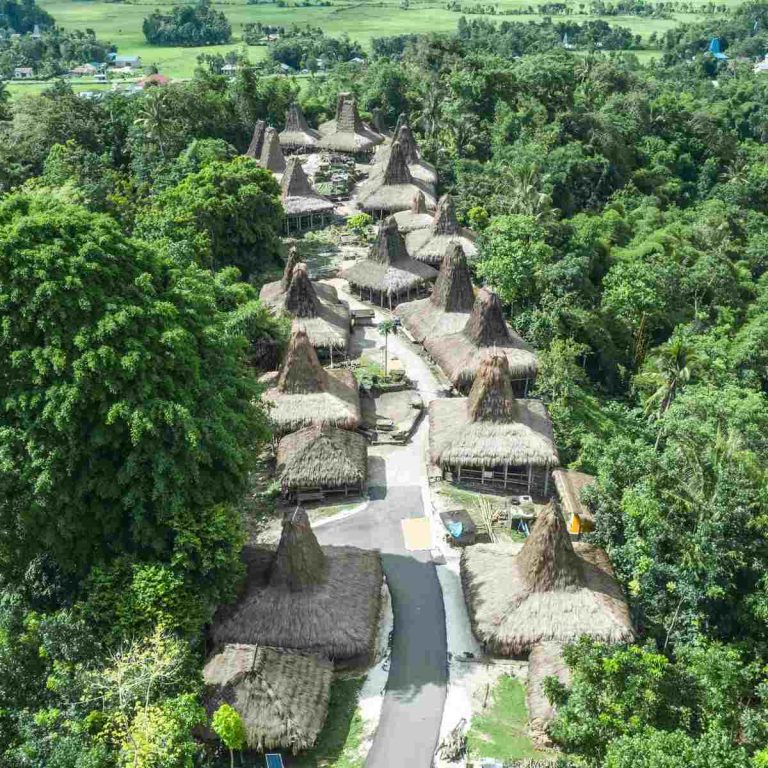
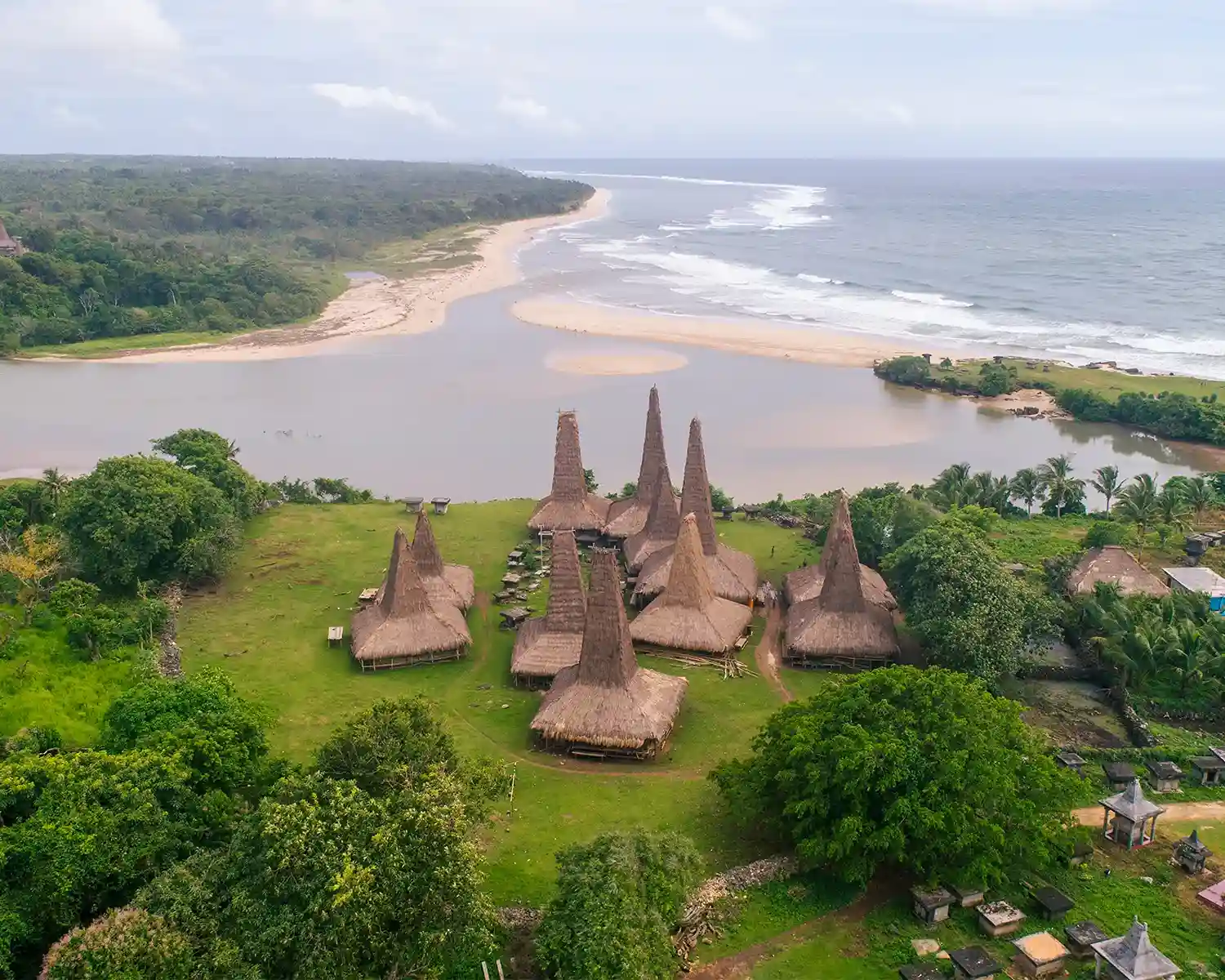
Across West and East Sumba, hilltop villages such as Ratenggaro, Praijing, Tarung and Waitabar are famous for two things:
- Tall, peaked “uma” houses with soaring thatched roofs
- Massive stone tombs in the village centre
In travel writing, these are often framed as “traditional villages” or “megalithic sites”. That language can be misleading. These are not fossilised heritage attractions; they are contemporary neighbourhoods where families cook, argue, dry laundry, charge phones and graze livestock around ancestral tombs.
Sumba’s famed megalithic stone graves are not archaeological ruins. Many are recent or still in use, and they are spiritually active within the marapu belief system.
Marapu: an animist faith still in practice
Marapu is the island’s ancestral animist belief, still observed in much of rural Sumba alongside Christianity. In marapu cosmology:
- Ancestors inhabit the stone tombs and sacred spaces.
- Ceremonies, offerings and animal sacrifices maintain balance between living and ancestral worlds.
- Certain objects (heirloom swords, drums, megaliths) are not merely art; they are spiritually charged.
That has direct implications for visiting sumba villages respectfully:
- A tomb slab is not a bench.
- A ritual is not a performance.
- A skull tree, altar or stone circle is not a prop for social media.
Every visitor changes the village
Even a polite visit can have real effects:
- Children skipping school to accompany guests.
- Ceremonies adjusted or delayed to “perform” for outsiders.
- Cash tips concentrating around the most visited houses, disrupting internal balance.
Honest etiquette is less about “walking lightly” in an abstract sense and more about understanding that your presence has economic, social and spiritual weight.
For a deeper context on community impacts, see our ethical travel guide: how to plan an ethical cultural visit to Sumba.
The core do’s and don’ts for visiting Sumba’s villages
Here is a concise framework for marapu village do and dont practice. We expand below, but this can travel in your head.
Quick-reference: megalithic village manners
| Do | Don’t |
|---|---|
| Arrive with a local guide who has village relationships. | Walk into a village unaccompanied expecting open access. |
| Dress modestly: shoulders and knees covered for all genders. | Wear beachwear, tight gym gear or low‑cut tops. |
| Greet elders and heads of household before photographing or exploring. | Start taking photos immediately from the village edge. |
| Offer a respectful donation to the village or household. | Push money directly into children’s hands or treat villagers as paid performers. |
| Ask clear permission before photographing people, tombs or rituals. | Assume consent because others have photographed there. |
| Follow your guide’s instructions during any ceremony. | Enter ritual spaces or approach altars and skull trees on your own. |
| Step carefully between tombs and keep voices low. | Walk, sit or pose on stone graves or lean on tomb slabs. |
| Buy local weavings and crafts at fair, pre‑agreed prices. | Haggle aggressively or treat a complex ikat as a souvenir bargain. |
Arriving: always as a guest, never as an intruder
In most Sumbanese villages, no one will physically stop you from entering. That does not equal welcome.
We strongly advise:
- Go with a local guide who is known in the area.
- Let your guide announce your arrival and intentions to a village elder or host household.
- Wait to be invited further in; do not push into house interiors unasked.
Some villages, especially those near main roads or popular beaches, have become accustomed to bus tours and open visits. Even there, the same logic holds: a short greeting and introduction, ideally in the local language, changes the dynamic from transaction to hospitality.
How to dress and behave in Sumba’s megalithic villages
Modest dress: what this actually means
“Dress modestly” is often repeated without details. In Sumba’s marapu villages, a practical baseline is:
- Shoulders covered (no tank tops or strapless tops).
- Knees covered (long shorts that reach below the knee, or light trousers/skirts).
- Avoid very tight, sheer or plunging garments.
- Carry a light scarf or sarong; useful for extra coverage or if invited into a house or sacred area.
Beachwear is appropriate on the beach, not in Ratenggaro village above it. Changing clothes in the car before or after village visits is normal.
Body language and movement
- Move slowly through central village spaces. The area around the tombs is both social and sacred.
- Keep voices low, especially near tombs or if a ceremony is underway.
- Do not touch ritual objects, altars, skull trees or offerings, even if they appear unattended.
- Avoid pointing at people or sacred items with your index finger; gesture with an open hand.
Children may crowd around you, particularly in more visited villages. Enjoy the interaction, but let your guide set boundaries so they are not rewarded for skipping school or leaving chores.
Donations, hosts and why a local guide helps
How donations usually work
In many villages, it is customary to give a contribution when you visit. This might support:
- The village as a whole (for ceremonies, shared infrastructure, or community fund).
- A specific household that receives you, offers tea or opens its home.
- A women’s weaving group or youth group.
We avoid prescribing a fixed figure; economic contexts vary and we do not want to anchor expectations irresponsibly. Your guide will advise an appropriate, respectful donation level for your party, last verified June 2026 against local norms.
General principles:
- Hand donations to an elder, household head or designated representative, never randomly.
- Avoid distributing cash to children.
- If you purchase weavings or crafts, treat that as separate from a general village donation.
Why entering with a guide matters
We consider a knowledgeable local guide non‑negotiable for most visitors. They:
- Broker permission and clarify expectations on both sides.
- Translate nuanced answers about marapu, tombs and ceremonies.
- Navigate internal village politics politely (who to greet, where to sit).
- Help you avoid accidental offences that no signboard will explain.
At Sumba Private, we maintain relationships with independent guides across West, Southwest, Central and East Sumba. We connect you only with guides who:
- Live on the island or are tightly integrated into its communities.
- Prioritise consent‑based visits over volume.
- Can explain why certain practices (like entering post‑funeral spaces) may be restricted.
If you would like an introduction to such guides, you can plan your trip with us via email or WhatsApp; we will pair you with a specialist suited to your interests in heritage and craft.
Photography etiquette and consent
Asking before you shoot
Photography is often where visiting sumba villages respectfully is tested in practice.
We recommend the following hierarchy:
-
People
– Ask individuals before photographing them whenever possible.
– For groups, your guide can request group consent.
– If someone turns away or looks uncomfortable, do not shoot. -
Tombs and sacred objects
– Ask your guide first: “Is it appropriate to photograph this tomb/altar/tree?”
– Some families are comfortable with photos of older, historic graves but not recent burials.
– Skulls, sacrificial posts and ritual stones can be highly sensitive. Never assume. -
Ceremonies
– Treat any ritual as a privilege to witness, not a content opportunity.
– Only photograph if explicit consent has been secured from the officiating elder and those directly involved.
– Even when allowed, move to the periphery, stay seated or low, and silence shutter sounds.
Framing and sharing responsibly
- Avoid dehumanising images: extreme close‑ups of grief, blood from sacrifices, or people in vulnerable states.
- Be careful with captions; do not speculate on rituals or beliefs. If you are unsure, ask your guide for correct terms.
- Avoid geotagging small villages in real time on public social media if this could drive uncontrolled traffic.
If photography is a primary focus of your trip, we can design an itinerary that balances your creative goals with community comfort, and introduce you to guides who understand both. Start a conversation via plan your trip; WhatsApp planning is available if you prefer.
Ceremonies, festivals and sacred spaces
Witnessing marapu rituals respectfully
Depending on timing, you may encounter:
- Funeral preparations or processions
- House construction rituals
- Agricultural or rain ceremonies
- Pasola season processions (especially in West Sumba)
Key considerations:
- Never request that a ritual be staged for you. Authentic ceremonies follow their own calendars and needs.
- Accept “no” if elders decide that foreign guests should not attend a particular rite or phase.
- Follow seating and gender cues: your guide will indicate where men and women customarily sit, and where guests are positioned.
If invited to share betel nut, coffee or food after a ceremony, this is a gesture of inclusion. You may accept or politely decline, but a brief participation is usually appreciated.
Sacred objects and prohibited areas
Each village has its own rules, but common patterns include:
- Inner altars, ancestor shrines and specific houses reserved for ritual leaders.
- Skulls or horn displays from sacrificial animals that should not be touched or rearranged.
- Stones used for divination or oath‑taking that are off‑limits to casual visitors.
Ask your guide to identify these spaces early so you can orient yourself. If in doubt, keep a respectful distance.
Ratenggaro, Praijing, Tarung & Waitabar: different contexts, same respect
Comparing key megalithic villages
- Ratenggaro (Southwest Sumba)
- Clifftop village above a sweeping beach, known for dramatic tombs and very tall roofs. Increased visitor numbers mean more familiarity with tourism, but ceremonies and daily life remain active.
- Praijing (West Sumba)
- Hilltop village with panoramic views and a larger cluster of houses. Accessible from Waikabubak, with a mix of traditional life and visitor infrastructure.
- Tarung & Waitabar (near Waikabubak)
- Adjacent hilltop villages often visited together. Tarung, badly affected by fire several years ago, has seen reconstruction of peaked houses and graves with both external support and local initiative. Marapu practices continue here with some of the strongest ritual lineages in West Sumba.
In all four, the core etiquette remains identical:
- Do not walk on tombs.
- Always ask before entering a house.
- Check with your guide before photographing ceremonies or sacred objects.
- Offer a respectful donation.
The main differences are practical:
- Visitor volume: Ratenggaro and Praijing receive more day‑trippers; locals there may be more accustomed to cameras and questions, but fatigue is also more likely.
- Access: Tarung and Waitabar sit close to Waikabubak yet retain strong ritual authority; seemingly “urban‑adjacent” does not mean less sacred.
Buying ikat and crafts without distortion
Ikat as living heritage, not souvenir stock
Sumba’s warp‑ikat textiles are among Indonesia’s most complex. In many villages, particularly around Waikabubak and in parts of East Sumba, women’s groups sell cloths directly to visitors.
Respectful practice includes:
- Allowing time: unrolling textiles, explaining motifs and negotiating takes more than a quick stop.
- Acknowledging labour: a large, intricately dyed and handwoven cloth can take months to complete.
- Accepting that certain heirloom pieces are not for sale, even if displayed to you.
For deeper background on motifs, natural dyes and regional styles, see our guide to Sumba ikat and handwoven textiles.
Paying fairly
We avoid publishing fixed prices because they fluctuate with cotton costs, dye availability and community decisions. As of last verified June 2026, ranges for serious collector‑grade pieces are substantially higher than for small tourist scarves, and that difference is justified by time and skill.
Your guide can:
- Indicate which textiles are everyday production vs ceremonial or high‑complexity work.
- Help ensure that negotiations remain respectful, not extractive.
- Clarify how revenue is shared within a family or weaving group.
Logistics: timing, group size and avoiding pressure on villages
When and how long to visit
- Time of day: Mornings or late afternoons are typically more relaxed; midday can overlap with farming or school.
- Duration: Aim for 45–90 minutes per village as a minimum if you intend to engage beyond a quick photo stop. Longer if ceremonies, weaving demonstrations or shared meals are involved.
- Seasonality: Some rituals cluster around planting and harvest, others around the Pasola season. Your guide will know when villages may be particularly busy or inward‑focused.
Group size and composition
Smaller groups (two to six people) generally:
- Cause less disruption.
- Are easier to seat and host in a single house.
- Allow more meaningful conversation rather than a spectacle dynamic.
If you are planning a larger family or corporate trip, we can help design a schedule that staggers visits and avoids overwhelming any single community. Contact us to plan your trip; we can coordinate via email or WhatsApp depending on your preference.
How Sumba Private curates respectful village visits
We see our role as:
- Curators: helping you decide which villages and experiences align with your interests (architecture, ritual, ikat, photography) and your comfort with remoteness.
- Connectors: introducing you to vetted local guides, drivers and, where appropriate, cultural mediators such as weavers or ritual specialists.
- Context providers: sharing frank, non‑romanticised insight so you can make informed choices: what your presence means, how donations are handled, and where to step back.
We do not run group tours or standardised “village circuits”. Each itinerary is bespoke. No one can pay to change what we publish; if you proceed with our partner they may pay us a referral fee at no extra cost to you.
If you are ready to think through an itinerary that includes Ratenggaro, Praijing, Tarung, Waitabar or less‑visited communities, we invite you to plan your trip. We are comfortable planning by WhatsApp voice or text if that is easiest across time zones.
FAQs: Sumba village etiquette
Do I really need a guide to visit Sumba’s villages?
For most travellers, yes. A local guide is about far more than navigation: they secure permission, interpret marapu customs, advise on donations, and prevent accidental offence. You can technically walk into some villages alone, but you will miss nuance and increase the risk of misunderstandings.
Is it acceptable to bring small gifts for villagers?
It can be, but it must be done thoughtfully. Items that benefit households or communities (quality betel nut, sugar, rice, school supplies coordinated through a teacher) are better than random trinkets. Avoid distributing sweets or toys directly to children. Ask your guide what is appropriate in that specific village.
Can I photograph funerals or animal sacrifices?
Only with explicit consent, and often the most respectful answer is to refrain. Some families may allow limited photography from a distance; others will not. Your guide should ask discreetly on your behalf. Even when permitted, consider carefully how and where you share such images.
How should I behave around the stone tombs?
Treat them as active ancestral graves, not as platforms. Do not sit, climb or pose on them, avoid walking across slabs, and keep voices low nearby. Ask before photographing specific tombs, especially those with recent offerings or decorations.
What should I do if I realise I have made a cultural mistake?
Acknowledge it quietly to your guide and follow their lead. A simple apology, conveyed through the guide to the affected person or elder, is usually enough. Remaining open, humble and willing to adjust your behaviour is more important than never making a misstep.