Where to Catch Sunrise and Sunset in Sumba
Our guide to the essential Sumba sunrise and sunset spots: Walakiri’s dancing trees, east savanna dawns, west-coast golden hours, and how to time them.
15 min read
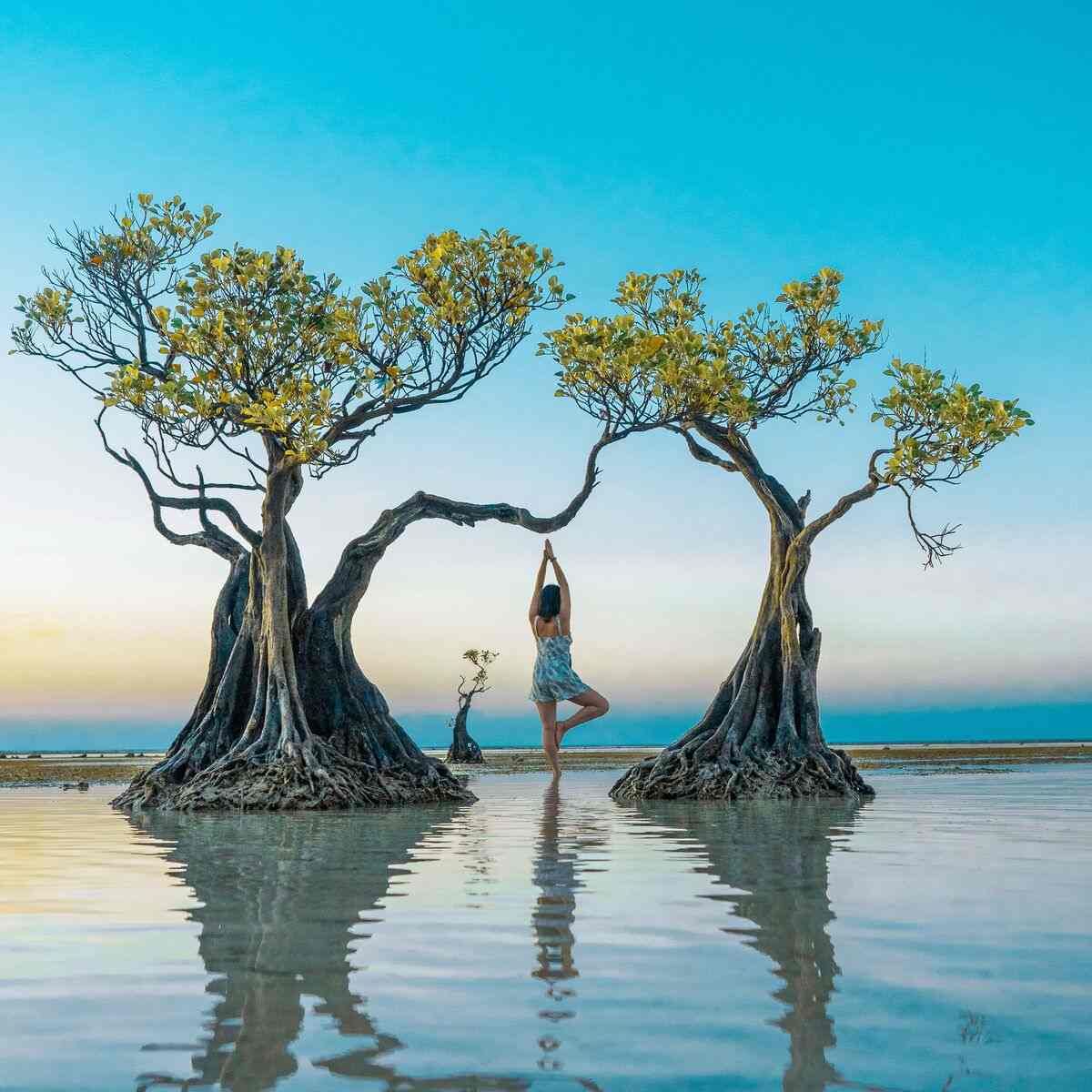
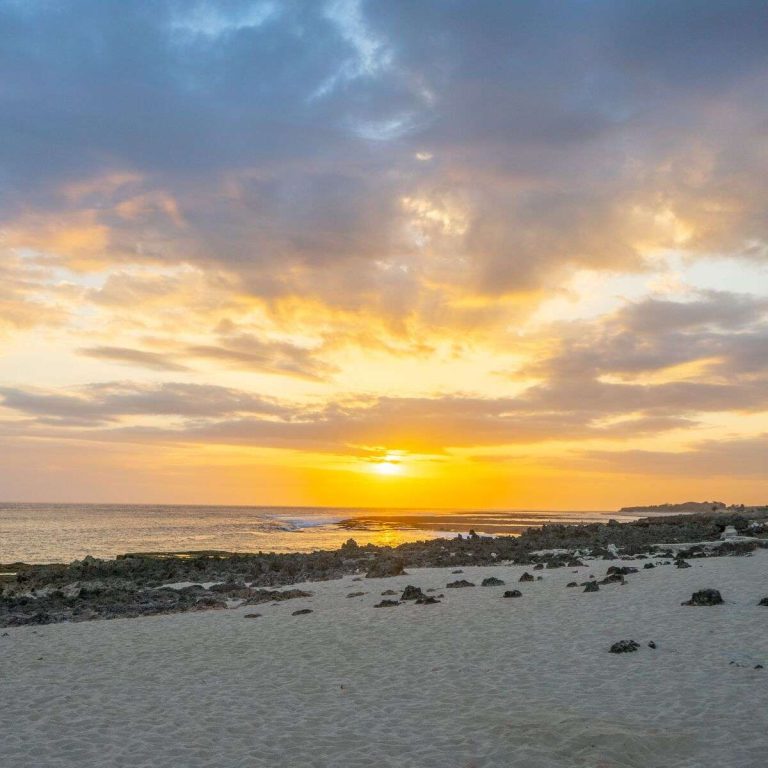
Sumba sunrise and sunset spots are less about a single “Instagram place” and more about choosing your side of the island, your tide, and your horizon. In practice, sunrise belongs largely to the east savanna and east-facing beaches, while sunset on Sumba is dominated by Walakiri’s mangrove “dancing trees” and the wave-carved cliffs of the greener west.
What we mean by “best Sumba sunrise and sunset spots”
On Sumba, the light changes fast, and distances are long. So rather than a long list of pins on a map, we frame the best sunrise and sunset Sumba offers in four broad zones:
- Walakiri Beach near Waingapu – the island’s most recognisable sunset foreground.
- West-coast cliffs and lagoons in the Kodi / Weekuri / Nihiwatu area – longer views, later golden hour.
- East savanna hills – dry grasslands that catch very early light, often with views toward traditional villages.
- East-facing beaches – quieter, more solitary dawns than you’ll find at Walakiri at dusk.
This guide assumes you care about light quality, horizon orientation, and how each place actually feels at first and last light — not just how it photographs.
Quick reference: where to go, when
- Signature sunset for first-timers
- Walakiri Beach mangrove “dancing trees” near Waingapu.
- Quietest, most atmospheric sunset
- West-coast cliff edges and beaches south of Weekuri Lagoon.
- Best all-round sunrise zone
- East savanna hills inland from Waingapu, with wide, open horizons.
- Most meditative sunrise
- East-facing beaches north and south of Waingapu, on a near-empty shore.
- How many golden hours to plan for
- On a 5–7 day trip, we suggest at least two sunsets and one sunrise dedicated purely to light and landscape.
For tailored sunrise/sunset timing built around your exact dates, tides and driving times, you can plan your trip with us; we also coordinate details over WhatsApp once we understand your interests.
Best sunset locations in Sumba
Walakiri Beach: the archetypal “best sunset Sumba” view
Walakiri Beach, about 25–30 minutes’ drive east of Waingapu town, is Sumba’s most photographed sunset location. The reason is precise: a shallow, gently sloping intertidal flat dotted with small mangrove trees that sit just far enough offshore to be fully silhouetted at low tide. Locals call them the “dancing trees” because their twisted trunks and lifted roots read like a row of figures in motion against the evening sky.
From a light and logistics perspective, here’s what matters:
- Orientation: Walakiri faces roughly northeast to east, but the mangrove stand sits along a curve that lets the trees backlight beautifully even as the sun drops more to the west-northwest, especially in the dry season.
- Foreground: You’re not chasing a pure ocean horizon. The interest is in the trees reflected in thin water over sand – an advantage if clouds obscure the sun itself.
- Access: You can park quite close and walk a short distance along the beach; no scrambling or long hikes required.
Walakiri sunset timing (conceptually, not minute-by-minute)
We avoid pretending to give precise tide tables or sunset minutes; those shift across the year. Instead, think in these bands:
- “Setup” window – From roughly 60–45 minutes before the published sunset time, the heat softens and you can explore compositions among the mangroves, still in relatively strong side-light.
- Peak silhouettes – Approx. 20 minutes before to 20 minutes after the listed sunset time, depending on tide. At lower tide, more of each tree stands free of the surface, with stronger, cleaner outlines.
- Afterglow – Up to 30 minutes after the sun has technically set, the sky can hold colour gradients from deep orange near the horizon into violet overhead. This is often when Walakiri is at its most refined, long after casual visitors have walked back to their cars.
Crowds are relative: compared to Bali, Walakiri remains calm, but in high domestic-holiday periods you may share the beach with small groups doing photoshoots. Serious photographers tend to wade a little further down the shore or out into the shallows to give themselves breathing space.
If you’re based in Waingapu and only have time for one sunset, Walakiri is the obvious first choice. From private villas outside town, build in buffer time for slow roads and the possibility of stopping at viewpoints en route.
West-coast cliffs and Weekuri area: broader horizons, softer end light
On Sumba’s west coast — the greener, more humid side of the island — the Indian Ocean is the main character at sunset. Cliff-backed coves, elevated grassy headlands and the area around Weekuri Lagoon all share an almost due-west orientation. That means a more classic “sun disappearing into the sea” experience than Walakiri offers.
Without naming individual small-access points, you can think in three sub-zones:
- Cliff edges north and south of Weekuri – Low limestone cliffs with patches of scrub and grass, facing straight out to an open horizon. Ideal if you want to feel the scale of the ocean rather than focus on detailed foregrounds.
- Beach-level viewpoints in Kodi – Wide, sandier stretches where waves break in long, clean lines; excellent if you like walking the shoreline as the light drops, watching traditional fishing activity at a distance.
- Resort-access headlands – Some high-end lodges on the west side sit above private or semi-private bays, giving guests obvious sunset perches. If you’re staying at one, you don’t necessarily need to drive anywhere at all.
Key differences versus Walakiri:
- Wind and swell: The west feels more exposed. Expect more sea spray and, on some days, stronger onshore breeze. Bring a light layer, even in the dry season.
- Colour palette: With more humidity in the air and a green backdrop, sunsets skew to deeper reds and magentas along the horizon, contrasting with darker headlands and coconut palms.
- Quiet: Outside holiday peaks, you may find yourself entirely alone on a headland, sharing the moment only with grazing horses or goats.
Logistically, the west is usually reached via Tambolaka Airport and then a road transfer to your accommodation near Kodi, Weekuri or the well-known surf breaks further south. Given the drive-time realities across Sumba, sunset exploration on the west is best anchored to wherever you’re already sleeping, rather than treated as a spontaneous cross-island jaunt.
Best sunrise spots in Sumba
East savanna hills: Sumba’s quietest first light
The east of Sumba, especially in the Waingapu region, is defined by rolling, semi-arid savanna dotted with lontar palms and seasonal cattle or horse grazing. At sunrise, these hills take on a soft, almost muted luminescence; grasses catch side-light, village roofs in the mid-distance pick up the first sheen of day, and morning mist sometimes lingers in low folds.
From a sunrise perspective, this area offers:
- Uncluttered horizons – Minimal tree cover means the first band of colour appears very cleanly, often 20–30 minutes before the sun itself rises.
- Flexible vantage points – Many hilltops are reachable by short, sometimes steep but uncomplicated walks from roadsides or villages, arranged through local contacts or your lodge.
- Cultural context – You’re often within sight of traditional Sumbanese houses and stone megaliths, even if not directly next to them. The landscape feels lived-in rather than purely scenic.
For those asking “where to see sunrise Sumba if I care more about atmosphere than the exact sea horizon”, an east-hill vantage point is usually our first recommendation. Plan to arrive at your chosen hilltop at least 30–40 minutes before the published sunrise time; the pre-dawn gradients of colour can be more rewarding than the exact moment the disc of the sun clears the line of hills.
Because many of these spots thread close to villages and sometimes burial grounds, we strongly encourage visiting with a local guide or driver who understands which areas are appropriate to walk through at that hour and how to greet and compensate custodians when necessary.
East-facing beaches: minimal people, maximum calm
For a more literal “sunrise over water” scenario, focus on the chain of east-facing beaches reachable from Waingapu. Some are closer to town, others require longer drives along partially paved roads, but they share certain sunrise traits:
- Softer swell – Compared to the west coast, the east typically has less heavy surf. At dawn, the sea can feel almost flat, with only small lines of breakers.
- Low visitor numbers – Many mornings, it may be just you, a few fishers working from the shore, and occasional dogs trotting the tideline.
- Simple compositions – Long arcing bays, a few scattered rocks, perhaps a promontory in the distance; ideal if you like your sunrise views uncluttered.
Practicalities:
- Timing: Aim to be walking the sand 20–30 minutes before the listed sunrise, with the most photogenic moments often 0–20 minutes after, when the first rays rake across any cloud banks offshore.
- Footwear: Parts of the east coast combine sand and coral rubble. Simple sandals or reef shoes help if you decide to wade into the shallows.
- Safety: As with any isolated beach at dawn, bring only what you need, let someone know your plan, and avoid walking alone far from access points if you’re unfamiliar with the area.
If you build your trip using our sample 5-day Sumba itinerary, it’s easy to dedicate one early morning to an east-coast beach sunrise, followed by coffee back in Waingapu before heading inland.
How light differs between east and west Sumba
The island’s shape and climate create two distinct golden-hour personalities.
| Aspect | East (Waingapu & surrounds) | West (Kodi, Weekuri & surrounds) |
|---|---|---|
| Dominant landscape | Dry savanna, sparse trees, broad hills | Greener hills, more trees, dramatic coasts |
| Best for sunrise or sunset? | Primarily sunrise; Walakiri for sunset silhouettes | Primarily sunset over the open ocean |
| Colour tendencies at golden hour | Subtle, pastel gradients, pale gold on grasses | Deeper oranges and reds, stronger contrasts |
| Typical wind at golden hour | Often calmer at dawn, light breeze by dusk | More onshore breeze at sunset, especially dry season |
| Access pattern | Shorter drives from Waingapu to multiple hills/beaches | Sunset mostly near your lodge or within a short drive |
From a planning standpoint:
- If you only have 2–3 nights in the east, prioritise one Walakiri sunset and one sunrise — either on a hill or an east-facing beach.
- If you’re splitting time between east and west, think “east for sunrise, west for sunset” and give yourself one rest day without early alarms or late drives.
- If you’re based solely in the west, you can still experience rich morning light as it brushes inland hills and villages, even if the actual sunrise is obscured behind terrain.
For those keen to pair the right light with the right activity — from horse riding on the beach to visiting traditional villages at soft morning angles — you can plan your trip with us; after an initial exchange we’re happy to refine timing together via WhatsApp.
Timing, tides, and practical notes
Seasonality and sky character
Sumba experiences a distinct dry and wet season pattern:
- Dry season – Roughly May to October, with drier air, clearer horizons and more frequent “clean” sunsets, but also harsher mid-day light and dust haze on some days.
- Wet season – Typically November to April, when clouds can create dramatic textures at sunrise and sunset, but heavy showers can also block the horizon entirely.
We do not guarantee sky conditions or colours; even in “peak months” a grey evening can appear without much warning. Think in probabilities, not promises.
Tides and Walakiri’s dancing trees
Walakiri’s character changes noticeably with the tide:
- Lower tide at sunset – More sandbanks exposed, trees more clearly separated from the waterline, and wider reflective shallows for silhouettes.
- Mid to higher tide – Trees feel more “anchored” in the water, with reflections closer to their trunks but less walking area in front.
We strongly recommend checking a reliable tide source for Waingapu on your specific travel dates and cross-referencing that with published sunset times. If low tide and sunset roughly align, build your schedule around Walakiri for that day. If they do not, Walakiri can still be worthwhile, but you might prioritise another evening there only if your schedule is flexible.
Driving times and safety
Distances across Sumba are not always reflected accurately in mapping apps because of road conditions, animal crossings and the temptation to stop frequently for views. As a conservative rule:
- Add at least 30–45 minutes’ buffer on top of whatever your map predicts for any late-afternoon drive to a sunset point.
- Consider your comfort with driving back in the dark on rural roads; if you prefer not to, choose sunset spots close to where you sleep.
- For sunrise hill walks, organise local guidance the day before, both for route familiarity and cultural sensitivity.
Photography and etiquette
Even if you’re not a photographer in the strict sense, it helps to think like one in terms of presence and respect:
- Give people space – At Walakiri, avoid blocking others’ compositions, and be mindful that local children often play around the trees.
- Ask before photographing people – Especially in or near villages at dawn. A simple greeting and a request, often via your guide, goes a long way.
- Minimise artificial light – At very early or late hours, bright phone torches can be jarring. Use them sparingly, and avoid shining them at others’ eyes or camera setups.
If you’re deeply focused on imagery, our separate guide to Sumba’s best photography spots covers composition-forward locations beyond the sunrise/sunset focus of this page.
How many sunrise and sunset sessions to plan
For high-net-worth travellers used to balancing rest with experience, Sumba rewards a deliberate approach. On a typical 5–7 night stay, we generally suggest:
- Two dedicated sunsets – One at Walakiri if you’re in the east, one on a west-coast headland if you’re in that region.
- One or two dedicated sunrises – One savanna hill morning, plus optionally a beach sunrise if you handle early starts well.
- One “flex” golden hour – Left intentionally unscheduled, to use wherever the forecast and your energy suggest on the day.
Importantly, you do not need to chase every single golden hour. Part of Sumba’s allure lies in letting a few pass unrecorded, as the backdrop to a slow breakfast or a late-afternoon swim.
If you’d like a day-by-day build including these moments plus traditional-village visits and beach time, our broader Sumba beaches guide and sample itinerary are good companion reads — or we can sketch an outline for you via email and WhatsApp if you plan your trip with us.
Why sunrise and sunset on Sumba feel different from elsewhere in Indonesia
Many Indonesian islands have dramatic coasts, but Sumba’s first and last light carry a particular character because of three intersecting factors:
- Low density, large scale – With fewer people and structures along much of the shoreline, the ratio of horizon to human activity is unusually high. You feel the size of the land and sea more acutely.
- Savanna topography – The open, rolling hills in the east are unusual in the Indonesian context, more reminiscent of highland plains than tropical jungle. That makes side-light and long shadows much more legible.
- Cultural landscape – Megalithic tombs, traditional peaked-roof houses and grazing horses are not staged; they are part of Sumba’s living fabric. At sunrise and sunset, they become part of the visual narrative almost by default.
Approaching these moments with quiet attention — not just as photo opportunities, but as ways of reading the island — tends to yield the most meaningful memories.
Is Walakiri the only “must-see” sunset spot in Sumba?
No. Walakiri is the best-known because of its mangrove “dancing trees”, but west-coast cliffs around Kodi and Weekuri offer more expansive, less peopled sunset experiences. If you have time, we advise seeing both an east-coast and a west-coast sunset to understand the contrast.
What is the best month for Sumba sunrise and sunset colours?
There is no single “best” month. Broadly, the May–October dry season offers clearer horizons and more dependable golden hours, while the November–April wet season can produce dramatic cloud formations and shafts of light through rain. We avoid promising specific conditions; each trip will include both muted and vivid evenings.
Can I visit Walakiri Beach for both sunrise and sunset?
You can, but Walakiri is primarily oriented as a sunset location. At sunrise, the mangroves face away from the first light, and the effect is much gentler. If your time is limited, we suggest Walakiri at sunset and a hill or east-facing beach for sunrise instead.
Do I need a guide to visit sunrise and sunset spots in Sumba?
For beaches directly accessible from main roads, a guide is not strictly necessary, though most travellers prefer having one for navigation and context. For savanna hilltops, areas near traditional villages or routes that cross privately managed land, local guidance is strongly recommended for safety, respect and efficiency.
Can you help time my Sumba sunsets around tides and driving?
Yes. As an independent curation and concierge-intelligence service, we can map your dates against tide and light patterns, then propose realistic sunrise and sunset sessions near your chosen accommodations. You can plan your trip with us; no one can pay to change what we publish, and if you proceed with our vetted partners they may pay us a referral fee at no extra cost to you. We’re happy to refine details together over WhatsApp once we understand your preferences.