Diving and Snorkeling in Sumba: An Honest Look
Honest guide to Sumba diving and snorkeling: what exists, what doesn’t, safest areas, and where serious divers might focus their trip instead.
16 min read
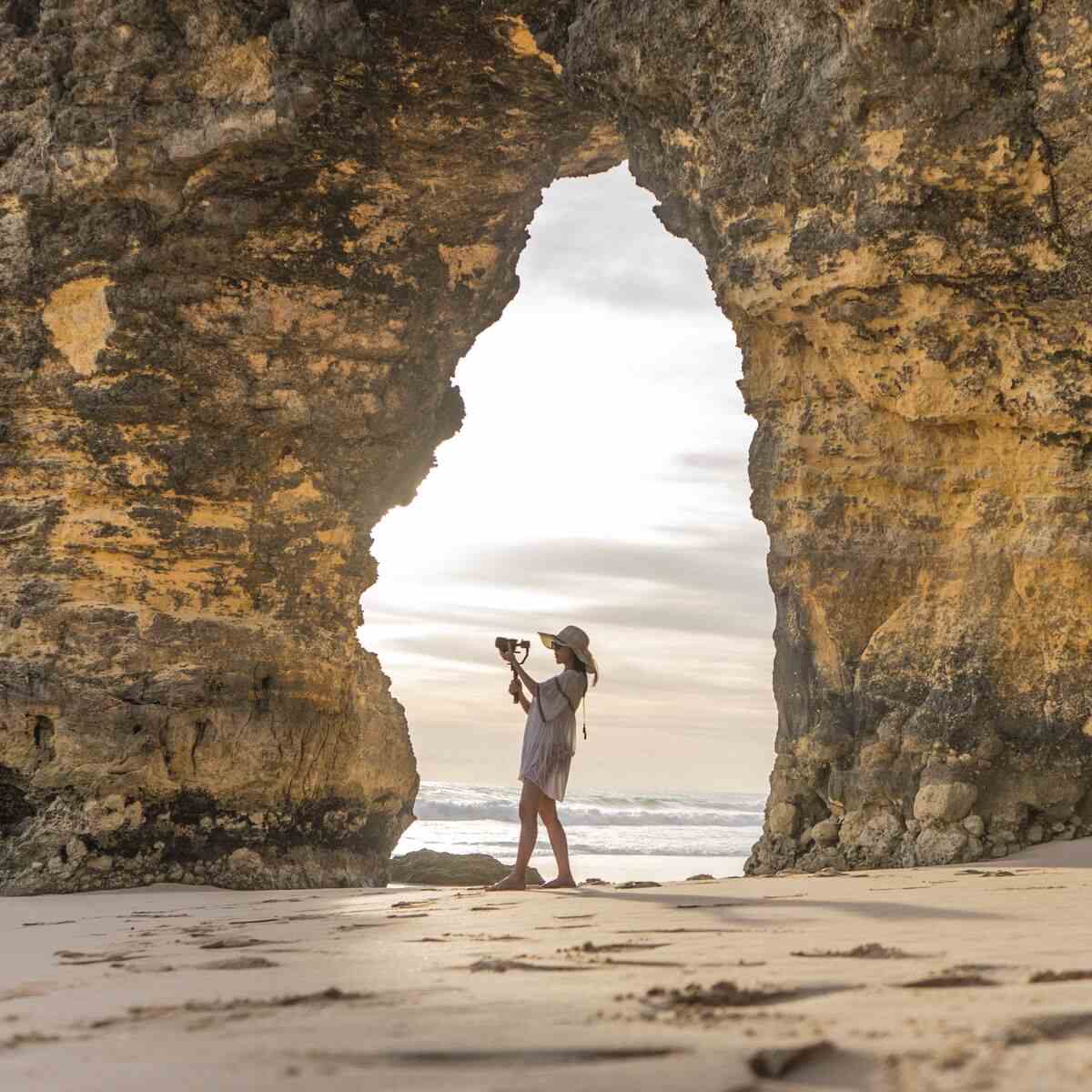
Sumba diving and snorkeling are possible, but they are not the island’s core reason to visit. Sumba is first and foremost about raw coastline, powerful surf, and a deeply rooted culture, with underwater experiences sitting in a secondary, still-developing tier.
We want to be very direct: if your primary goal is a dedicated dive holiday with daily boat trips, nitrox, and a long list of documented sites, Sumba is not yet on the same level as places like Komodo, Raja Ampat, or even Bali’s more developed coasts. If your priority is Sumba itself — for its waves, horses on the beach, megalithic villages and dry-savanna landscape — and you’re simply asking “can I get in the water with a mask and maybe do a few tanks while I’m there?”, the answer is a cautious yes, with clear caveats.
This page sets expectations, not fantasies. We will not name “secret reefs” or operators that we cannot substantiate, and we will not pretend there is a mature dive industry where it has yet to fully emerge. Conditions, staff, and gear on a young island change quickly; anything serious should be verified locally once you’re on the ground, and ideally cross-checked by your accommodation or a trusted concierge.
Why Sumba Isn’t a Primary Dive Hub (Yet)
Sumba sits in a biologically rich part of eastern Indonesia, not far (in regional terms) from world-renowned areas such as Komodo and Alor. On a map, it looks as though it should share their underwater fame. So why does it not?
1. Limited, dispersed dive infrastructure
Sumba’s coastline is long, wild and relatively undeveloped. Surf explorers came first, drawn by heavy reef breaks such as the famous Occy’s Left on the west coast. High-end beach lodges followed, oriented around waves, wide beaches, horses, and cultural excursions inland.
From our ongoing ground research:
- Reliable, full-service dive centres with comprehensive websites, published safety standards, and multi-boat fleets are still rare.
- Diving is often arranged through individual resorts or private guides on a semi-bespoke basis, rather than via a dense network of independent shops.
- Maintenance standards, cylinder testing intervals, and gear turnover are not documented in a way we are comfortable generalising publicly.
That does not mean there is no safe diving on Sumba. It does mean we cannot responsibly present a list of “top 10 operators” or guarantee that what is possible in one season will be available in the next. Any operation you are considering should be checked in person, with careful questions about equipment, insurance, and emergency procedures.
2. Challenging ocean conditions around much of the island
The same forces that make Sumba a serious surf destination also complicate relaxed Sumba diving and snorkeling:
- Open coasts are often fully exposed to Indian Ocean swell.
- Many beaches end in shallow reef shelves that break hard at mid to low tide.
- Tidal range is meaningful, and currents on headlands and channel mouths can be intense.
On paper, the phrase “underwater Sumba” might suggest lazy drifts over coral gardens. In practice, outside a handful of calmer pockets (we’ll come to those), much of the nearshore environment is energetic, with surge and breaking waves. This is ideal for experienced surfers; not ideal for casual snorkelers or novice divers.
3. Conservation and mapping are still catching up
Compared with Bali, Komodo, and Raja Ampat:
- There are fewer long-term marine conservation projects with public data on reef health, fish biomass, or coral cover.
- Detailed dive-site maps are sparse; local fishermen and surf guides often know more about specific reefs than the global dive community does.
- Moorings, if present, may be ad hoc rather than part of a formalised system.
We are cautiously optimistic: lower overall pressure from mass tourism may have left some reefs in reasonable condition. But “possibly intact” is not the same as “independently surveyed and monitored.” Until more science and structured guiding exist, we prefer not to oversell underwater Sumba.
Snorkeling Realities: Calmer Coves vs Surf-Exposed Reefs
Snorkeling spots in Sumba can be enjoyable if you choose locations carefully and keep expectations aligned with the island’s natural energy.
1. The logic of where to snorkel on Sumba
Broadly, you can think of the coastline in two categories:
- Surf-facing beaches: long, open stretches with strong swell and shorebreak, often over shallow reef.
- Protected inlets, river mouths, and lagoons: more sheltered from direct swell, often with gentler entry points.
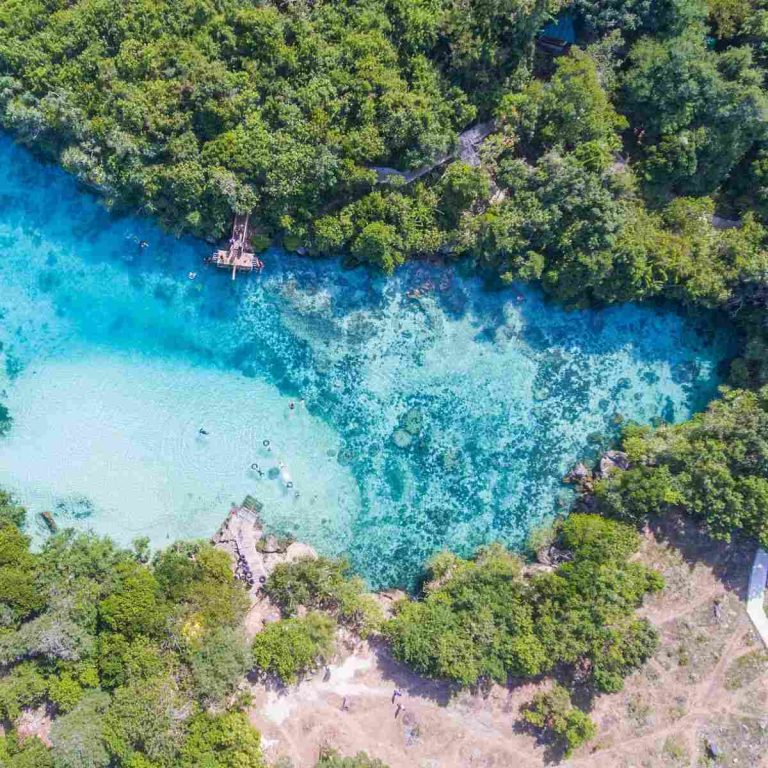
A well-known example of the latter is Weekuri Lagoon in Southwest Sumba — a saltwater lake separated from the open ocean by porous rock. It is not a coral garden in the classic sense, but its calmer, clear water can be more forgiving for swimming and casual mask-and-snorkel time than exposed surf beaches.
By contrast, surf zones near reef breaks (including areas proximate to Occy’s Left) typically feature:
- Powerful waves, especially in the dry season.
- Strong lateral currents and rips.
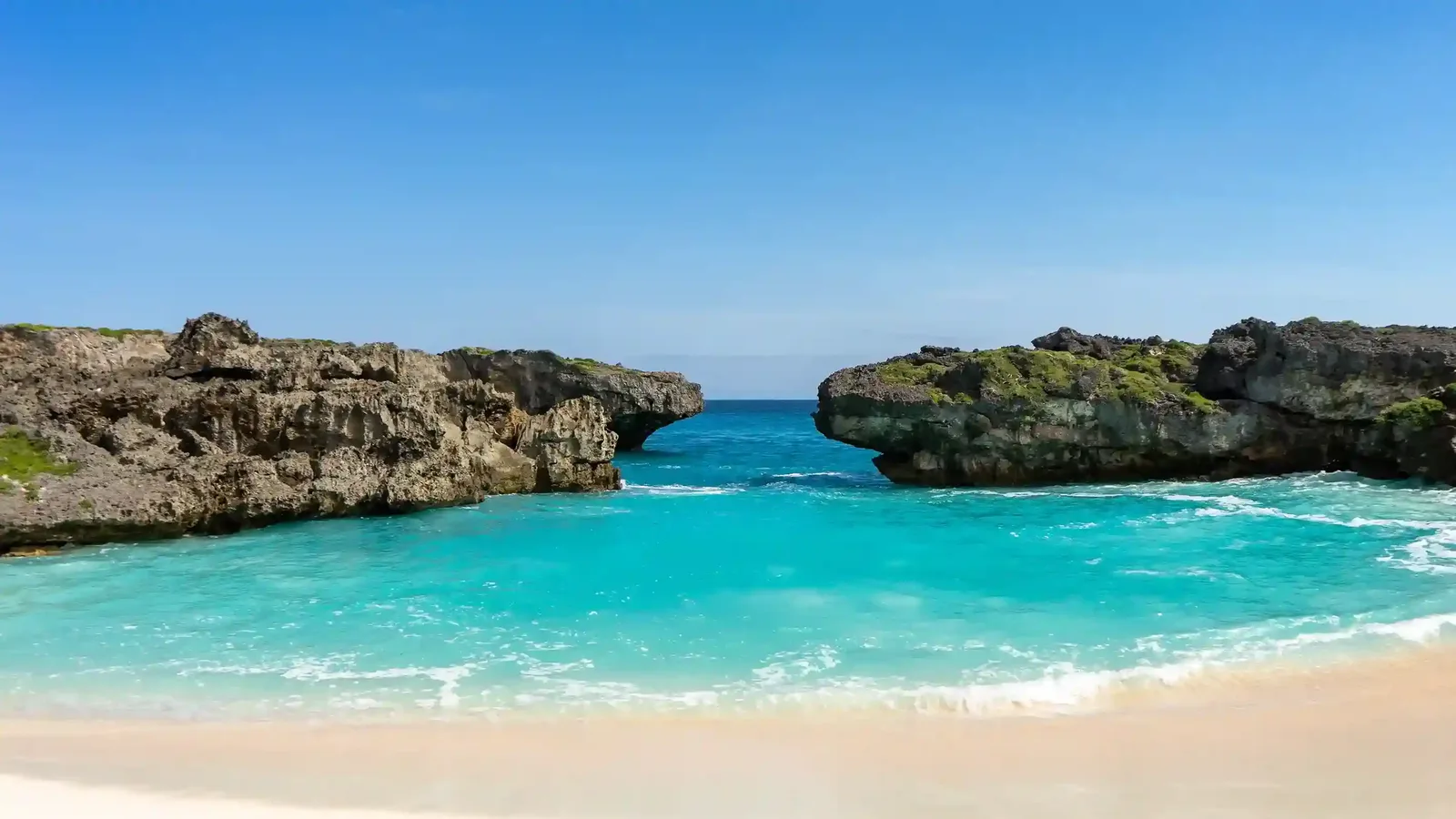
- Shallow reef close to shore — which may look invitingly turquoise from above, yet be turbulent and hazardous in reality.
These are areas to admire from the sand or on a surfboard if you are experienced, rather than to treat as relaxed snorkeling spots in Sumba.
2. Safety considerations for snorkeling on Sumba
We will be unambiguous: self-guided snorkeling off unfamiliar open beaches in Sumba is risky, particularly for children or weak swimmers.
Key points:
- Currents: On many coasts, you may not feel significant pull in the shallows, but step a few metres deeper and you can encounter rips heading out past the reef.
- Wave impact: Shorebreak can knock you over quickly, especially on steeper beaches. If that happens in front of reef or rocks, injuries are likely.
- Visibility: Water clarity can shift with swell and wind — calm turquoise one afternoon, milky with stirred-up sand the next.
Wherever you are staying, ask staff specifically about:
- Safe entry and exit points.
- Best tide windows (often higher tide is gentler over reef).
- Areas to avoid entirely due to known currents.
If you are building your itinerary and want an honest view of which parts of the island match your water confidence, we can help you plan your trip via email or WhatsApp, with precise, non-romanticised guidance.
3. What you might see: an honest range
Where conditions are appropriate and access is safe, snorkeling can offer:
- Healthy patches of hard coral in some zones.
- Reef fish typical of eastern Indonesia.
- Occasional turtles, depending on location and luck.
However:
- Do not expect dense, multi-layered coral gardens on par with central Komodo or Misool.
- Do not assume that every clear-water cove has vibrant coral; some are more about sand, rock, and seagrass.
- Wildlife sightings are never guaranteed.
Is Sumba Good for Diving?
The answer depends on what you mean by “good” and what you expect from a dive destination.
1. For serious divers with multiple Indonesian trips under their belt
If you have already logged extensive time in:
- Komodo (Labuan Bajo region),
- Raja Ampat,
- North Sulawesi (Bunaken, Bangka, Lembeh),
- Alor or Flores,
then Sumba might interest you as an exploratory side project. You may value:
- The chance to experience a large Indonesian island that is still strongly shaped by local tradition.
- Occasional exploratory dives arranged through a resort with access to a boat and guide.
- The contrast between land-based culture days and a handful of underwater forays.
In this framing, the question “is Sumba good for diving?” shifts from “is it world-class on a pure dive metric?” to “is it an unusual, somewhat raw place where a diver can get wet and see something different while focusing on the island as a whole?” For the latter, the answer can be yes.
2. For first-time divers or certification courses
This is more complex. Entry-level training benefits from:
- Predictably calm bays.
- Close proximity to established medical facilities and recompression chambers.
- Multiple operators for redundancy and choice.
Sumba currently lags more established hubs on all of those fronts. It is not where we would usually steer someone for:
- Their very first Open Water course.
- A once-in-a-decade “bucket list” dive holiday where every day needs to be maximised underwater.
For those goals, nearby islands with mature facilities offer a better risk-reward balance.
3. Practical realities: access, costs, and logistics
A few broad, grounded points:
- Access: Most visitors arrive via Tambolaka (Southwest/Northwest Sumba) or Waingapu (East Sumba). From there, you’ll travel overland to your lodge along sometimes rough roads.
- Boat use: Many water experiences (from surfing to fishing and potential diving) are organised directly by lodges. Distances to suitable reefs vary widely.
- Indicative costs: Where diving is available through high-end properties, expect per-person dive pricing to be materially higher than in high-volume hubs such as Bali, reflecting isolation and logistics. As a broad regional indicator, guided dives in remote Indonesian islands often fall somewhere in the USD 80–180 per person per day range (last verified June 2026), depending on equipment, boat type, and number of dives — Sumba, where offered, would likely sit toward the upper half of that for one-off, bespoke outings.
We do not quote specific operators or fixed packages for Sumba diving and snorkeling, because availability and standards move too quickly. Any serious plan should be cross-checked directly with your accommodation and, ideally, via an on-island contact.
The Honest Gap: Limited Documented Dive Infrastructure
1. Why we don’t list specific dive operators
Given our role as an independent curation and concierge-intelligence authority, we spend a significant amount of time separating durable reality from marketing narratives. For diving in Sumba, that currently means:
- We find mentions of “house reef dives” or “nearby sites” in some resort descriptions, but without enough operational detail for a firm public recommendation.
- Staff turnover can be high; a strong dive guide one season can relocate the next.
- Boat condition, oxygen availability, and emergency protocols are seldom described with the clarity we would expect for a categorical endorsement.
Because of this, we will not fabricate a “dive scene” or pin our name to specific operators in a way we cannot substantiate over several seasons. Our policy is simple: no one can pay to change what we publish; if you proceed with our partner they may pay us a referral fee at no extra cost to you.
2. What we can say with confidence
There are three statements we are comfortable making:
- You can sometimes arrange diving through certain higher-end lodges or via locally connected guides, particularly in the more visited western and southwestern quadrants of Sumba.
- Infrastructure is thinner and more variable than in Indonesia’s classic dive regions, with fewer redundancies if something goes wrong.
- The majority of Sumba’s most reliably accessible water activities today are still surf-oriented (for those with skill) or land-based coastal enjoyment (walking, picnics, photography), not daily multi-dive operations.
If your personal bar for diving includes specific box-ticks — nitrox, photo gear support, multiple deco gases, tech-friendly operators — Sumba is, for now, more of a curiosity than a base.
3. How we support clients in this grey area
For travellers who are committed to Sumba but want to understand their water options, we:
- Clarify your actual risk tolerance and skill level.
- Map your chosen property against known safer swim and snorkel spots.
- Cross-check, close to departure, what their current capability is for guided water activities.
- Where appropriate, suggest building in time before or after Sumba in a neighbouring region that delivers the diving standard you expect.
If that kind of honest, logistics-first planning is what you need, you can plan your trip with us via email or WhatsApp; we prioritise setting realistic expectations over telling you what you might want to hear.
Alternatives Near Sumba for Serious Diving
If your heart is set on Sumba for land and culture, but your logbook goals require more robust underwater time, pairing Sumba with a nearby dive hub is a sensible strategy.
1. Komodo and Labuan Bajo
Komodo National Park, accessed from Labuan Bajo in Flores, is one of Indonesia’s most established dive regions. Compared with underwater Sumba as it currently stands, Komodo offers:
- A dense catalogue of mapped sites with known conditions.
- Multiple reputable dive operators with clear safety standards.
- Regular access to current-rich channels, manta cleaning stations (seasonal and never guaranteed), and vibrant coral walls.
Many travellers:
- Fly into Labuan Bajo, spend several days to a week diving (land-based or on a liveaboard).
- Then connect onward to Sumba for a more land- and surf-focused stay.
- Or reverse the order, using Sumba as the decompression phase of an otherwise dive-intense trip.
2. Bali’s east and northeast coasts
Compared to Sumba:
- East Bali (Padangbai, Candidasa) and Northeast Bali (Tulamben, Amed) have far more training options, shore dives, and emergency infrastructure.
- Travel logistics are simpler, especially with direct international flights into Bali’s airport.
A pragmatic pattern:
- Complete dive training or rack up relaxed dives in Bali.
- Then fly onward to Sumba via a short domestic hop, shifting focus to beaches, surf watching, and megalithic villages.
3. Alor and other frontier regions
For highly experienced divers drawn to frontier feeling but needing strong operations, destinations like Alor offer:
- Very high-quality reefs.
- Genuine remoteness, similar in spirit to Sumba on land.
- Yet more established operators with long-running reputations.
Combining Sumba with one of these regions creates an itinerary where:
- The “underwater” box is confidently ticked elsewhere.
- Sumba is free to be what it currently excels at: wild coasts, horses at sunset, village life, and a few carefully chosen, condition-dependent water sessions rather than daily diving.
What Sumba Does Exceptionally Well in the Water (Beyond Diving)
Even if Sumba diving and snorkeling remain secondary, the island offers water-adjacent experiences that are difficult to replicate elsewhere.
1. Surf for those with sufficient experience
Surf breaks like Occy’s Left have long drawn committed surfers. These are not beginner playgrounds, but for those with the skill:
- Long, powerful left-handers.
- Sparse line-ups compared with Bali.
- A sense of frontier surfing that is increasingly rare in Indonesia.
We cover this in more detail in our dedicated surf perspective (see our Sumba surf pillar article), but the point here is simple: waves, not scuba, led Sumba’s relationship with the sea.
2. Coastal immersion and culture
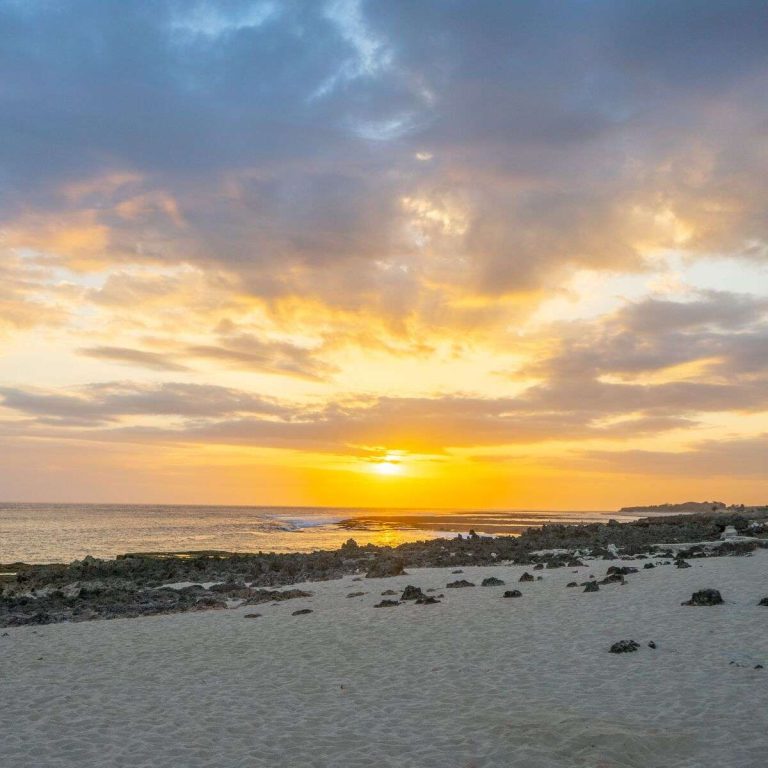
Sumba’s beaches are about:
- Wide skies and long sand walks rather than crowded bars.
- Horses and sometimes buffalo being exercised at low tide.
- Traditional villages often within a short drive of the coast, combining sea air with megalithic stonework and marapu belief.
For many high-net-worth travellers we advise, this blend — raw shorelines, deeply felt local culture, and selective comfort — is more compelling than any single activity list.
3. Lagoon and estuary time for lower-risk swimming
Spots such as Weekuri Lagoon illustrate a broader category: more enclosed, calmer bodies of water where:
- Families can swim with less exposure to large surf.
- Casual floating, photography, and gentle exploration replace the intensity of open-ocean snorkeling.
These are not necessarily coral showcases, but they are often the most realistic way for a multi-generational group to enjoy Sumba’s water without venturing into higher-risk zones.
Key Comparisons: Sumba vs Classic Indonesian Dive Hubs
Below is a concise comparison to ground expectations:
| Factor | Sumba | Komodo / Raja Ampat style hubs |
|---|---|---|
| Primary travel draw | Surf, beaches, culture, landscape | Diving and marine biodiversity |
| Dive operator density | Low, dispersed, often lodge-based | High, with multiple specialised centres |
| Documented dive sites | Limited, sporadically mapped | Extensive, with known profiles and briefings |
| Typical daily dive structure | Occasional, bespoke by arrangement | Standardised 2–3 tank days, liveaboards |
| Ideal traveller profile | Explorer prioritising land and culture, accepting ad hoc water time | Dive-focused visitor aiming to maximise underwater hours |
| Snorkeling ease | Concentrated in select coves/lagoon-type areas | Broad range of calm bays and guided trips |
How We Recommend Using Sumba if You Care About the Sea
For travellers who feel a strong pull toward Sumba yet still want meaningful time in or on the water, we tend to suggest:
1. Start with your priorities, not the marketing
Ask yourself:
- Is my deepest motivation for this trip cultural and landscape-driven?
- Or am I measuring success primarily in logged dives and specific species?
If culture and landscape lead, Sumba is a strong candidate, even if Sumba diving and snorkeling remain modest. If logging dives is the core metric, base yourself in a dedicated hub and treat Sumba as an optional add-on later.
2. Use Sumba for variety, not volume
Consider Sumba as:
- A place to surf (if experienced), walk dramatic beaches, and swim selectively in safer areas.
- A context for one or two exploratory dives or guided snorkels if your accommodation and conditions align.
- An intentional contrast to the more structured underwater days you spend elsewhere in Indonesia.
This mindset removes pressure on Sumba to deliver something it is not currently designed to provide at scale.
3. Let us help you balance the itinerary
Our role is not to push you toward “doing everything” on Sumba, but to help you understand:
- Which coastlines best align with your swimming and snorkeling comfort.
- How to sequence Sumba with Bali, Komodo, or other regions to respect weather patterns and domestic flight routes.
- What a realistic number of water days on Sumba might be for your group profile (multi-generational, highly experienced ocean people, or cautious swimmers).
To discuss specifics and build a bespoke route that treats Sumba fairly — neither oversold nor underutilised — you can plan your trip with us; we are reachable via email and WhatsApp for detailed, candid planning.
FAQs: Sumba Diving and Snorkeling
Is Sumba a good choice for a dedicated dive holiday?
For a trip where diving is the primary focus and you expect multiple structured dive days with a choice of operators, Sumba is not yet ideal. It is better treated as a culture- and landscape-led destination where diving, if available, is occasional and secondary.
Are there safe places to snorkel in Sumba?
Yes, there are calmer areas such as certain coves, river mouths, and Weekuri Lagoon that can be suitable for relaxed swimming and light snorkeling in the right conditions. Always ask local staff about tides, currents, and recommended zones before entering the water.
Can beginners learn to dive in Sumba?
While you may find instructors or resort-based programs, we usually recommend more established training hubs like Bali or Komodo for first-time courses, due to their calm training sites, denser infrastructure, and clearer emergency pathways.
How does the marine life around Sumba compare to Komodo?
Both sit in a rich marine region, but Komodo has far more documented sites, long-standing conservation work, and mature guiding. Sumba’s underwater potential is less mapped and less consistently accessible, so divers seeking iconic biodiversity experiences generally prioritise Komodo.
What is the best way to combine Sumba with serious diving in one trip?
A common pattern is to spend several days diving in a hub such as Komodo (Labuan Bajo) or Bali, then fly on to Sumba for a land- and surf-focused stay with selective, condition-dependent water activities. This way you secure the underwater experience elsewhere while still giving Sumba the time it deserves on its own terms.