Pasola 2027: How the Timing Really Works
Calm, detailed pasola 2027 timing guide explaining dates, nyale link, and how to plan a respectful Sumba trip around this fluid ritual festival.
16 min read
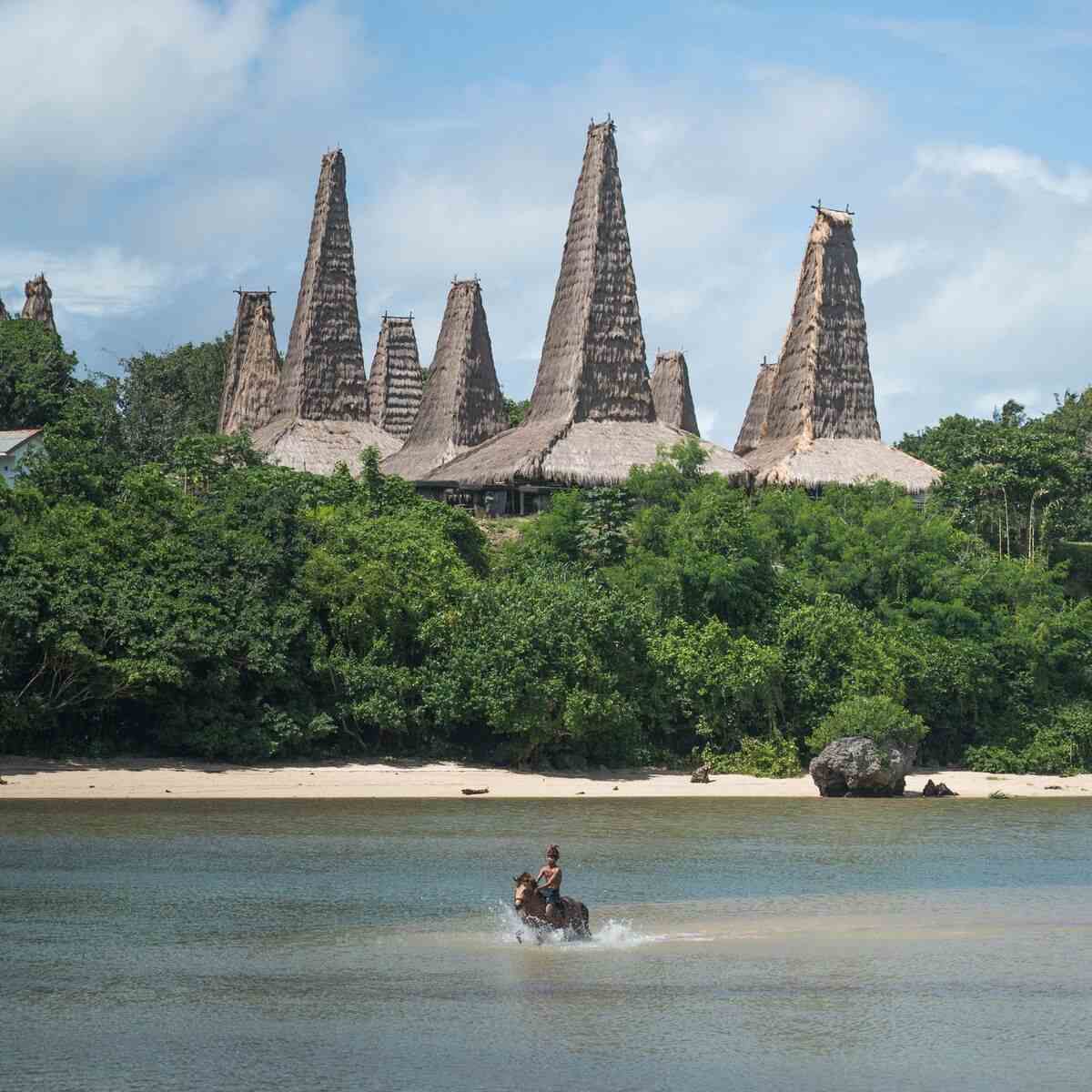
The pasola 2027 timing guide is, above all, a guide to uncertainty. Pasola is a living ritual in West and Southwest Sumba, and its exact 2027 dates will only be fixed locally, close to the event, by traditional custodians who read the sea, the moon, and the nyale sea-worms.
If you are trying to understand when is pasola 2027, the honest answer is: expect it in the February–March window (occasionally early April), in several districts on Sumba’s southwestern coast — and plan a flexible trip that can absorb a few days of movement in either direction. Any website offering you exact 2027 dates today is, at best, guessing.
Below, we set out what pasola is, how the dates are actually set, what a realistic pasola festival schedule feels like on the ground, and how to plan around an uncertain event without disrupting the ritual itself.
What Pasola Really Is: Ritual First, Spear-Throwing Second
Pasola is often described as a “spear-throwing festival” for tourists. That framing is incomplete. At its core, pasola is a Marapu ritual — part of Sumba’s ancestral belief system — in which mounted groups of men ride and cast blunted spears at high speed, watched over by Rato (ritual priests) and village elders.
Marapu and the ritual sequence
Marapu is the ancestral spiritual framework that shapes much of Sumbanese life: ceremonial calendars, house architecture, sacrificial rites, and the invisible obligations between land, clan, and the dead. Pasola sits firmly inside this world, not outside it.
Before anyone rides into the pasola field, a series of less-visible rites will already have taken place:
- Consultation by the Rato on the right time, using both astronomical cues and inherited knowledge.
- Nyale-related ceremonies on the beach at night, when the sea-worms rise with the tide.
- Village offerings and animal sacrifices asking for fertility of land and people, and for protection in the arena.
- Community-level taboos activated around conflict, behavior, and speech.
Only after this ritual scaffolding is in place do we see the public-facing spectacle that visitors associate with the pasola festival schedule.
The mounted games: what a visitor actually sees
On a pasola day, two sides of horsemen, often representing different villages or clans, charge across a wide grassy field, casting wooden spears (also called pasola) toward one another. Horses are lightly equipped; riders often go without saddles. There are no protective barriers. The intensity is real.
A few important realities for travelers:
- It is not a reenactment or show. The stakes are spiritual and social, not theatrical.
- Injuries are possible. Blunted spears still cause harm; falls are common.
- No ticketed seating. Spectators stand or cluster under trees and temporary tarps, often quite close to the field.
- The “program” is fluid. There is no fixed hour-by-hour program; the rhythm of the day follows ritual decisions and practicalities (weather, horse readiness, community consensus).
As Sumbanese friends often remind us: pasola exists for Marapu, for the land, and for the community; visitors are welcome observers, not the audience it is designed for.
Key pasola districts on Sumba
Pasola is not a single-site event. It’s a series of related rituals and mounted games in different districts, each with its own local custodians and nuances. The main west-coast areas are:
- Wanokaka
- Closer to the main hub of Waikabubak. Often associated with one of the earliest pasola events each year, shortly after the nyale appear.
- Lamboya
- On the central-west coast. Fields are typically inland from dramatic headlands and beaches.
- Gaura
- Further southwest, on the border of what many maps mark as West and Southwest Sumba.
- Kodi
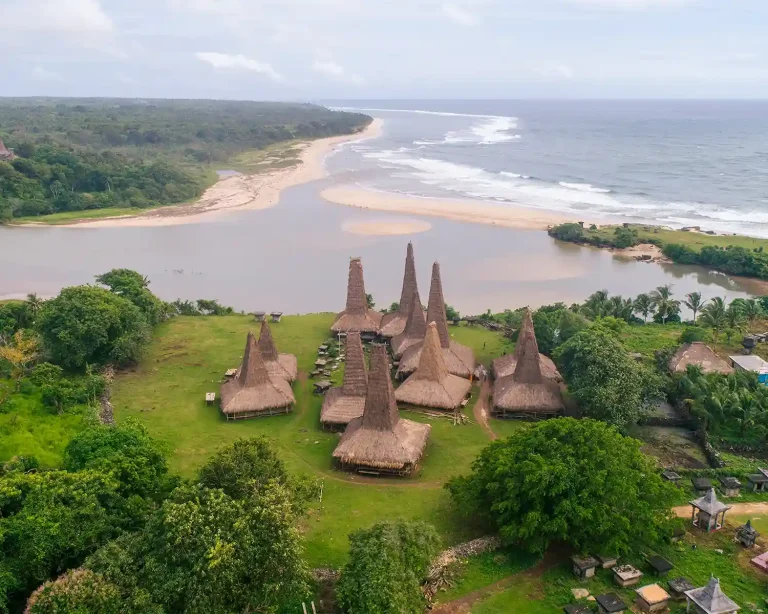
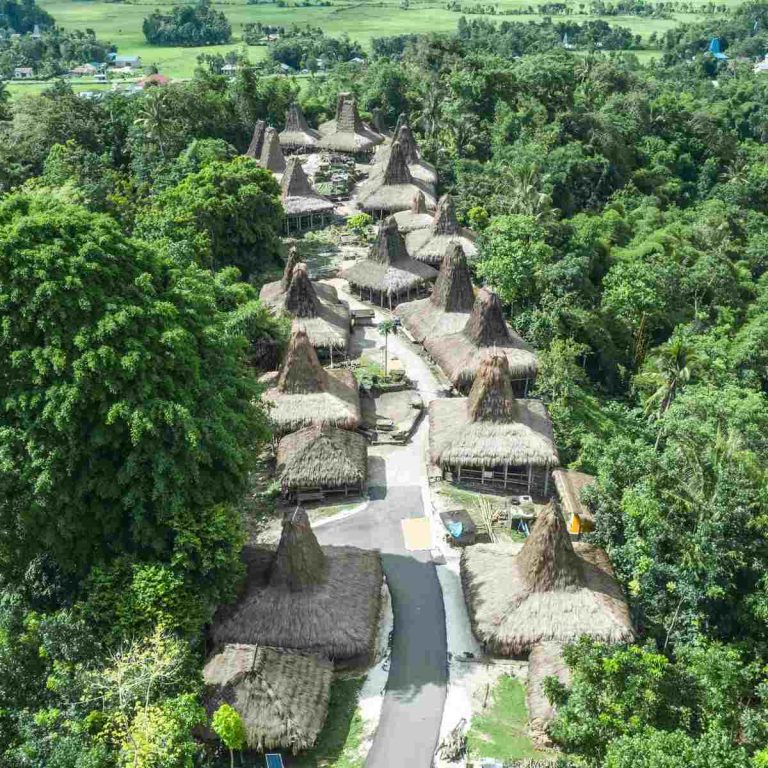
- In Southwest Sumba, toward the island’s far southwestern tip, known for strong ritual traditions and distinctive megalithic villages.
In a typical year, pasola in these districts unfolds across several weeks, not a single day, as the “season” migrates along the coast.
Why Pasola Dates Are Always Fluid (Including 2027)
The core reason a precise “pasola 2027 festival schedule” does not exist yet is simple: dates are not set by a central tourism office, and they are not fixed years in advance. They are read, debated, and then declared by local ritual leaders based on signs.
Nyale sea-worms: the living calendar
Pasola is intertwined with the nyale, small sea-worms that rise from the ocean floor in great numbers once a year around a particular full moon and tide. Across parts of eastern Indonesia, nyale are harvested as food; in Sumba’s pasola regions, they are a key sign from the sea, linked to fertility and the agricultural cycle.
In practice, this means:
- Ritual leaders watch the sea and sky to anticipate when the nyale will appear.
- The exact night of mass nyale emergence can shift slightly from year to year.
- The main pasola day for a district is typically scheduled for the days directly following that emergence, often aligned with the nearest full moon.
This interplay of ocean, tide, and lunar cycle is why pasola can fall at different points in late rainy season, even if, to an outsider, “February” seems like a fixed thing.
Lunar phases and the Marapu ceremonial calendar
The Marapu calendar is not a simple overlay of the Gregorian one. Ritual leaders read:
- Lunar phases and the exact full-moon night that aligns with local tradition.
- Preceding omens (weather patterns, animal behavior, social events).
- Clan obligations, such as weddings, funerals, and house-building ceremonies, which may affect the best timing.
All of this is negotiated at community level. It is not announced by a single island-wide authority years ahead, which is why any precise 2027 date list you see now should be treated with caution.
The reliable part: the seasonal window
What is reasonably predictable for pasola 2027 is the seasonal window. Based on long-term patterns:
- Expect pasola 2027 to fall broadly in the February–March window.
- In some years, early April events may occur, especially in the later districts along the coast.
- The rough sequence often starts earlier in Wanokaka and moves through Lamboya, Gaura, and Kodi, but exact order and spacing can change.
Think of it as a movable season anchored around late rainy-season full moons and the nyale, not a set of fixed public-holiday dates.
- There is no official, fixed pasola 2027 schedule published this far in advance.
- All pasola dates are set locally by ritual custodians based on nyale and lunar timing.
- Any specific 2027 date you see online today is provisional at best and may change.
- You must confirm dates on the ground (via trusted local contacts) in the days and weeks before traveling.
- This guide offers context and planning strategy, not a guaranteed timetable.
Planning a Trip Around Pasola 2027 When the Date Isn’t Fixed
Planning a trip around pasola when you cannot lock in a date a year or two ahead can feel uncomfortable, especially if you are used to structured itineraries and set festivals. In practice, it is manageable, provided you accept a degree of flexibility and travel to Sumba for more than a single day’s spectacle.
Step one: choose a sensible window, not a single day
Rather than chasing a specific “pasola day,” choose a window wide enough to absorb local variation:
- For 2027, a realistic target window for most travelers is 10–14 days around the anticipated February–March nyale period.
- If your priority is the earlier events (often Wanokaka / Lamboya), lean toward the first half of that window.
- If you are more drawn to the southwestern edge of the island (Gaura / Kodi), bias toward the latter half.
With this approach, you are not betting everything on a single date. You allow the trip to flex slightly once local announcements are made.
Step two: build a Sumba-first itinerary
The best hedge against pasola’s unpredictability is to let Sumba itself be the anchor, not just the festival. Even if pasola is shifted by a few days, you will be on the island, with time to adjust.
A balanced pasola-anchored itinerary might include:
- 3–4 nights near West Sumba’s cultural heart (for example, within reach of Waikabubak) to visit megalithic villages, traditional houses, and local markets.
- 3–5 nights along the west or southwest coast with access to Lamboya, Gaura, and Kodi, so you can reposition quickly if a pasola day is called.
- Additional nights in East or Central Sumba if you want broader landscape and textile experiences.
Room rates at well-run, small-scale properties in west and southwest Sumba typically range from roughly US$150–450 per night for comfortable, characterful accommodation (last verified June 2026). It is sensible to book cancellable or flexible-rate rooms during the pasola window, as small date shifts are common.
If you would like help aligning your accommodation and driving days with the likely pasola period, we can plan your trip via email or WhatsApp, using current on-the-ground information from our local network.
Step three: lock in logistics that can pivot
Key logistical points for a pasola-focused trip:
- Flights: Sumba’s main gateways (e.g., Tambolaka in the west and Umbu Mehang Kunda in the east) have limited daily flights. Book these early, with some buffer days at either end of your pasola window if possible.
- Drivers and vehicles: Rather than over-fine-tuning a day-by-day schedule months ahead, secure a reliable car and driver for a block of days, with the understanding that you may change daily routes to respond to pasola announcements.
- Internal positioning: Distances on Sumba are longer than they appear on a map. West-coast roads, while improving, can still be slow. Avoid planning accommodation so far away that you cannot reach the pasola field in the early morning if the day is suddenly confirmed.
The goal is to be on the right side of the island, with a vehicle and driver who know the local landscape and are in contact with village news.
Step four: accept that “maybe” is the only honest answer until close to time
One of the most useful mindshifts in planning a pasola 2027 timing guide for yourself is to treat every pre-trip date as “strongly indicative, not guaranteed.” Locals may say “likely next week” or “probably after the full moon.” These are meaningful signals, but not contracts.
In the weeks leading up to your trip, expect a conversation that sounds like:
- “The nyale are expected around these nights.”
- “If they appear strong, the Rato may declare pasola for these days.”
- “We should hold these two or three mornings free to be ready.”
Travelers who thrive at pasola are those who are comfortable with this kind of fluidity, and who value the broader cultural immersion at least as highly as the mounted contest itself.
Typical Pasola Season Pattern vs. Fixed-Festival Expectations
To help recalibrate expectations, it is useful to contrast typical pasola timing with a conventional fixed-date festival. Use this as a conceptual guide, not a timetable.
| Aspect | Pasola (Sumba) | Typical fixed-date festival (e.g., city arts event) |
|---|---|---|
| Date setting | Set locally by ritual leaders based on nyale and moon; confirmed close to time. | Set by organizers a year or more ahead. |
| Publication of dates | Word of mouth in villages; local authorities may relay, but not always promptly online. | Official websites, press releases, ticketing platforms. |
| Seasonal window | Late rainy season (Feb–Mar, sometimes early Apr), variable by year. | Often locked to a specific weekend or week annually. |
| Program structure | Single main day (or part-day) per district, framed by prior rituals. | Multi-day, hour-by-hour program; multiple venues. |
| Audience focus | Community and Marapu obligations first; visitors are observers. | Designed primarily for paying attendees. |
| Tickets and seating | No formal tickets; informal viewing areas around the field. | Reserved seats, passes, VIP areas. |
| Predictability | Medium: the window is predictable, exact day less so. | High: exact days and times advertised long in advance. |
Planning a trip around pasola 2027 therefore requires a mindset closer to following a natural phenomenon (like a migration or bloom) than attending a staged cultural show.
How to Witness Pasola Respectfully in 2027
Being present at pasola is a privilege. It also carries responsibilities. Your choices contribute to how the festival evolves under increasing outside attention.
Respecting Marapu and local leadership
Even if you do not personally share Marapu beliefs, recognize that pasola is sacred ground for many Sumbanese. Practical ways to show respect:
- Follow local instructions from elders, Rato, and community coordinators around where you may stand, when you may move, and how close you can approach riders.
- Dress modestly: covered shoulders and knees as a baseline, avoiding loud, costume-like outfits that pull focus.
- Refrain from intrusive photography during clearly ritual moments (offerings, prayers, sacrifices) unless expressly invited.
- Avoid stepping on tomb platforms or climbing on megaliths; many fields are near ancestral graves.
Treat pasola field edges as you would the edge of a religious compound, not a sports stadium.
Photography, drones, and social media
Photography is generally accepted in public areas, but a few guardrails matter:
- Ask before close-up portraits, especially of elders and children.
- Do not use drones without prior local permission; they can disturb horses and riders and disrespect the ritual mood.
- Avoid framing injuries or distress for spectacle. Remember that this is someone’s son, husband, or brother.
- Be mindful with captions. Avoid language that exoticizes or strips the ritual of its meaning.
Money, “tickets,” and contributions
There is no official, standardized ticketing system for pasola today. This can be disorienting if you expect gates and prices. You may encounter:
- Informal parking or viewing-spot fees requested by local youth or organizers.
- Opportunities to contribute to village funds or ritual costs.
- Local guides offering context and translation.
Modest, respectful payment for genuine services or organized viewing arrangements is appropriate. What to avoid:
- Paying for behavior that escalates risk or spectacle purely for visitors.
- Pressuring anyone to stage “private pasola” outside the accepted ritual framework.
If you are unsure how to handle a particular request, a trusted local host or driver can advise on what is normal for that community and moment.
Safety for you and for others
Pasola’s power partly comes from its lack of barriers and formal safety systems. This also creates risk. To keep yourself and others safe:
- Stay behind the informal lines set by locals; the field boundary is not always obvious to outsiders.
- Keep children close and away from horse paths.
- Wear shoes you can move fast in; there can be sudden surges when horses change direction.
- Have basic sun and rain protection ready; weather during late rainy season is highly changeable.
Do not attempt to step into the field for a “better angle.” Riders are focused on each other and the ritual, not on avoiding someone’s camera.
Fitting Pasola Into the Wider Sumba Seasonal Picture
Because pasola happens in the late rainy season, you should understand how that interacts with the wider climate and travel patterns on Sumba.
Rainy season reality
February–March on Sumba is, by any measure, wetter and more humid than the dry-season months. Based on long-term climate norms:
- You can expect more frequent showers and occasional heavy downpours.
- Roads, particularly smaller coastal or village tracks, can be muddy and slower.
- Landscapes are greener; rice fields and hills are often at their most lush.
Our broader guidance on the island’s climate patterns is covered in detail in our best time to visit Sumba guide and our dedicated Sumba rainy season article. Pasola necessarily sits inside the rainy season, so your packing and expectations should follow that, not a dry-season beach holiday template.
Balancing pasola with other interests
If your travel dates are bound by work or school calendars, it may be wise to treat pasola as a powerful possibility rather than the sole purpose of the journey. Even if pasola 2027 does not align perfectly with your days on the island, late rainy season offers:
- Intense, green landscapes for those interested in photography or painting.
- Village time with fewer tourists than the height of dry season.
- Textile exploration with weavers who are less pulled into fields or dry-season ceremonies.
Thinking this way reduces the pressure on a single day and allows you to appreciate the trip even if pasola’s timing shifts beyond your reach.
How We Actually Help With Pasola 2027 Timing
As an independent curation and concierge-intelligence platform, our role is not to sell you a pasola package. It is to give you a clear understanding of the likely window, and then, closer to the time, to verify emerging dates through people who live with the ritual.
What we can help with, if you plan your trip with us via email or WhatsApp:
- Refining your travel window based on the latest nyale and lunar expectations once we enter late 2026/early 2027.
- Plotting an itinerary that keeps you well-positioned on the island even if dates slide by a few days.
- Introducing you to vetted local hosts and drivers who understand both pasola’s ritual significance and your need to move safely and discreetly.
- Giving neutral guidance if rumors or conflicting dates circulate online.
No one can pay to change what we publish; if you proceed with our partner they may pay us a referral fee at no extra cost to you. Our priority is to maintain the trust of both travelers and the Sumbanese custodians of pasola, which depends on honest framing rather than certainty we cannot ethically promise.
FAQ: Pasola 2027 Timing and Planning
Can you give me exact pasola 2027 dates now?
No. Exact pasola 2027 dates have not been set and will not be fixed until much closer to the event. Dates are determined locally by ritual leaders based on nyale sea-worms, lunar phases, and community considerations. Any specific 2027 dates you see online today should be treated as provisional and subject to change.
What is the most realistic travel window for pasola 2027?
The most realistic window is broadly February–March 2027, with a possibility of some events in early April, depending on the nyale and local decisions. For travelers who want to maximize their chances, we generally suggest a 10–14 day stay during that period, positioned on Sumba’s west and southwest coasts, and staying flexible.
How far in advance are pasola dates usually confirmed?
Confirmation timing varies by district and year, but reliable local consensus often crystallizes only a few weeks, and sometimes days, before the actual pasola day. Initial indications may circulate earlier, but they can shift if the nyale or other signs do not align as expected.
Is it possible to “book” pasola or buy tickets?
No formal ticketing system exists. There is no central body selling official pasola tickets. You may pay for transport, guiding, parking, or managed viewing arrangements, and you may choose to contribute to village funds, but these are not the same as a standardized ticket. Be wary of anyone selling guaranteed front-row access months in advance.
Can you help me time my 2027 Sumba trip for the best chance of seeing pasola?
Yes. We can help you identify the most promising travel window, structure your itinerary to stay within reach of key pasola districts, and, closer to 2027, cross-check emerging local information. To start that process and to coordinate via WhatsApp if you wish, you can plan your trip with us directly.