Is Sumba Worth Visiting? An Honest Editor’s Take
Honest answer to is sumba worth visiting: who Sumba suits, what makes it distinct, trade-offs, logistics, rough costs, and how to plan it well.
15 min read
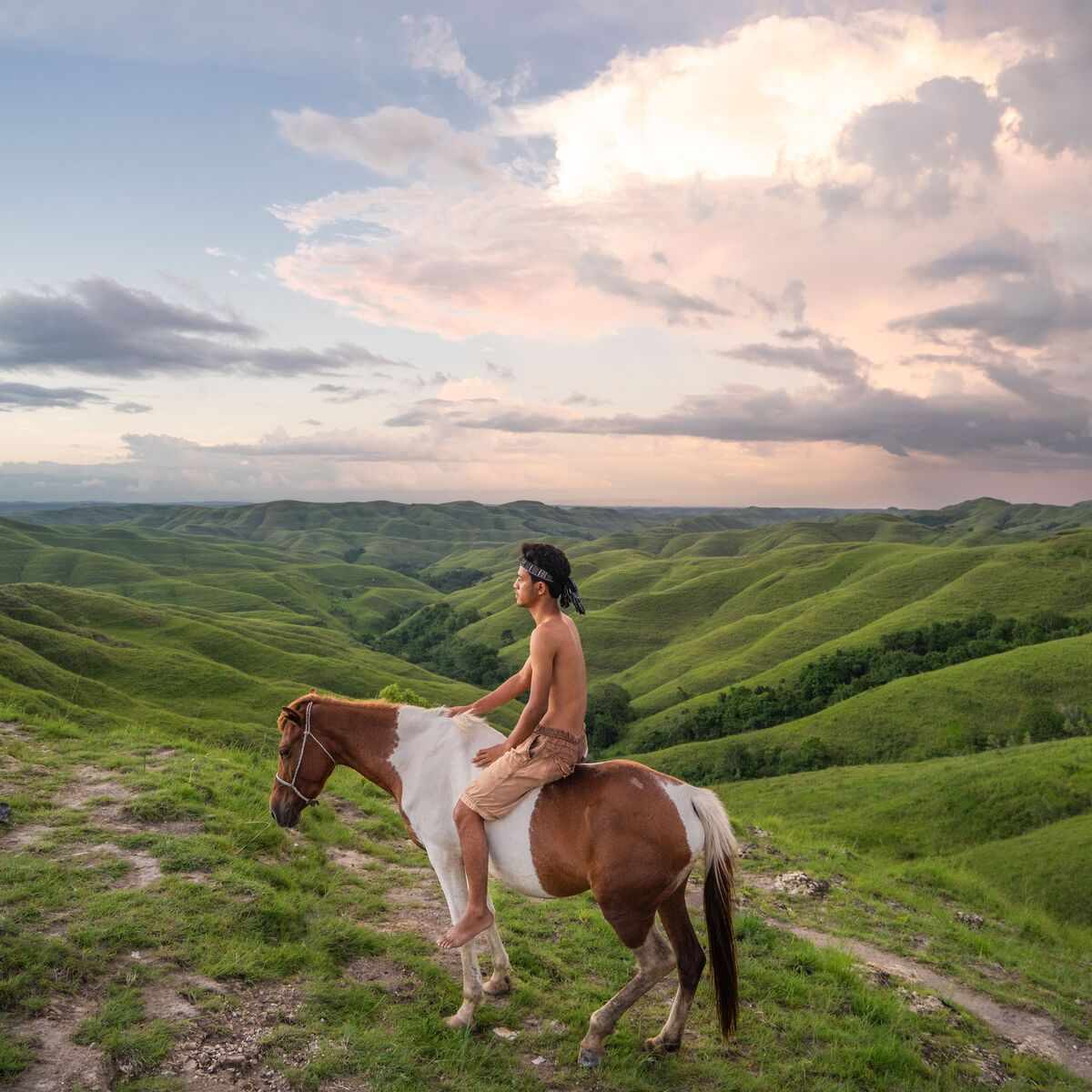
Is Sumba worth visiting? Yes, if you care more about raw landscapes, living culture, and quiet than about polished infrastructure and nightlife; less so if you want easy resort-hopping and dense dining options.
This guide is our candid editorial answer to that question, drawn from on-the-ground reporting, local partnerships, and years of itinerary design support for private travelers.
Who Sumba is right for (and who it is not)
Who tends to love Sumba
From our experience, Sumba Island most rewards travelers who:
- Value landscape and silence over scene and nightlife. You come for wide horizons, empty beaches, and the sound of surf and insects, not for bars or boutiques.
- Are genuinely interested in living culture. Megalithic hilltop villages, traditional houses, and animist Marapu rituals are part of daily life, not staged shows.
- Can accept some friction in logistics. Domestic flights, longer drives on imperfect roads, and flexible timing are part of the experience.
- Prefer “fewer, deeper” places. Sumba suits travelers content with two to three bases and time to walk, talk, and observe, not a checklist of sights.
- Are comfortable with relative remoteness. Medical facilities, shops, and service density are lower than on Bali or Java; you plan accordingly.
Who may be happier elsewhere
By contrast, Sumba Island may not be worth it for travelers who:
- Want easy, urban convenience. If you dislike early flights, bumpy transfers, or limited dining choices, larger Indonesian islands are easier.
- Prioritize nightlife and shopping. There is almost no bar culture, limited café life, and modest handicraft markets rather than developed retail districts.
- Expect dense luxury infrastructure. There are a handful of high-end properties, some mid-range hotels, and simple guesthouses, but not Bali-style breadth.
- Need fully predictable schedules. Weather, local ceremonies, or infrastructure constraints can affect timing; a degree of flexibility helps.
If you are unsure which side you fall on, we can help you think through fit, route, and timing based on your priorities. You can plan your trip with us via email or WhatsApp; we curate options and introduce you to vetted local partners, but we do not operate tours ourselves.
What makes Sumba distinct within Indonesia
Part of answering “is Sumba Island worth it” is understanding how it differs from other Indonesian islands many travelers know better.
Four regencies, one large island
Since 2 January 2007, Sumba has been administratively divided into four regencies: Sumba Barat (West Sumba), Sumba Barat Daya (Southwest Sumba), Sumba Tengah (Central Sumba), and Sumba Timur (East Sumba). Together they cover roughly 11,243 square kilometres, making Sumba significantly larger than Bali in land area, but with far fewer visitors.
Drier east, greener west
Unlike many lush, volcanic Indonesian islands, Sumba sits in a comparatively dry zone of the archipelago.
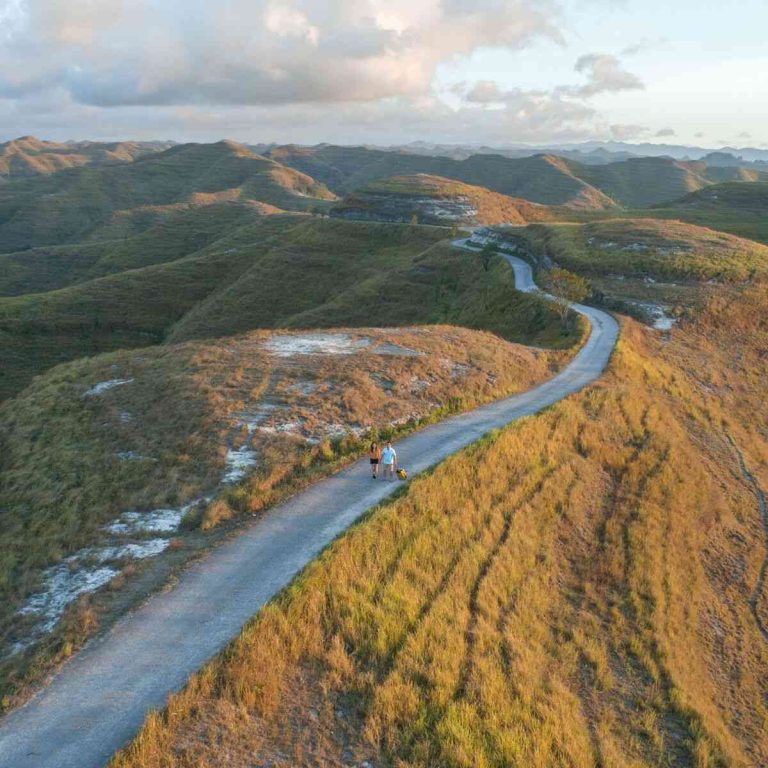
- Eastern and central Sumba tend toward open savanna, grasslands, and sparser tree cover, especially in the dry season. Light and shadow here are hard-edged; hills roll into wide river valleys and seasonal lakes.
- Western Sumba is generally wetter and greener, with more forested areas, rice paddies, and waterfalls, especially toward the higher interior.
This east–west contrast means itineraries can feel like two different islands in one: one day fat, dry hills and horse riders on open plains; another day, layered rice terraces and shaded rivers.
Living megalithic culture
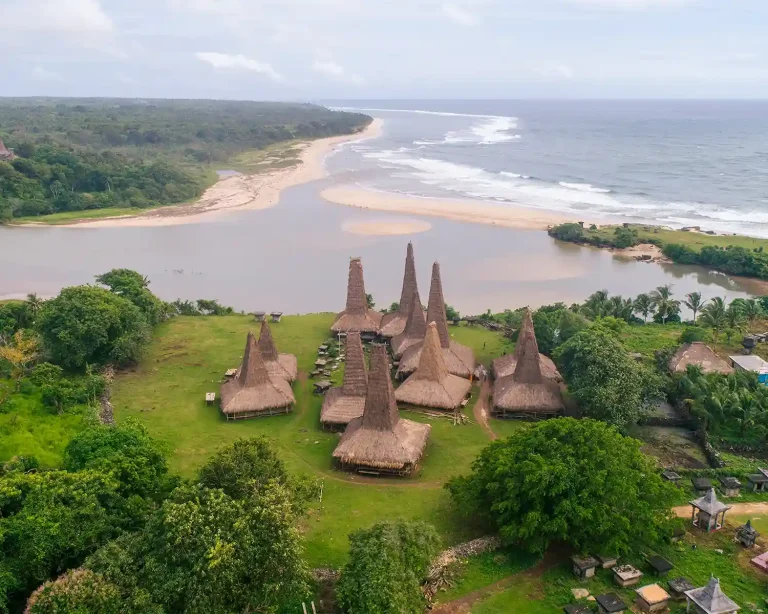
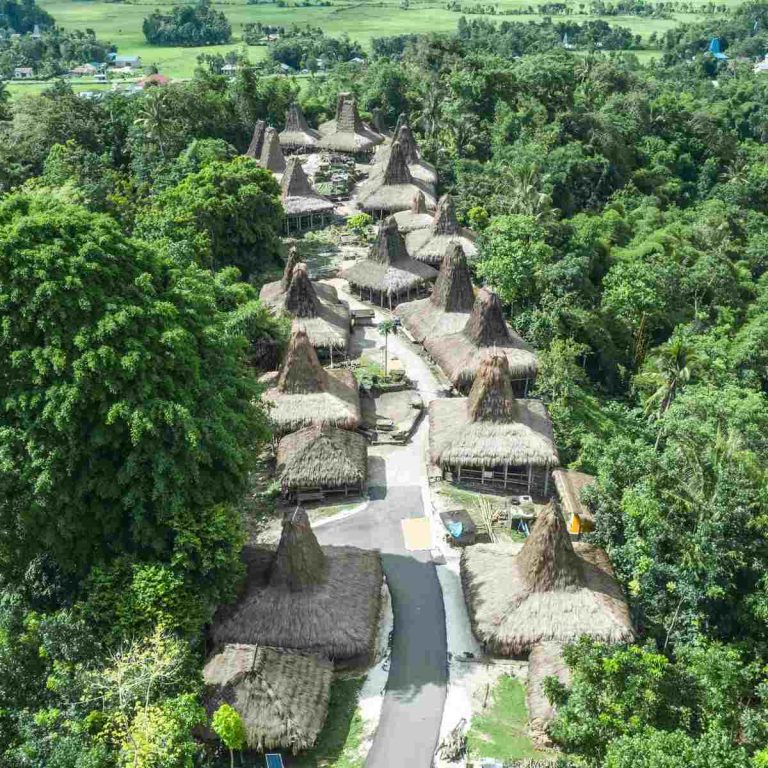
Sumba is one of the few places where a megalithic tradition remains visibly embedded in village life. In many traditional settlements you see:
- Stone tombs dating back generations, sometimes still actively used, arranged among houses rather than separated in distant cemeteries.
- High-pitched thatched roofs sheltering wooden houses built on stilts, with design elements linked to Marapu belief and social structure.
- Ongoing ritual practice that may include animal sacrifice, feasts, and multi-day ceremonies tied to agricultural or life-cycle events.
These are not museum pieces. They are home, and visiting requires tact, introductions, and usually a local facilitator. This is where we focus much of our vetting: ensuring guests enter spaces where hosts actively want visitors and where interaction benefits the village on its own terms.
Ikat and equestrian heritage
Two other aspects of Sumbanese culture matter to many travelers deciding why to visit Sumba Island:
- Ikat weaving. Sumba’s textile traditions are intricate, labor-intensive, and deeply symbolic. Motifs often reflect lineage, status, or cosmology. Serious collectors consider certain Sumba pieces among Indonesia’s most important textiles; casual visitors can still appreciate the time and skill in even a simple cloth.
- Horses and Pasola. The island has a long equestrian tradition. The most famous expression is Pasola, a ritualized mounted spear game held annually in parts of West Sumba, linked to the lunar calendar and local ritual guidance. Dates can shift; it is not a tourist show, and attending requires sensitivity and preparation.
Empty-feeling coastlines
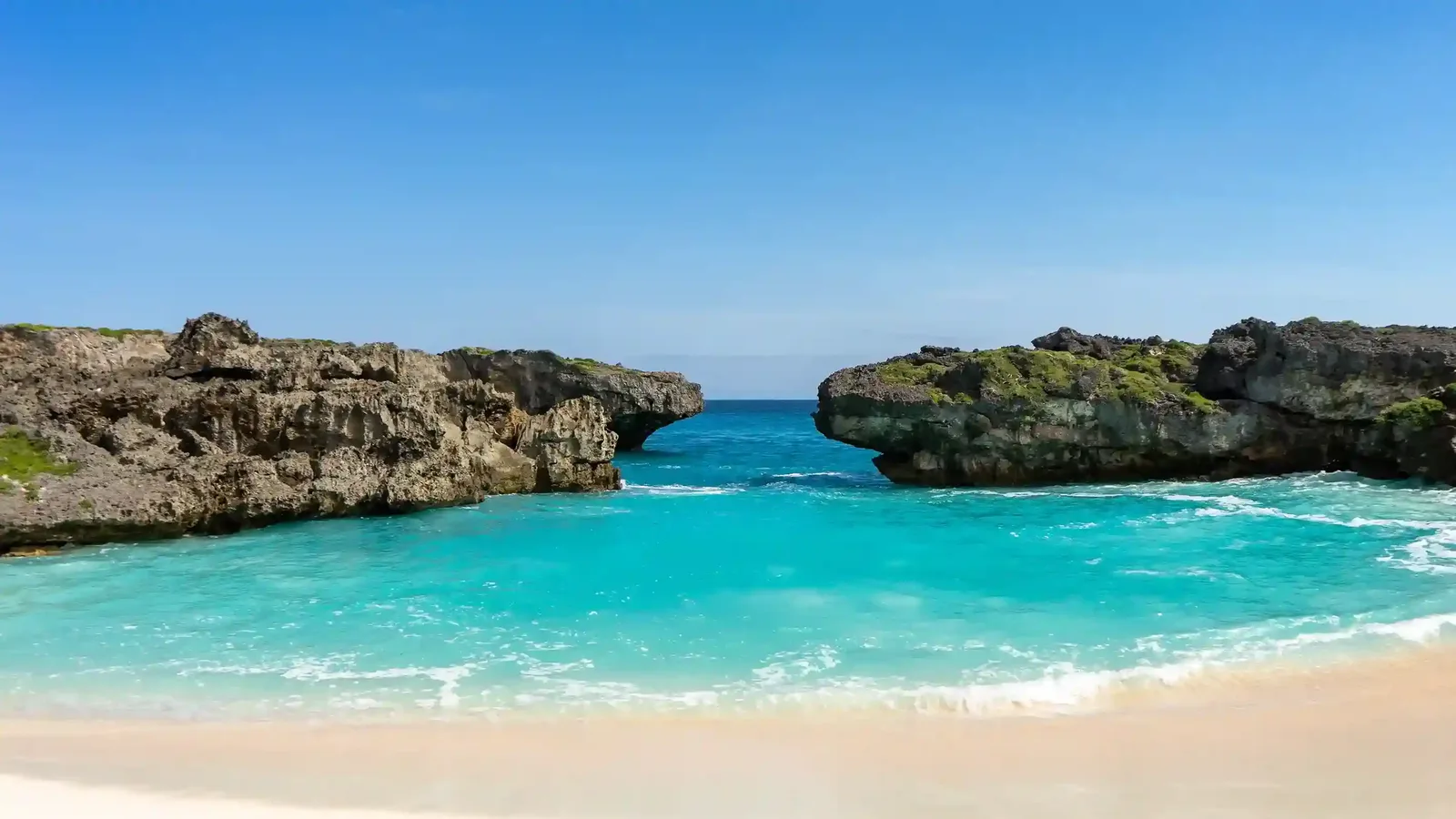
Many travelers arrive from Bali and are struck by how few people are on Sumba’s beaches. This is partly population density, partly access, and partly the current phase of development. There are surf breaks, long walking beaches, estuaries, and cliff-backed coves, but outside a small number of access points, you share them mostly with local fishers, horses, or nobody at all.
Sumba vs other Indonesian islands
To answer “Sumba vs other Indonesian islands” in a concise way, the table below compares broad characteristics with Bali and Flores, two common reference points.
| Aspect | Sumba | Bali | Flores (incl. Komodo access) |
|---|---|---|---|
| Overall feel | Raw, spacious, low visitor density | Developed, dense visitor areas, wide range of scenes | Developing, mix of town and rural, marine-focused |
| Primary draw | Landscape, culture, quiet, select high-end stays | Cuisine, wellness, surfing, culture, nightlife, shopping | Marine parks, island-hopping, volcanoes |
| Infrastructure | Basic to high-end in pockets; limited diversity | Extensive: roads, hospitals, restaurants, rentals | Moderate: improving roads, limited but growing stays |
| Nightlife | Minimal; hotel bars and informal warungs | Extensive in south/coastal hubs | Concentrated in Labuan Bajo; otherwise minimal |
| Ease for first-time Indonesia visitors | Better with support; can feel remote | Very easy, wide service range | Moderate; simple with a local operator |
If you want Indonesia’s variety on one island, Bali remains unmatched. If you want frontier-like landscapes with living ritual culture accessible within a few flights of Denpasar, Sumba is hard to replace.
Atomic facts: the practical frame
For orientation, here are some core, verifiable facts about Sumba Island as a destination.
- Administrative divisions
- Four regencies since 2 Jan 2007: Sumba Barat, Sumba Barat Daya, Sumba Tengah, Sumba Timur.
- Land area
- Approximately 11,243 km² — considerably larger than Bali, but with far fewer residents and visitors per square kilometre.
- Airports
- Two main airports serve the island: Tambolaka (TMC) in the west and Waingapu (WGP) in the east.
- Typical flight time from Bali
- Non-stop Denpasar (DPS) to Sumba flights are usually around 1 hour to 1 hour 15 minutes; schedules and carriers change, so always check current timetables.
- Overland link Tambolaka–Waingapu
- The drive between Tambolaka (west) and Waingapu (east) is typically about 3–3.5 hours in normal conditions, via the main cross-island road.
These basics shape every Sumba itinerary: which airport you use, which regencies you focus on, and how many road hours you are comfortable with over a stay.
The trade-offs: logistics, roads, and dining
To judge honestly if Sumba is worth visiting for you, the trade-offs matter as much as the highlights.
Limited flights and timing
Compared to Bali or Lombok, Sumba has relatively few daily flights. Routes and carriers change over time; most itineraries that include Sumba will route via Denpasar, with some services connecting to other Indonesian hubs.
Implications for travelers:
- Less schedule flexibility. You plan around available flight days and times; late arrivals can constrain what you do on day one.
- More value in buffer days. If you are connecting to long-haul departures from Bali or Jakarta, we suggest a buffer night on the mainland to reduce stress.
We maintain up-to-date working knowledge of carrier patterns and can help you assemble current options as part of our free curation; contact us to plan your trip via email or WhatsApp.
Road conditions and transfer lengths
The main cross-island routes are paved and generally passable, though surfaces and widths vary, and local traffic (trucks, livestock, school children) slows average speeds.
- Airport to coastal or rural lodges. Many higher-end stays are 45–90 minutes from their nearest airport by road, sometimes partly on narrower local roads.
- Regency-to-regency sightseeing. Visiting both the drier east and greener west in a single trip almost always implies at least one longer road transfer of around 3–3.5 hours.
If you dislike long drives entirely, Sumba may feel spread out; if you accept that part of the experience is watching the island unfold from the car window, the distances are manageable.
Fewer dining options
Outside a small number of hotels and local restaurants in towns like Waingapu, Waikabubak, or Tambolaka, dining options are modest.
- In-resort dining. Many higher-end properties treat meals as part of the stay, using local produce where possible. You eat primarily on property unless you make specific trips out.
- Local warungs and simple cafés. In towns and at certain coastal points, you find nasi campur, grilled fish, and simple Sumbanese dishes. English may be limited; menus can be basic.
If you travel primarily to explore cafés, bars, and multi-course tasting menus, Sumba will not deliver the variety of Bali or Jakarta; its pleasures are elsewhere.
Healthcare and services
Sumba has hospitals and clinics in key towns, but capacity and equipment are more limited than in major Indonesian cities. Pharmacies exist, but those with specific medical needs should bring supplies and consult their doctor before travel. For complex issues, evacuation to Bali or beyond may be recommended.
This does not mean Sumba is inherently unsafe, but it does mean that those with serious medical conditions or high risk aversion should factor this context into their decision.
Experiences that make Sumba feel “worth it”
For travelers for whom Sumba is a fit, value is often measured not in the number of “sights” but in the quality of certain experiences.
Village visits done carefully
Visiting traditional villages is one of the most meaningful (and sensitive) activities on Sumba. Done well, it can involve:
- Arriving with a local guide or facilitator already known to village leadership.
- Taking time for introductions, greetings, and questions before cameras appear.
- Understanding that some spaces or rituals are not for visitors, and accepting gentle no’s.
This is an area where our curation focuses less on “how many villages” and more on “which relationships.” We connect guests only with partners who demonstrate ongoing, reciprocal relationships with host communities.
Landscape days: beaches, hills, and rivers
Common landscape-focused days might include:
- A pre-breakfast walk or horseback ride along a near-empty beach.
- Time at a tidal lagoon or estuary, with swimming dictated by conditions and local guidance.
- Sunset on a headland or savanna hill, with a sense of space that is rare in more crowded destinations.
None of this is complicated, but the feeling of “having room” is what many guests describe later as the point of being here.
Textiles, markets, and slow collecting
Those interested in ikat will find small weaving groups and cooperatives in various parts of the island, alongside market stalls selling everyday cloths. Expect a wide range of quality, time investment, and price; serious collectors work through trusted advisors, but casual travelers can still find pieces that carry memory and meaning.
Again, the ideal is to support groups that weave as a living practice, not just as a response to tourist demand. Our partners on the ground help identify such contexts and set realistic expectations.
Costs: how much Sumba typically requires
Honesty about cost is part of deciding whether Sumba Island is worth it for your situation. Exact figures depend on timing, choice of stay, group size, and the level of logistical support. Any ranges below are indicative only and should be verified for your dates and preferences; we frame these as broad editorial guidance, not fixed quotes.
Accommodation
Sumba currently offers a limited but growing range of places to stay, from simple guesthouses to internationally recognized luxury properties. Ranges below are per room per night, for two people, last verified June 2026, and generally exclude flights.
- Simple guesthouses and homestays. Often in towns or near villages; expect basic amenities. Approximate range: lower hundreds of thousands to under one million Indonesian rupiah per night.
- Mid-range hotels and eco-lodges. More comfort, some with pools or beach access, varying service levels. Approximate range: around low- to mid-single-digit millions of rupiah per night.
- High-end and luxury stays. Larger villas, extensive facilities, higher staffing ratios, often including activities and meals. Approximate range: mid- to high-single-digit millions into multiple tens of millions of rupiah per night, depending on category, season, and exclusivity.
At the upper end, Sumba can cost as much as or more than marquee resorts on Bali or Lombok. The difference is not price but context: more space, fewer neighbors, more logistical complexity behind the scenes.
Guides, vehicles, and activities
Most private travelers use a combination of resort-arranged activities and separately arranged guiding. Costs vary by distance, group size, and inclusion (fuel, entry contributions, guiding, etc.). As broad orientation, again last verified June 2026:
- Private day use of a car with driver and fuel often falls in the low-single-digit millions of rupiah per day for reasonable distances.
- Guiding fees may be structured by day or by activity, sometimes bundled with vehicle costs, sometimes separate.
- Village contributions or ceremony-related costs are often handled through your guide or host and vary by context; we encourage transparency here.
Because arrangements and practices differ across regencies and operators, we suggest approaching these as by-quote items. We can outline realistic bands for your specific route before you commit.
Flights
Domestic flight pricing in Indonesia changes frequently with season, demand, and carrier strategy. It is common for direct Denpasar–Sumba return tickets to occupy a middle band of domestic fares within Indonesia. Premium cabins or flexible tickets cost more; promotional fares exist but should not be assumed.
The key point for budgeting is that adding Sumba to an Indonesia trip introduces at least two additional domestic sectors, sometimes four or more if you are combining multiple islands.
How many days make Sumba feel worthwhile
For travelers already in Indonesia, our editorial baseline is:
- 4–5 nights minimum if you are flying in and out of the same Sumba airport and focusing on one region.
- 6–8 nights if you want both east and west Sumba, with time for at least one cross-island transfer without rushing.
Can you “see” Sumba in fewer nights? You can arrive, sleep, and depart. But because flight schedules and transfer times eat into days, shorter stays often feel compressed. If your total Indonesia time is tight and this is your first trip, it may be more coherent to focus on one or two better-served islands instead.
Is Sumba worth visiting for you – a candid summary
Sumba is worth visiting if you are drawn to:
- Quiet beaches and hills with few other visitors.
- Living megalithic villages and ikat traditions, approached respectfully.
- A sense of frontier—without needing expedition-level hardship.
It is less compelling if your priority is:
- Ease of movement, short transfers, and dense flight schedules.
- Wide dining and nightlife choices in walking distance.
- Shopping, café culture, and spa-going as the core of your holiday.
We are not a tour operator or agency; our role is to curate, stress-test plans, and connect you with vetted on-the-ground partners who align with your style and values. No one can pay to change what we publish; if you proceed with our partner they may pay us a referral fee at no extra cost to you.
If Sumba still sounds like it might be “your” island, we can help you refine dates, routes, and expectations. Use our logistics guide on how to get to Sumba, consult our best time to visit Sumba overview, or ask us to shape a draft Sumba itinerary reflecting your pace and interests. You can also plan your trip with us directly via WhatsApp or email for tailored, independent guidance.
FAQs
Is Sumba safe for travelers?
Sumba is generally calm and welcoming to visitors, with community-oriented rural life and low levels of tourist-focused crime. Normal travel precautions apply: use reputable drivers, follow local guidance on where and when to swim, and keep valuables secure. Those with significant medical needs should note that advanced care is limited and may require evacuation to Bali or beyond.
How do I get to Sumba from Bali?
You typically fly from Denpasar (DPS) to either Tambolaka (TMC) in the west or Waingapu (WGP) in the east. Direct flights usually take around 1–1.15 hours, though schedules, routes, and carriers change. Many private travelers build in a buffer night in Bali before or after Sumba to simplify connections. For more detail, see our dedicated guide on how to get to Sumba.
What is the best time of year to visit Sumba?
Weather patterns vary by region, but broadly, many travelers prefer the drier months for predictable road conditions and beach time, while the shoulder months can bring more greenery and fewer visitors. No period can guarantee specific weather or wildlife experiences, and some ceremonies follow local ritual calendars rather than fixed dates. Our best time to visit Sumba guide breaks this down by season and interest.
Can I visit Sumba with children?
Many families do, especially those with children comfortable in nature and flexible about food and routine. Key considerations are transfer lengths, limited medical facilities, and the need for close supervision near water and on village visits. Choosing the right base and pacing is crucial; we can help you assess specific properties and routes for family suitability via our plan your trip channel.
Do I need a guide on Sumba?
You can technically self-drive and explore independently, but for most private travelers a trusted local guide and driver add significant value: cultural interpretation, village introductions, real-time route decisions, and safety awareness. Guides are especially important for respectful engagement with traditional communities. We do not guide ourselves; instead, we introduce you to partners we have vetted for professionalism, local roots, and sensitivity.