The Best Photography Spots in Sumba
Discover the best photography spots in Sumba, from Weekuri Lagoon to Walakiri’s mangroves, with ethical tips, timing, and on-the-ground logistics.
15 min read
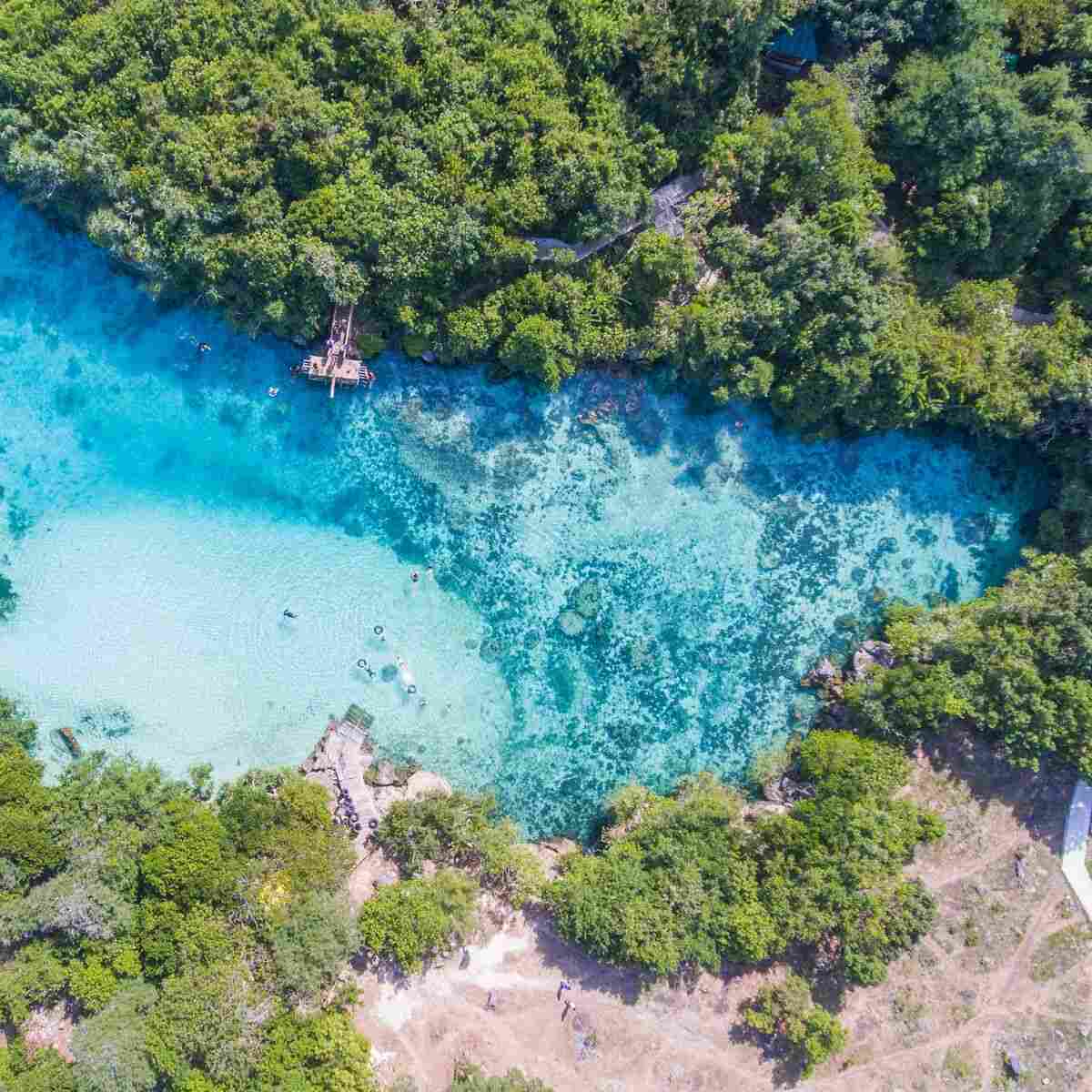
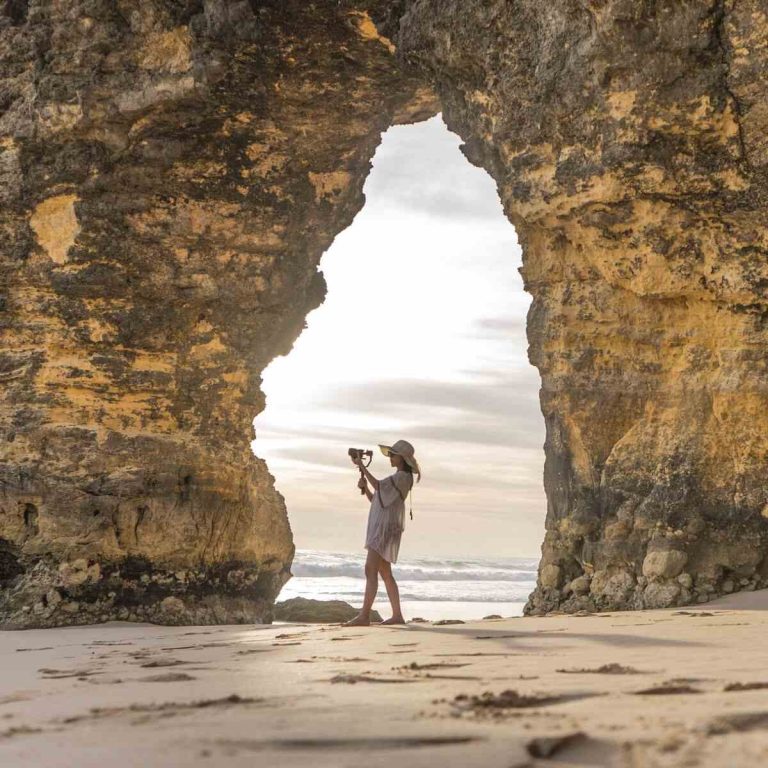
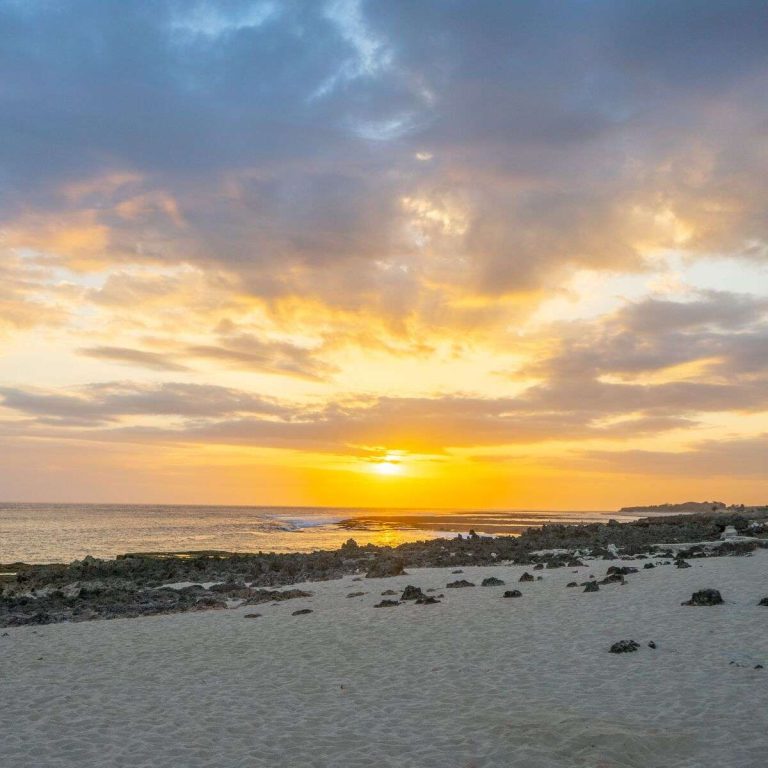
The best photography spots in Sumba are the places where water, savanna and living culture intersect: Weekuri Lagoon’s turquoise cliffs, Walakiri’s mangrove “dancing trees” at sunset, the east’s dry hills, and the peaked-roof megalithic villages that still anchor Sumbanese life. This guide maps those locations, timing and ethics so you can plan your Sumba shots with intention rather than chasing hashtags.
We write this as curation, not as a tour pitch. Sumba Private is an independent, on-island editorial and concierge service: we define what Sumba can offer, then—only if you ask—match you with vetted private guides and stays. No one can pay to change what we publish; if you proceed with our partner they may pay us a referral fee at no extra cost to you.
Signature Sumba landscapes: the anchor frames
If you are prioritising the best photography spots in Sumba for landscapes, four motifs define the island visually: a saltwater lagoon, mangrove silhouettes, high savanna, and sculptural cliffs and coves. Each behaves very differently in light and tide.
Weekuri Lagoon: Turquoise bowl of saltwater
Weekuri Lagoon in Southwest Sumba is one of the island’s most reliable wide-angle frames. It is a shallow, cliff-ringed saltwater lagoon separated from the open sea by porous rock. Sunlight reflects off the pale sand and limestone, producing gradients from pale aquamarine to deep teal.
Photography notes:
- Best light: 09:00–11:00 and 14:00–16:00, on broadly clear days. Midday sun flattens the cliffs but maximises water colour. Early morning brings softer contrast and fewer visitors.
- Lenses: 16–35mm (full-frame) for the whole bowl; 35–70mm for abstract water patterns and swimmers.
- Angles:
- The cliff-top paths on the seaward side offer classic top-down frames of the lagoon.
- From water level, shooting back towards the low platforms and trees gives scale and human interest.
- Logistics:
- Access is via a paved road from Tambolaka/Waitabula area (roughly 1.5–2 hours by car; road condition: mixed, last verified June 2026).
- A modest local entry/parking fee is typically collected per vehicle or per person; expect a small cash amount in Indonesian rupiah, not a commercial “ticket”.
Ethics and respect:
- Drone use is usually tolerated outside immediate crowds; check locally on arrival and avoid buzzing over bathers.
- This is not a set; it is a community-managed natural site. Avoid climbing fragile cliff edges just “for the shot”, especially in wet season.
Walakiri Beach: Mangrove “dancing trees” at sunset
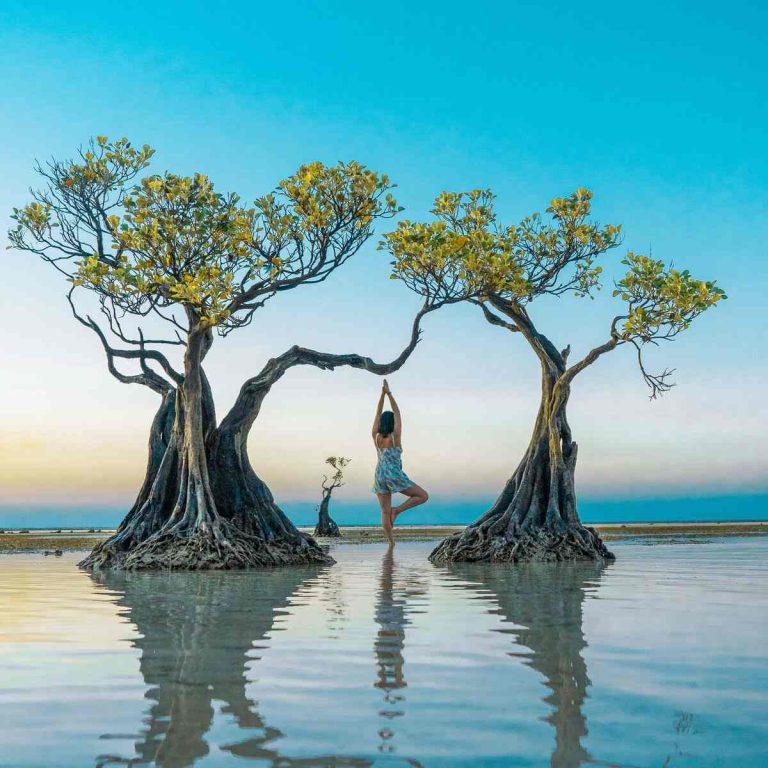
Walakiri Beach near Waingapu on East Sumba is the island’s most documented sumba photo location—and for good reason. At low tide, the small mangrove trees stand on exposed sand, their twisted trunks and thin canopies becoming silhouettes against a shallow mirror of water.
This is one of the most instagrammable places in Sumba, but it rewards more than social-media framing if you understand its rhythms.
Key variables:
- Tide: You need an exposed but still wet foreground.
- Ideal: low tide that coincides with late afternoon into sunset.
- Check tide charts for Waingapu for your exact dates.
- Time of day:
- Photographers generally arrive 1.5–2 hours before sunset.
- Golden hour (roughly 16:30–17:30, season dependent) produces backlit silhouettes; blue hour softens contrast for longer exposures.
- Lenses:
- 24–70mm for flexible framing of the tree clusters.
- 50mm+ if you want compressed layers of trees and reflected sky.
Practical tips:
- Wet sand is slippery; go barefoot or wear sandals you are happy to submerge.
- Expect some crowding near the “famous” trees during peak domestic holiday periods. Walking a few hundred metres along the beach usually reveals quieter compositions.
Cultural and environmental respect:
- The beach is bordered by local communities who have seen rapid tourism exposure. Keep noise low, dress respectfully, and avoid using mangrove roots as props or perches.
East Sumba savanna hills: Big skies and dry contours
Away from coastlines, East Sumba’s character is in its savanna—rolling, largely treeless hills with seasonal grass that flips from pale green (roughly Dec–Mar in stronger rainy seasons) to muted gold and brown (often May–Oct; timing can shift year by year).
For Sumba landscape photography, this is where depth and repetition come into play: ridgelines, river valleys, and long roads leading through grassland.
Areas often used for photography itineraries include:
- Hill country north and south of Waingapu: Easy half-day outings from town with vehicle access to hilltops.
- Roadside viewpoints on the routes towards Melolo and Wulla Waijelu: Layered hills, especially in late afternoon.
How to approach it:
- Light:
- Golden hour brings soft, angled shadows that reveal the contours of the hills.
- Harsh midday light can still work for high-contrast black-and-white or minimal compositions.
- Subjects:
- Lone trees, small herds of cattle, and distant thatched roofs create focal points.
- Dust trails from motorbikes and trucks become leading lines in backlight.
- Weather:
- Clouds add scale. In shoulder/rainy months, fast-moving clouds can give dramatic skies, but be ready for sudden showers.
Even from the road, this is still people’s grazing and ancestral land. Ask your driver or guide before walking into distant fields and be mindful of gates and fences.
Mandorak and Watu Maladong: Cliffs, coves and pounding surf
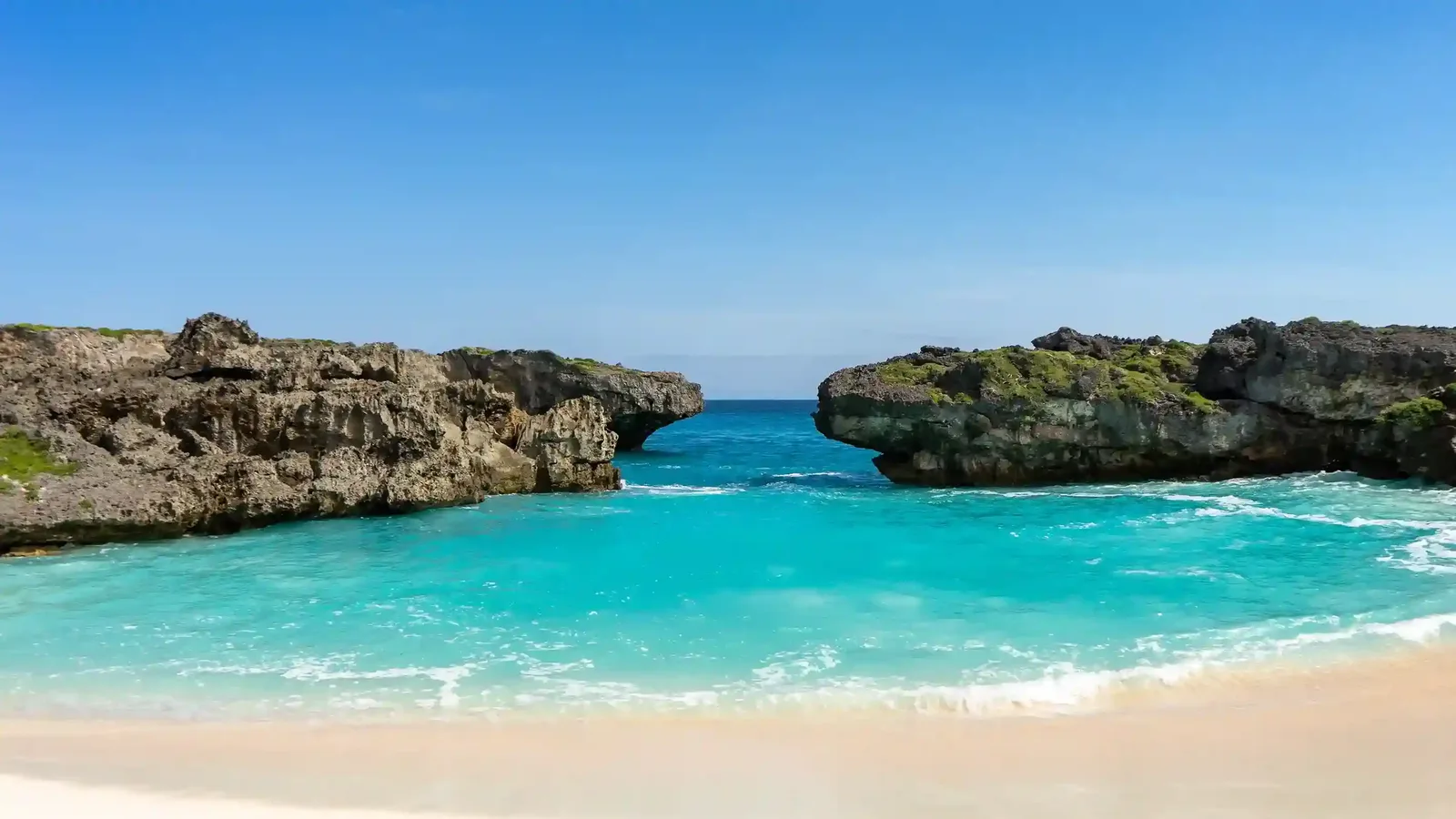
On Sumba’s southwest coast, near Weekuri, the pair of Mandorak Beach and Watu Maladong cliffs offers a different seascape language: sculpted limestone, narrow coves and open Indian Ocean swell.
- Mandorak Beach: A small cove framed by rock promontories, with vivid water on brighter days.
- Good for: shore-level shots of waves and rocks, long exposures as the tide moves.
- Watch for: strong currents; this is a photography stop, not a safe general swim spot during rough seas.
- Watu Maladong: Offshore rock stacks and cliff lines visible from a series of headlands.
- Good for: telephoto compression of sea stacks, stormy-weather drama, and silhouettes at sunset (depending on season and horizon haze).
Here, safety trumps photography. Waves and rogue sets can sweep unexpectedly high; stay well back from wet rock edges and observe where local people stand (and where they do not).
Cultural frames: villages, ikat and horses
Sumba’s most powerful images are rarely its beaches. They are its villages, textiles, and the relationship between people, animals and megalithic stone. This section is where we move from “pretty scenes” to Sumba’s living culture—and why an ethical approach matters.
Peaked-roof villages and megalithic tombs
Traditional Sumbanese villages feature tall, peaked thatch roofs (“uma mbatangu”) and ancestral stone tombs. Two frequently photographed villages accessible on standard routes are:
- Ratenggaro (Southwest Sumba):
- Character: Houses clustered near the sea, with distinctive tomb slabs and sea views.
- Frames: Roofs against sky, tomb stones in foreground, sometimes with horses or villagers moving through.
- Praijing (near Waikabubak, West Sumba):
- Character: Hilltop layout with a ring of peaked roofs; easy-to-read composition from viewpoints above and within the village.
- Frames: Aerial-like vistas from designated terraces; alleyways between houses; daily activities like weaving and cooking.
Ethical guidelines (non-negotiable if you are serious about photography in Sumba):
- Ask before you shoot people.
– A smile and simple Indonesian phrases—“boleh foto?” (may I take a photo?)—go a long way. Your guide can help translate nuance. - Do not photograph sacred ceremonies or objects without explicit permission.
– Some rituals are closed to outsiders; others can be observed but not recorded. Follow your host’s lead and accept “no” gracefully. - Expect to make a small donation.
– Many villages have a communal box or a designated caretaker. Contributions support maintenance and community projects. Cash, in small notes, is appreciated; there is no fixed “photography fee”. - No staging without consent.
– Do not move ritual objects, sit on tombs, or ask elders to “perform” traditional acts purely for the camera unless you are invited and have clear consent.
Our separate guide to ethical Sumba village visits goes deeper into etiquette and expectations; if you plan serious cultural work, read it in full.
Ikat weaving: Pattern, process and portraiture
Sumba is renowned for its hand-woven ikat textiles, which carry complex symbolic language. Many villages in East, West and Central Sumba host active weavers.
Photographic possibilities:
- Details: Tight shots of dyed threads, wooden looms, and hands at work.
- Environmental portraits: A weaver in the context of her home; textiles hanging behind her; children playing nearby.
- Market scenes: Textiles laid out in local markets add layered colour and repetition.
Ethics and consent:
- Always ask the weaver before photographing them or their work.
- If you plan to publish or exhibit, be transparent about your use and, where possible, get names and context.
- Buying directly from the weaver is a meaningful way to support the craft—but do not treat purchase as a license for intrusive photography.
Sandalwood horses: Motion on the savanna and beach
Sumbanese horses—often called sandalwood ponies—are compact, agile and culturally significant. They appear in daily life and in ceremonial events like Pasola (a spear-throwing ritual in parts of West Sumba, subject to its own protocols and sensitivities).
How they enter your frame:
- Savanna and roadside: You may see herds being grazed on hill slopes. Long lenses (100–400mm) let you capture them without disturbing the animals or handlers.
- Beaches: In some areas, local youth ride at the shoreline in late afternoon. This can produce powerful silhouettes and spray shots.
- Ceremonial contexts: Horses used in rituals or community events are never just “subjects”; they are part of spiritual practice.
Respect:
- Do not approach or touch horses without the handler’s invitation.
- Avoid flash directly into the eyes of animals or riders, particularly at night or indoors.
- For Pasola or other ceremonial riding, photography boundaries can be strict—clear guidance from local leaders or your guide is essential.
Timing Sumba: Golden hour, seasons and direction of light
Sumba is elongated east–west, with distinct coastal aspects. That matters if you only have a few sunrises and sunsets to work with.
East vs west: Where to be for sunrise and sunset
Use this simplified reference when planning:
| Area / Motif | Best for Sunrise | Best for Sunset | Primary Character |
|---|---|---|---|
| Walakiri Beach (East Sumba) | Soft side-light; less iconic | Signature mangrove silhouettes | Shallow tidal flats, reflections |
| Waingapu savanna hills (East) | Sun rising behind or across hills | Side/backlight, dust trails in glow | Rolling grassland, long views |
| Weekuri Lagoon (Southwest) | Gentle side-light on cliffs | Warm tones, sometimes backlit | Turquoise lagoon, limestone |
| Mandorak / Watu Maladong (Southwest) | Less used; depends on clouds | Sun over or near ocean horizon | Cliffs, sea stacks, surf |
| Ratenggaro village & coast | Village-lit roofs, village life | Roof silhouettes, coastal glow | Traditional village, sea views |
In practical terms:
- If your focus is Walakiri and savanna: Base yourself around Waingapu and prioritise late afternoons and early evenings in the east.
- If your focus is lagoon and cliffs: Base near Southwest Sumba and build in multiple afternoon opportunities—cloud and haze can vary.
We explore broader sunrise/sunset patterns, seasonal sky clarity and cloud behaviour in our dedicated Sumba sunrise and sunset guide.
Dry vs wet months and how they affect your images
General pattern (subject to yearly variation, last verified June 2026):
- Drier months: roughly May–Oct
- Pros: Clearer skies, more predictable sunsets, easier access to remote sites.
- Visual mood: Golden, dusty, high contrast; brown-gold savanna; strong shadows.
- Wetter months: roughly Dec–Mar
- Pros: Greener hills, textured clouds, moody atmospheres.
- Visual mood: Softer tones, greener fields, dramatic storm-light opportunities.
- Trade-offs: Some roads deteriorate; heavy rain can cancel specific shoots.
Transitional months (Apr, Nov) can offer a mix of both. For a photography-first trip, many visitors target late dry season into early shoulder (Aug–Nov) to balance access, colour and sky interest.
Gear, light and on-the-ground realities
You do not need a museum of gear to photograph Sumba, but a few choices and habits will save you frustration.
Practical kit for Sumba landscape photography
- Camera: Any modern interchangeable-lens camera or capable phone; durability matters more than specs.
- Lenses:
- Wide (14–24mm or 16–35mm) for Weekuri, savanna vistas, village overviews.
- Standard zoom (24–70mm) for most uses.
- Telephoto (70–200mm or longer) for horses, distant hills, compressed layers, discreet portraits.
- Filters:
- Circular polarizer: Deepens skies, controls reflections on water at Weekuri and Walakiri.
- ND filters: Optional for long coastal exposures; not essential.
- Stability:
- A compact travel tripod or stable monopod helps for blue-hour and long exposures, especially at Walakiri and cliff areas.
- Protection:
- Lens cloths—dust is pervasive in dry months.
- Light rain cover or plastic bag for sudden showers in rainy months.
- Dry bag if you plan to shoot from or near water.
Electricity and storage:
- Power availability is generally stable in main towns and established lodges. In remote areas, supply can be intermittent; bring spare batteries and power banks.
- Back up images nightly to a second card, drive or cloud (where connection allows).
Working with light and avoiding common mistakes
- Avoid only shooting at extremes.
Golden hour is prized, but Sumba’s high midday sun can work for stark, minimal images: lone trees, geometric roofs, white sand and rock. - Embrace haze and dust.
In the dry season, late-afternoon dust caught in backlight around Walakiri or the savanna can create atmospheric layers. Meter carefully and expose slightly to the right if needed. - Look beyond the Instagram shot.
At Walakiri, the famous mangrove cluster attracts a crowd. Step back, walk further, frame lesser-known trees or locals at work for quieter, more personal images. - Respect darkness.
Some rural areas have minimal ambient light, making them interesting for astrophotography. But be absolutely certain of your footing, route and local comfort with after-dark wandering; never treat villages as night-photo playgrounds.
Independent travel vs local guidance
You can reach many key spots with a driver and offline maps, but photography benefits from timing, local knowledge, and the ability to communicate with communities.
A photography-minded local guide can help you:
- Align village visits with times when residents are comfortable or active, rather than during rest or ceremonies.
- Read cloud and weather patterns for last-minute location swaps.
- Navigate permissions, introductions and donations in villages and during events.
If you would like that level of support, we can help you plan your trip and match you with a private guide who understands photographic priorities. WhatsApp-based planning is available for efficient, timezone-friendly communication.
Spot-by-spot cheat sheet: Sumba photo locations at a glance
- Weekuri Lagoon (Southwest Sumba)
- Saltwater lagoon with turquoise water and limestone cliffs. Best mid-morning or mid-afternoon. Wide angles, top-down views, reflections.
- Walakiri Beach (East Sumba)
- Mangrove “dancing trees” on tidal flats. Best at low-tide sunset. Silhouettes, reflections, long exposures during blue hour.
- Mandorak Beach
- Small cove with clear water and rock promontories. Works in varied light. Long exposures of waves; textural rock studies.
- Watu Maladong
- Sea stacks and cliffs facing open ocean. Strong afternoon and sunset light; telephoto compression of cliffs and stacks.
- Ratenggaro Village
- Traditional peaked-roof houses near the sea, with megalithic tombs. Village portraits, architectural studies, cultural context. Ask permission, offer donation.
- Praijing Village
- Hilltop traditional village near Waikabubak with defined viewpoints. Good for sunrise or sunset over roofs and surrounding hills.
- East Sumba Savanna (around Waingapu)
- Rolling grass hills and big skies. Dawn and dusk for layered light and long shadows; any time for graphic forms.
- Local Ikat Weaving Villages
- Textile production and everyday life. Detail shots of fabric and looms; environmental portraits with consent.
- Beaches with Horses (various)
- Informal late-afternoon rides by local youth in some coastal areas. Dynamic silhouettes, panning shots; respect riders’ privacy and space.
How Sumba Private can help frame your trip
Our role is to help you understand what Sumba genuinely offers, then quietly structure logistics so you can work with light and culture instead of fighting them.
For photography-focused travellers, we typically:
- Design routes that balance east and west for sunrise/sunset coverage.
- Build ethical village visits around existing rhythms rather than imposing shoot schedules.
- Pair you with guides who understand why you might want to linger at a ridge or return to Walakiri multiple evenings.
If that level of planning would be useful, you can plan your trip with us—WhatsApp coordination is available for quick back-and-forth on timing, tides and locations.
Is Sumba safe for photographers carrying visible gear?
In most areas commonly visited by travellers, Sumba feels calm and welcoming to photographers. Basic precautions apply: avoid flashing gear unnecessarily in crowded markets, keep valuables close when travelling, and leave non-essential equipment at your accommodation for village or night walks when advised by your guide. As always, conditions can change; local, up-to-date advice is essential.
Can I use a drone at the main Sumba photography spots?
Consumer drones are currently flown at places like Weekuri, Mandorak and some savanna viewpoints, but there is no blanket, island-wide “permission”. Rules can shift, and local communities have different comfort levels. Avoid flying near ceremonies, over people or animals, or close to homes without consent. Check on arrival, respect any posted restrictions, and be prepared for a guide or local leader to say no.
Do I need a special photography permit for villages?
There is no centralised photography permit system for villages as of June 2026, but many communities maintain informal entry or donation systems. Treat any requested contribution as community support rather than a “ticket”, and always ask before photographing people, interiors or rituals.
What is a realistic minimum stay in Sumba for photography?
To cover both east and west highlights with buffer for weather and rest, we suggest an absolute minimum of 5 nights on the island, split between at least two bases. Seven to ten nights allow you to revisit key locations under different conditions and spend more time in villages without rushing.
Can Sumba Private arrange a dedicated photography guide and driver?
Yes. While we are not a tour operator, we maintain relationships with guides and drivers who understand photographic priorities. If you wish, we can introduce you to a suitable partner who can support location access, timing and cultural protocols; if you proceed with our partner they may pay us a referral fee at no extra cost to you. Start by sharing your goals via our plan your trip page, and we can continue the conversation over WhatsApp for practical details.