Visiting Sumba in the Rainy Season: Worth It?
Honest guide to sumba rainy season travel: what the wet months are really like, Pasola timing, pros, cons, costs and who should still go.
18 min read
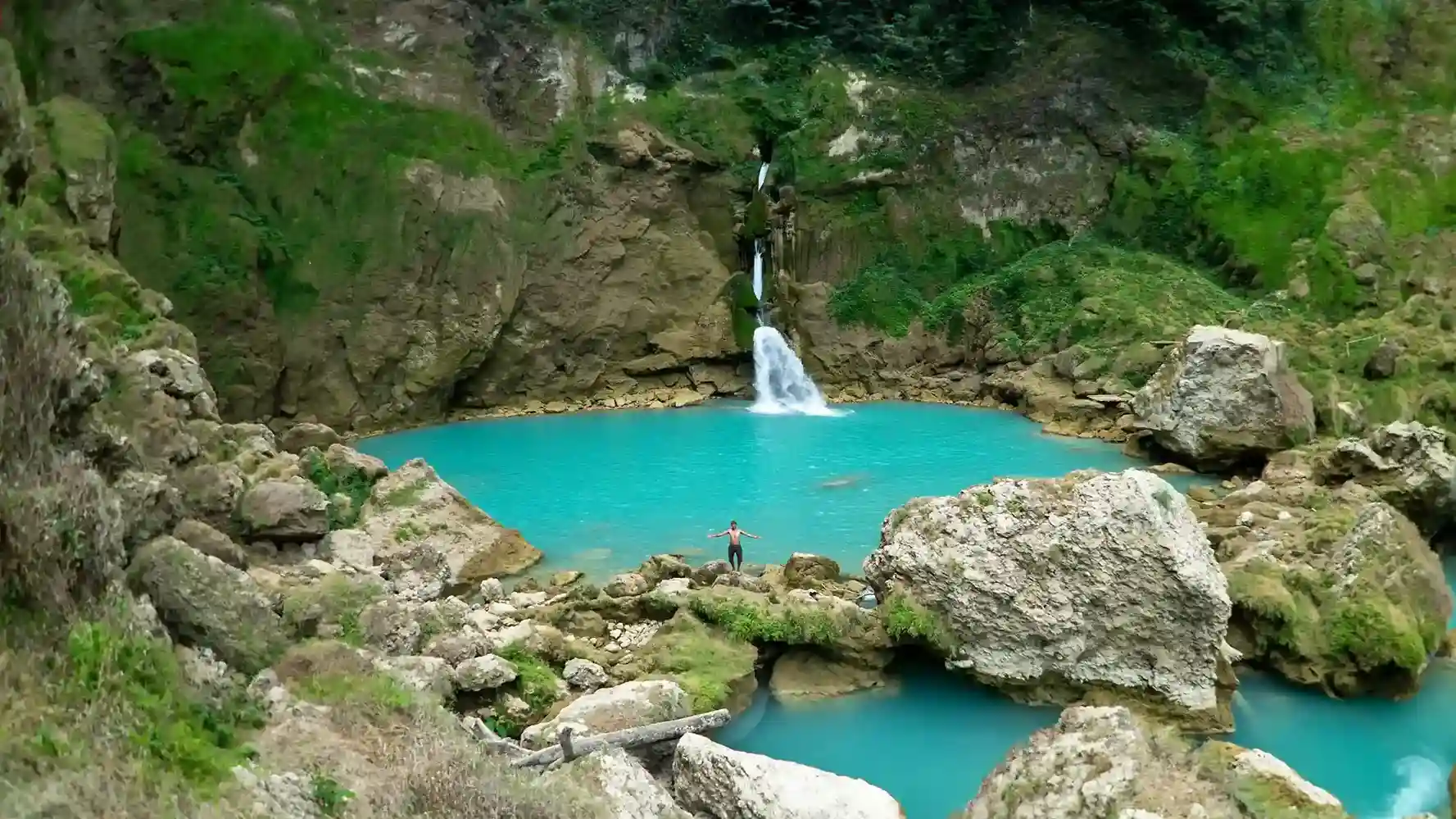
Sumba rainy season travel means visiting the island between roughly November and March, when short, intense showers turn the dry savanna into deep green. It can absolutely be “worth it” — but only for travellers who understand the trade‑offs around weather, roads, surf and access, and plan accordingly.
Dry vs wet: how Sumba’s seasons actually work
Sumba has just two broad seasons:
- a dry season: roughly April–October
- a wet season: roughly November–March
Patterns vary year to year, and even week to week. What follows reflects multi‑year norms and on‑island observation, not a rigid rulebook.
Rainy months in Sumba, at a glance
The “rainy months Sumba” question usually means: when is rain frequent enough to shape logistics and mood.
- Core wet months
- December–February; often the heaviest, most reliable rain.
- Shoulder wet months
- November and March; can swing drier or wetter depending on the year.
- Greenest landscapes
- Typically March–April, once the soil is saturated and grasses have fully responded.
- Driest stretch
- July–September; hills are at their most golden and arid.
- West vs east
- West Sumba is generally wetter and lusher in the rains; East Sumba tends to be drier and more open.
The primary takeaway: “Sumba in December January” is usually quite wet, but not in a monsoon‑all‑day sense. Think intense showers and storms, most often in the afternoon or at night, with windows of clear sky in between. Some years are milder, some are surprisingly dry, some bring longer grey stretches.
What the Sumba wet season actually feels like
Expect:
- Humidity: higher than in the dry months, sometimes heavy inland and in river valleys.
- Temperature: broadly similar year‑round, but nights can feel cooler after heavy rain, especially in the highlands.
- Light: more dramatic skies, softer sun, strong contrasts for photography.
You will almost certainly see rain if you are on the island for a week in January. The key question is not “will it rain,” but “how does that shape what we want to do?”
What Sumba looks like in the rainy season
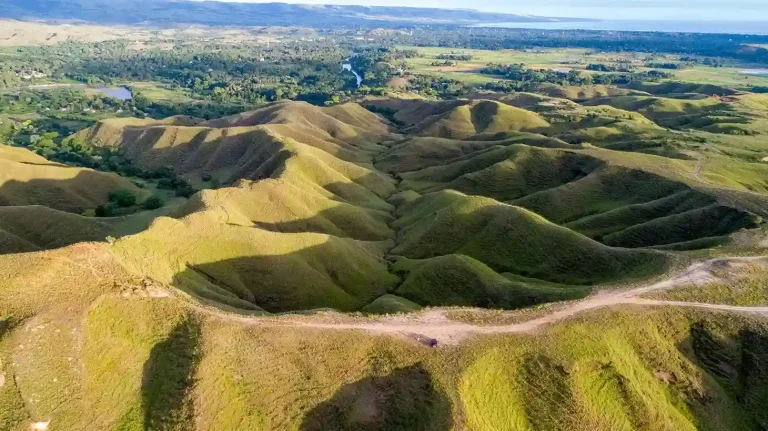
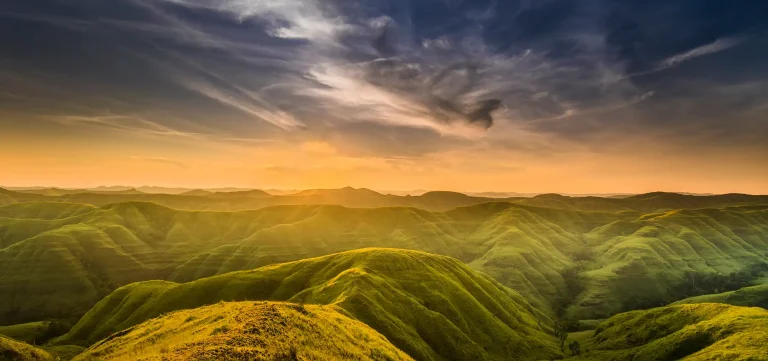
From straw‑gold to emerald
Most imagery of Sumba online falls into two categories:
- parched, golden hills and dusty roads (late dry season)
- improbably green valleys and rice terraces (late wet / early shoulder season)
Those lush images are usually taken around March–April, when the accumulated rain has had time to transform the savanna. Earlier in the wet season, say November–December, you often see a patchwork: hills just beginning to soften; riverbanks and rice fields greening fast; pockets of brown grass hanging on.
If your priority is seeing Sumba at its greenest, with full rice paddies and thickened vegetation, the sweet spot is often late wet into early dry — roughly March and April, sometimes into early May depending on the year.
Coast, rivers and waterfalls
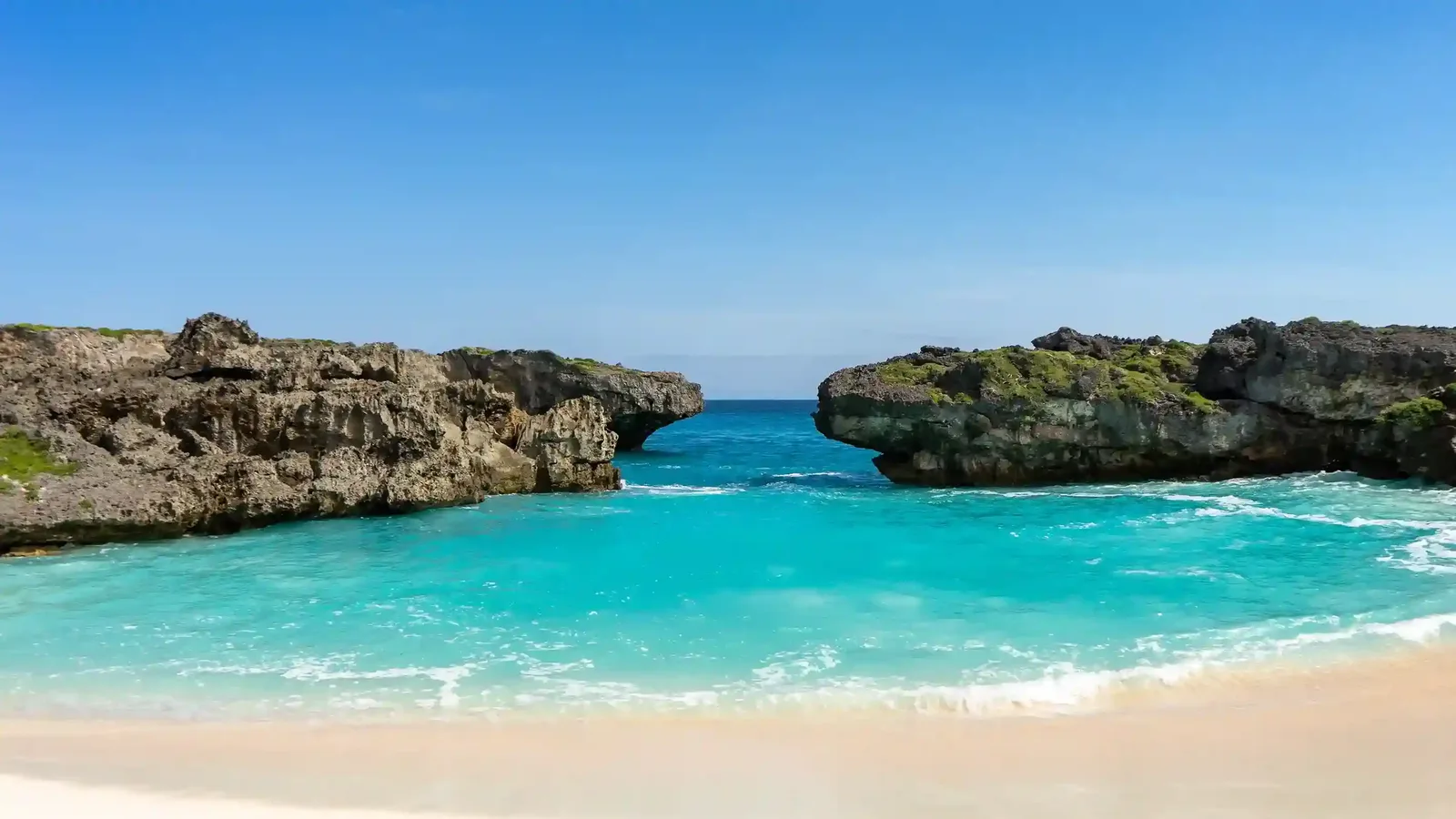
- Beaches: the sand is the sand — that does not change. What shifts are sea colour, wave character and debris. During heavy swell and onshore winds, the water can be more turbid and lines of driftwood or seaweed more common.
- Rivers: many rivers run stronger and higher. Some dry‑season fords become challenging or unsafe for smaller vehicles after heavy rain.
- Waterfalls: volumes increase, so falls that are modest in the dry season can be much more forceful and photogenic. Access, however, can be muddier and more slippery.
Many of the most shared images of Sumba’s inland waterfalls are from the wet or just‑after‑wet season, when they are actually flowing.
Village life in the rains
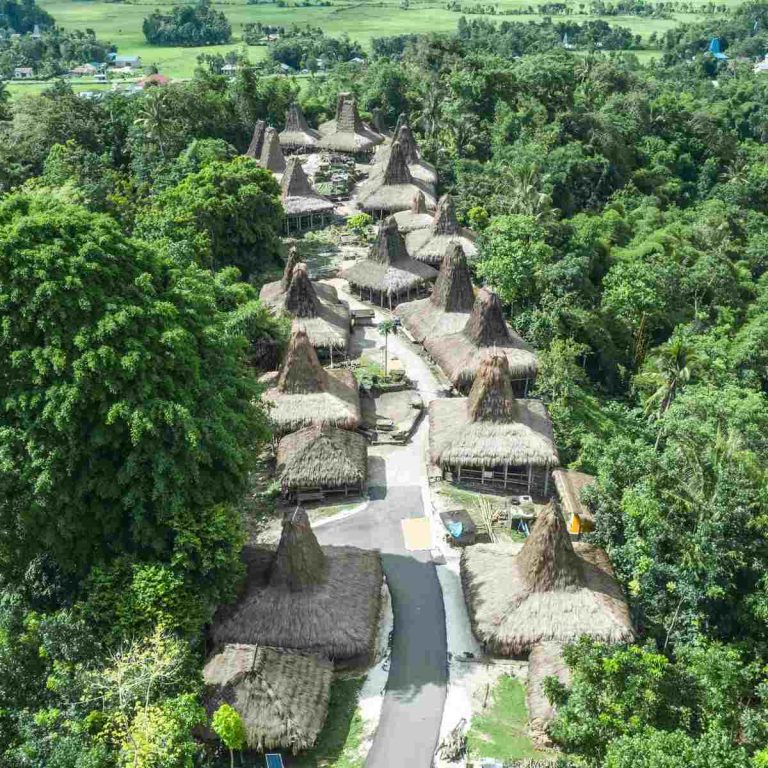
Traditional villages continue at their rhythm through all seasons. The wet months often mean:
- more time spent under the high, thatched roofs of traditional houses
- communal work around rice fields and gardens
- road‑access variability; some villages are simply easier to reach in July than in January
For culturally minded travellers, the wet season can feel more intimate. Guests are fewer; conversations have more time to stretch. But you may need to accept last‑minute route changes if a road or bridge is affected by rain.
The upside of visiting Sumba in the rainy season
Lushest landscapes and photography
From a purely visual standpoint, Sumba is at its most verdant after several weeks of consistent rain. If:
- your ideal Sumba is green hills rather than austere savanna, and
- your priority is photography or videography of rice fields, rivers and waterfalls
then targeting late wet season (especially March) often makes more sense than an August trip.
Skies can be dramatic: towering cloud formations, shafts of light over the ocean, occasional rainbows. Sunrise and sunset can be very rewarding when clear air follows a storm.
Pasola and the nyale season
The other major “pro” of Sumba rainy season travel is its link with Pasola, the island’s most noted ritual event. In broad terms:
- Pasola is usually held between February and March, occasionally into early April.
- Dates and exact locations are not fixed far in advance. They depend on the appearance of nyale (sea worms) and traditional calendrical calculation.
- There are typically four main Pasola arenas in West Sumba, each with its own day in the season.
If you want to align a trip with Pasola:
- Treat any date you see online as indicative, not guaranteed.
- Confirm timing as close as possible to departure through on‑island sources.
- Build flexibility into your itinerary; you may need to shift a day forward or back.
Expect:
- early‑morning ritual at the beach where nyale are gathered
- processions and gatherings in the villages
- the Pasola ritual itself: mounted riders on horseback in traditional attire, riding at speed on an open field, historically throwing spears (the modern form is less lethal but still intense)
Pasola is not a “show” designed for visitors. It is a serious ritual, with its own internal logic, risks and etiquette. A respectful presence matters. We treat Pasola and nyale in more depth in our dedicated guide; if this is your anchor, we strongly suggest speaking with us before fixing dates so we can cross‑check the current year’s pattern.
Fewer visitors, more availability
Sumba has never been a crowded destination, but there is still a discernible peak in the mid‑dry season (roughly July–September) and around certain holiday periods.
In the rainy months:
- popular lodges and villas typically have more open inventory
- room category choice is often wider
- some properties are more open to longer‑stay or shoulder‑season rate structures
Indicative nightly ranges for quality, small‑scale accommodation (last verified June 2026):
- Simple guesthouses: roughly USD 40–120 per room
- Mid‑range boutique: roughly USD 150–350 per room
- Upper‑tier villas / suites: roughly USD 400–900+ per room
Exact figures vary with location, inclusions (meals, activities) and date. December peak holidays can sit outside the usual wet‑season logic and price like high season.
Surf: specific windows, specific coasts
Surf conditions in the Sumba wet season are nuanced and highly spot‑dependent. As a broad rule:
- Some exposed west‑ and south‑facing breaks can be too wind‑affected or heavy in the core wet months.
- Certain sheltered or east‑facing spots can see interesting windows in the shoulder rains and transition months.
Serious surfers often target the shoulder seasons (roughly April–June and September–October) for a balance of swell and more consistent winds. That said, if your trip is primarily a holiday with incidental surfing, not a high‑stakes surf pilgrimage, you can still enjoy sessions in the rainy period provided you choose accommodation with realistic access to the right coast.
We outline west–east trade‑offs more fully in our West vs East Sumba piece, which is worth reading together with this guide.
Price and value dynamics
Domestic airfares and hotel rates on Sumba do not follow an extremely aggressive low‑season discount model, because base volumes are still relatively modest. Still, in the rainy period you may find:
- slightly more favourable bundle value on certain stays
- more negotiability for longer visits
- vehicle and driver availability at shorter notice
We can help sense‑check whether you are actually seeing a seasonal advantage for your dates or simply an average rate dressed as “low season value”.
The downside: what the Sumba wet season complicates
Road conditions and travel time
This is the single most practical constraint. Sumba’s main cross‑island roads are paved, but many of the most interesting beaches, waterfalls and villages are reached via:
- dirt or partially improved tracks
- small bridges
- river fords or low‑lying sections
In heavy rain:
- some tracks become deeply rutted or sticky mud
- certain low bridges or crossings can be unsafe or closed temporarily
- motorbike access may become more technical; cars need higher clearance
That translates into:
- longer drive times between points than in the dry months
- a higher probability a particular waterfall, cliff or village will be “not advisable today”
For planning:
- A “3–3.5 hour” transfer in the dry season can easily stretch toward 4–4.5 hours on a bad wet‑season day.
- We suggest being conservative about same‑day multi‑stop itineraries and allowing slack in your schedule.
Decent vehicles with drivers who know the island well remain, in our view, non‑negotiable in the rainy months. Daily rates for private car and driver are commonly in the range of roughly USD 70–140 (last verified June 2026), depending on vehicle type, driving distance and inclusion of guiding. We can benchmark current norms for your dates before you commit.
Coastal access, snorkelling and small‑boat trips
The wet season does not “close” Sumba’s coast, but it does affect how and where you get on the water.
Typical patterns:
- Sea state: heavier swells and more onshore wind days on certain coasts.
- Small boats: some simple local outrigger operators will not go out in rougher conditions.
- Snorkelling: clarity is more variable, especially downcurrent from river mouths after heavy rain.
If ocean time is central to your plan:
- be ready to move flexibly between beaches or even coastlines if conditions shift
- avoid over‑committing to long, fixed boat excursions booked weeks in advance without wet‑season contingency language
- schedule ocean‑dependent activities early in your stay, leaving room to reshuffle
We never guarantee snorkelling or visibility quality at any time of year, and that caveat applies double to the rains.
Hiking, trekking and “big days out”
Many of Sumba’s most rewarding viewpoints, megalithic sites and waterfalls involve at least some walking on dirt paths, grass slopes or rocks.
In the wet months:
- grass and clay can become slick; falls are more likely without good footwear
- river levels at crossing points may be higher or more dynamic
- long hikes in open savanna can feel more humid, with fewer dry resting spots
If you are comfortable with:
- getting muddy
- pausing for showers under shelter
- adjusting a planned loop to a shorter in‑and‑out route
then trekking in the rains is entirely feasible and can be very atmospheric. If your tolerance for discomfort is low, you may enjoy dry‑season walking more.
Photography challenges
The same conditions that give you moody skies can also:
- obscure distant views in haze or falling rain
- limit drone flying windows due to wind and moisture
- create flat, grey light on very overcast days
Most visiting photographers who are happy with wet‑season results share a few habits:
- longer stays (to ride out uncooperative days)
- early starts to chase clear morning windows
- a realistic shot‑list that allows for alternates when hills or coast are socked in
If you have a tightly scoped professional brief with non‑moveable deliverables, we would push you gently toward a more predictable window in the shoulder dry season instead.
Who should still visit Sumba in the rainy season?
Not every traveller will enjoy Sumba in January. Those who do tend to fall into clear profiles.
Good rainy‑season fits
You are likely a good candidate for Sumba wet season travel if you:
- Prioritise culture and ceremony over spotless beach days and pool time. You want Pasola, village visits, local markets and conversations more than a rigid checklist of landscapes.
- Prefer green hills to dry savanna, even if that means getting wet occasionally.
- Are flexible by temperament: you can absorb an unplanned quiet afternoon with a book if a road washes out.
- Have multiple days on Sumba, ideally 6–8 nights or more, so you can absorb weather variability without frustration.
- Are already travelling regionally (for example, Christmas–New Year in Bali or Sumbawa) and can treat Sumba as one leg, not the only destination of the year.
Families with older children who are comfortable “off schedule” often handle the wet season well, especially around Pasola, provided expectations are calibrated.
Probably better in the dry or shoulder seasons
You may wish to avoid the core rains if you:
- have just 3–4 nights on Sumba and a rigid onward schedule
- care deeply about calm, blue‑water snorkelling and have limited tolerance for sea conditions changing on you
- prefer short drives on smooth roads, and find muddiness or unpredictability stressful
- are planning a very elderly or mobility‑limited guest’s key trip
- are highly crowd‑averse but ceremony‑curious, yet uncomfortable around the intensity that can accompany Pasola gatherings
For these travellers, we usually suggest targeting roughly May–June or September–October — still relatively low‑key compared with high tourism islands elsewhere in Indonesia, but with more stable weather.
West vs East Sumba in the wet months
The west tends to:
- receive more rainfall
- feel greener sooner
- host most Pasola arenas and many of the well‑known beaches and villages
The east tends to:
- be drier overall
- offer wider, more open vistas, even in the rains
- have certain routes that remain simpler to drive in adverse weather
There is no single “right” side of the island for the wet season. The decision hinges on whether you are:
- primarily chasing Pasola and specific western landscapes, or
- seeking more driving predictability and open horizons
Our dedicated piece on West vs East Sumba walks through these trade‑offs in detail. For an actual itinerary, we usually design a cross‑island arc that factors in current‑year road and weather reports.
If you want to test your specific dates and priorities against the reality of the season, use our free planning channel: plan your trip and ask for rainy‑season timing help via WhatsApp. We will respond with an honest assessment, not an automatic “yes”.
Costs, logistics and how to plan a wet‑season trip
Flights and timing
Sumba is served by:
- flights from Denpasar (Bali)
- flights from Kupang (West Timor)
- occasional seasonal or connecting options via other eastern Indonesian hubs
The rainy season does not usually mean cancellations as a matter of course, but heavy weather can cause occasional delays. We suggest:
- maintaining at least one buffer night between Sumba and any long‑haul international departure
- avoiding last‑flight‑of‑the‑day itineraries where a delay would have immediate knock‑on effects
Airfare levels fluctuate more with demand and promotions than with rain specifically. Booking earlier usually secures better options, especially around Christmas–New Year and domestic holiday periods.
Accommodation: what to ask up front
When short‑listing accommodation for Sumba in December January and adjacent months, consider asking:
- How do you typically handle heavy‑rain days for guests? Are there realistic indoor or covered spaces with light and airflow?
- Are any of your main experiences (waterfalls, coastal walks, village visits) regularly affected by road closures in the rains?
- Does your location tend to be more exposed to wind or sheltered at this time of year?
Some remote coastal properties can feel very elemental in the wet months. Others, with a bit of elevation and wind protection, may be more comfortable when storms roll through.
Transport and guiding
Given wet‑season road variability, we are cautious about entirely self‑driven plans unless you have:
- strong prior experience on Indonesian roads
- high‑clearance vehicles
- language skills and local contacts
For most travellers, professionally arranged vehicles with drivers and, where appropriate, local guides are the safer and more efficient path. Think in terms of:
- Point‑to‑point transfers between regions or properties
- Day‑use vehicles with flexible daily routing, informed by real‑time conditions
- Localised guiding in villages where relationships and etiquette matter as much as navigation
Rates, as noted earlier, typically run in the approximate range of USD 70–140 per day for private car and driver (last verified June 2026). Guides may be additional on a per‑day or per‑activity basis.
What to pack for Sumba rainy season travel
A concise wet‑season packing list:
- light, quick‑dry clothing; long sleeves and trousers for village visits and sun protection
- a packable, breathable rain jacket or poncho
- footwear with grip: trail shoes or sandals with proper tread for muddy paths
- dry bags or waterproof pouches for cameras, phones and documents
- spare socks and a change of clothes on long excursion days
- a light sarong or scarf (useful in villages, on the beach and as an improvised cover)
Umbrellas are often provided locally, but a compact travel umbrella is useful if you are particular.
How we help calibrate a wet‑season decision
Our role is to:
- give you a candid assessment of how your wish‑list matches the probable realities of your dates
- suggest alternates or tweaks (for example, adjusting coastlines, shifting dates by a week, or re‑balancing cultural vs coastal days)
- connect you, at your request, with vetted local partners who respect Sumbanese heritage and understand wet‑season logistics
We are not a tour operator or an agency; we do not package and sell fixed‑price “rainy‑season deals”. Our independence means no one can pay to change what we publish; if you proceed with our partner they may pay us a referral fee at no extra cost to you.
If you are on the fence about committing to a January or February trip, reach out early via plan your trip. WhatsApp is often the most efficient medium for real‑time questions, especially around shifting Pasola indications and current road conditions.
Summary: is the Sumba rainy season “worth it” for you?
Visiting Sumba in the rainy season is not a discounted version of a dry‑season holiday. It is a qualitatively different experience:
- greener, more dramatic landscapes (especially by March–April)
- deeper alignment with ritual time, including Pasola’s Feb–Mar window
- more logistical friction: slower roads, more changeable coastal access
- fewer fellow visitors, more space and quiet
If that exchange appeals — and you can travel with a flexible, respectful mindset — then Sumba’s wet months can be exceptionally rewarding. If your tolerance for weather‑driven change is low, it may be wiser to target the more predictable shoulder or dry season instead.
For a broader, season‑by‑season comparison across the year, our main “best time to visit Sumba” guide offers a wider lens. To stress‑test your own dates and priorities specifically against the rainy months, we’re happy to help one‑to‑one via plan your trip; mention that you are asking about wet‑season timing, and we can continue via WhatsApp if you prefer.
FAQs: Sumba rainy season travel
Which months are considered the rainy season in Sumba?
The core rainy season in Sumba runs roughly from November to March, with December–February usually seeing the most frequent and intense showers. March and April often remain green but can be more transitional, with a mix of wet and increasingly dry days.
Is December a bad time to visit Sumba?
December is not inherently a bad time, but it is wetter and more humid than the dry months. You should expect rain on most multi‑day stays, be prepared for slower road travel, and stay flexible on waterfall and coastal access. In exchange, you gain greener fields (especially later in the month) and fewer visitors than peak mid‑year.
When does Pasola usually happen?
Pasola typically takes place in West Sumba between February and March, occasionally nudging into early April. Exact dates and locations are confirmed relatively close to the time, based on the nyale sea‑worm appearance and traditional calendars. Any online date lists should be treated as provisional until verified locally for the current year.
Can I still surf in Sumba during the rainy season?
You can often surf during the rainy season, but conditions are more variable and spot‑specific. Some exposed breaks can be too wind‑affected or heavy in peak wet months, while certain more sheltered or differently oriented coasts may offer usable windows. If surfing is your main purpose, the shoulder seasons are typically more reliable; for casual surfing as part of a broader trip, the wet months can still work with the right expectations.
Is it safe to drive around Sumba in the wet season?
Main paved roads generally remain passable, but secondary tracks to remote villages, beaches and waterfalls can deteriorate considerably in heavy rain. River levels may rise, some crossings become unsafe, and travel times increase. Using an experienced local driver with a suitable vehicle is highly recommended in the rainy months, and itineraries should build in flexibility for route changes or occasional no‑go days.